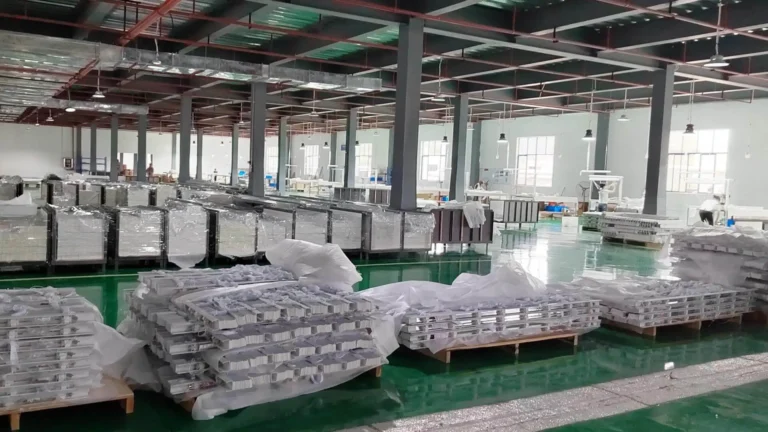

Two venetian blind samples can share the same spec sheet and still perform very differently after two years on an Australian or New Zealand window. The difference is rarely on the datasheet. It sits in rivet strength, slat thickness and where the ladder cord is clamped. As a venetian blinds manufacturer with an annual capacity of 120,000 venetian blinds (within a combined 480,000+ units across all product lines) and a dedicated 16-person QC team independent of production, we have traced enough failures back to the factory floor to know which checks matter. This guide is for Australian and New Zealand wholesalers who want to make those checks before the first container is booked.
What should ANZ buyers check first when comparing wholesale venetian blinds manufacturers?
Check four things: slat material and thickness, the tilt and lift mechanism, child-safety design and lifespan, and supply terms. Many suppliers quote the same slat widths and colour ranges, so the real differences sit in these four areas, and each can be tested at sample stage.
| What to check | What to ask the supplier | Red flag |
|---|---|---|
| Slat material and thickness | Which material (aluminium, wood, PVC)? What thickness and alloy or formulation? | Only "standard quality" offered, with no numbers |
| Tilt and lift mechanism | What is the rivet pull-out standard? How often is it tested in production? | No pull-out figure; testing "at final inspection only" |
| Ladder cord position | What is the clamp position tolerance on the assembly drawing? | Tolerance not defined |
| Child safety and lifespan | Cordless or corded? What is the cycle life of the cordless mechanism? | Only "safe" or "compliant" claimed, with no evidence |
| Supply terms | Lead time, sample time, mixed-container options, cut-down service | Vague lead times |
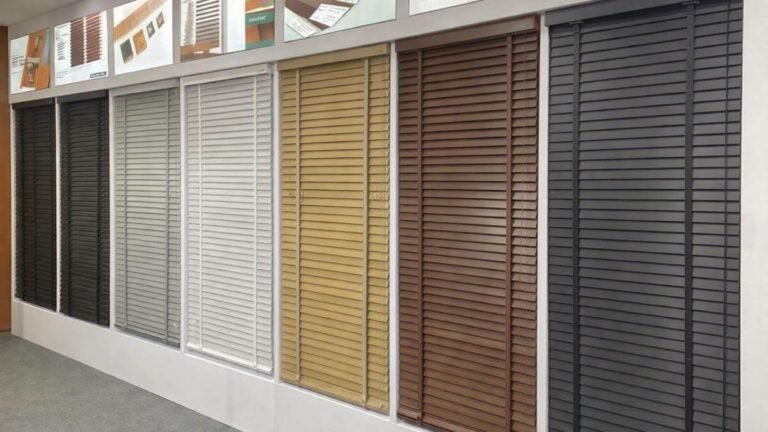
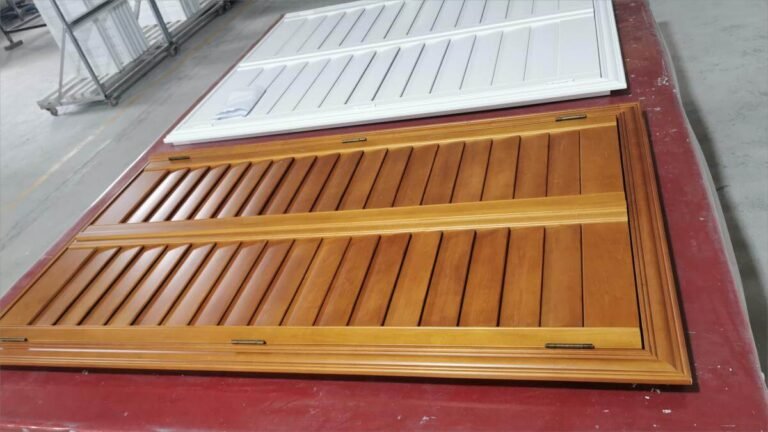
For reference, our own venetian blinds range covers wood and PVC (faux wood) slats in 25mm and 50mm widths, with cord or cordless operation, a choice of headrails, and a cut-down service. Standard lead time is 20–30 days, and sampling takes 3–7 days. Venetian blinds can also be mixed into a full container with other product lines. We cover why that matters for ANZ distributors in our factory-direct pricing breakdown.
How thick should venetian blind slats be for residential and commercial jobs?
For 25mm aluminium slats, 0.18mm suits entry-level residential, 0.20mm suits standard commercial use, and 0.22mm suits high-frequency commercial use. For 50mm slats, 0.28mm is standard and 0.35mm is the commercial grade. Match thickness to how often the blind is operated, not to the price tier.
A note on scope: the thickness figures below apply to aluminium slats, and we use them here as a benchmark you should apply to any supplier quoting aluminium. Wood and PVC slats are judged differently (see the end of this section).
| Slat width | Thickness | Typical use |
|---|---|---|
| 25mm | 0.18mm | Entry-level residential |
| 25mm | 0.20mm | Standard commercial |
| 25mm | 0.22mm | High-frequency commercial |
| 50mm | 0.28mm | Standard |
| 50mm | 0.35mm | Commercial |
Aluminium slats are typically 8011 alloy in H14 or H24 temper (work-hardened by cold rolling). H14 has a tensile strength of about 95–115 MPa, and H24 is slightly lower at 85–105 MPa. Ask which one is being quoted, because both appear on spec sheets as simply "aluminium".
Here is why frequency matters. A hotel room blind operated about ten times a day is opened and closed roughly 3,650 times a year. In our internal durability testing, 0.18mm slats under that usage showed edge creasing in about 35% of cases within 2–3 years. That is why we recommend 0.20mm or thicker in H14 temper for hotel and apartment-rental projects across Australia and New Zealand.
To be fair to the thinner option: 0.18mm is not "poor quality". In a low-frequency residential setting, such as a spare bedroom or a home office, it is a sensible way to control cost. The problem only appears when it is specified for a high-frequency commercial job. Also note that the 35% figure comes from our internal testing. It is not a third-party certification result.
For wood and PVC slats, thickness tables do not apply, so ask about material and formulation instead. Outdoor use is a good example. A standard indoor PVC slat used on a balcony can start to show white powdery chalking after about 18 months, as UV degrades the plasticiser at the surface. A genuine outdoor-grade formulation adds UV absorbers and a hindered-amine light stabiliser (HALS), and reduces the total plasticiser content. It costs roughly 12–18% more, but in our experience it extends service life by about three times. If a supplier describes a slat as "suitable for balconies", ask whether that is an outdoor-grade formulation or an indoor one with a new label.
Similarly, wood blinds are a poor choice for bathrooms, saunas and laundries. In our experience, a wood blind in a persistently humid room lasts only 30–40% as long as an aluminium or PVC blind in the same space. The end grain absorbs moisture even with a waterproof coating. In those rooms we recommend aluminium blinds or PVC roller blinds, and we would rather say so than promise that a wood blind will cope.
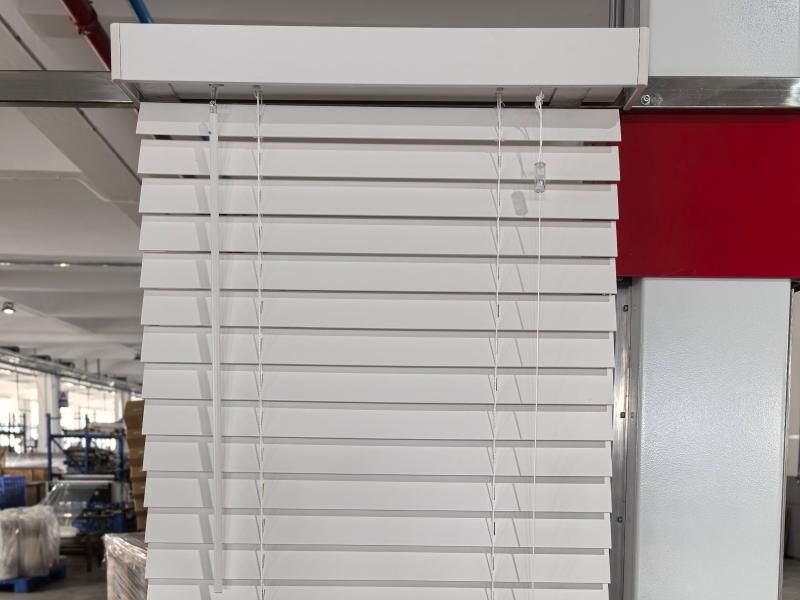
Two details sit behind many of the early failures we have traced: the pull-out strength of the rivets that hold the tilt drum in the headrail, and the position where the ladder cord clamps each slat. Neither shows up in a visual check, which is why they are worth asking about before an order rather than after a complaint.
Rivet pull-out strength. The tilt drum is riveted inside the headrail. If the rivet is too weak, pulling the tilt cord makes the drum spin without turning the slats. It cannot be repaired on site, and the only fix is to replace the entire headrail assembly. Our standard requires a pull-out force of 45–50 kgf.
We learned why this standard matters the hard way. One batch was built while air pressure at the riveting machine fluctuated, and the actual pull-out force measured only 32–35 kgf. About three months after shipping, the complaints began. Since then, we test the first rivet of every shift for pull-out force and log an hourly spot check throughout the shift. This is our internal process control, not an official certification requirement, but it is now a fixed step in how we build every headrail.
Ladder cord position. The ladder cord clamps each slat about 3–4mm from the slat edge. Our assembly drawing specifies 3.0 ± 0.5mm. Beyond 4mm, the lever arm grows and the slat hangs with its leading edge tilted slightly upward instead of level. The end user sees slats that stack unevenly when raised, and uneven light gaps when closed. It is one of the most common "won't stack neatly" complaints and one of the hardest to explain, because nobody can see the few millimetres of difference behind it.
When you evaluate a sample, pull the tilt cord repeatedly and check that the slats respond every time, then raise the blind fully and look at the edge of the stack. If a supplier cannot tell you their rivet pull-out standard or ladder cord tolerance, that tells you something about how the product is controlled. For the wider manufacturing set-up behind our range, see our capabilities page.
Cordless or corded: what should ANZ wholesalers ask about child safety and lifespan?
Ask two separate questions: what safety design and evidence the supplier can provide, and how long the mechanism lasts. Cordless is the direction of the market, but it is not automatically the best choice for every project, and safety evidence should never be replaced by a single word on a quote.
Some regulatory context first. In Australia, corded internal window coverings must meet a mandatory supply standard enforced by the ACCC1, which requires cord-safety components and warning labels. In New Zealand, the government announced in mid-20262 that new corded window coverings will have to meet one of several recognised international standards, with the detailed rules and timing still to be finalised. Across these markets the direction is the same: cordless designs or engineered cord-safety devices. That is background on the industry and regulators, not a claim about any one supplier.
For our part, our venetian blinds range offers both corded and cordless operation, and our product design takes cordless safety structure into account. We do not describe that as certification. If you need documentation to show your downstream retailers, ask any supplier, us included, for third-party test reports and read what standard and sample the report actually covers. A design that follows a safety principle is not the same thing as a certificate.
Then there is lifespan. The spring mechanism inside a cordless blind is typically designed for about 5,000–8,000 cycles, which corresponds to roughly 3–5 years of normal daily use. As spring tension fades, the blind may no longer raise fully or hold at a mid-point. Replacing the mechanism usually means stripping and re-stringing the blind, so in practice most users replace the whole product.
This matters for project buying. For a hotel, serviced apartment or rental portfolio with high operating frequency, corded blinds can have a lower lifetime maintenance cost than cordless ones. We say this at quotation stage, because it is better to agree the right specification up front than to explain a replacement cycle later. Corded products must still meet the requirements that apply where they are sold, so the choice is a specification decision to make with the compliance position in view, not a shortcut around it.
Frequently asked questions
Does offering cordless venetian blinds mean a supplier holds safety certification?
No. Offering a cordless option shows that a product is designed around cordless safety structure. It does not prove that the product has been certified. Our venetian blinds come in cordless and corded versions, and we describe that as a design capability, not a certificate. Ask any supplier for third-party test reports, and check which standard, sample and date each report covers.
Which slat thickness suits hotel projects in Australia or New Zealand?
For 25mm aluminium slats, we recommend 0.20mm or thicker in H14 temper. A hotel blind operated about ten times a day is cycled roughly 3,650 times a year, and in our internal testing 0.18mm slats showed edge creasing in about 35% of cases within 2–3 years. For 50mm slats, 0.28mm is standard and 0.35mm is the commercial grade.
How can a buyer check a tilt mechanism at sample stage?
Pull the tilt cord many times and confirm the slats respond every time, then raise the blind fully and inspect the stack edge. You cannot measure rivet pull-out force by hand, so ask the supplier for their pull-out standard and how often it is tested. Our standard is 45–50 kgf, with a pull test on the first piece of each shift and hourly spot checks.
Are cordless blinds always the better choice for ANZ projects?
Not always. Cordless mechanisms use a spring rated for about 5,000–8,000 cycles, roughly 3–5 years of daily use. For high-frequency projects such as hotels and rental portfolios, corded blinds can cost less to maintain over their life, provided they meet the cord-safety requirements that apply where they are sold. We recommend agreeing the specification at quotation stage.
What to do next
Before you commit to a container, take a sample and check four things: slat thickness and alloy or formulation, the tilt mechanism, ladder cord position, and the safety evidence for the operating type you plan to sell. If your supplier can give you numbers for each, you are dealing with a factory that controls its process. If the answers stay general, treat that as information.
Two ways to continue:
- See how factory-direct pricing works: read our pricing breakdown for ANZ distributors, including how product mix and container planning affect your cost, or request a factory-direct wholesale quote.
- Test before you order: request a sample (3–7 days) and ask us for the rivet pull-out standard, ladder cord tolerance and slat specification on the exact unit you receive.
If your project is a bathroom, laundry or outdoor space, a wood venetian blind may not be the right fit. Tell us the application and we will suggest the better material rather than push a quote.