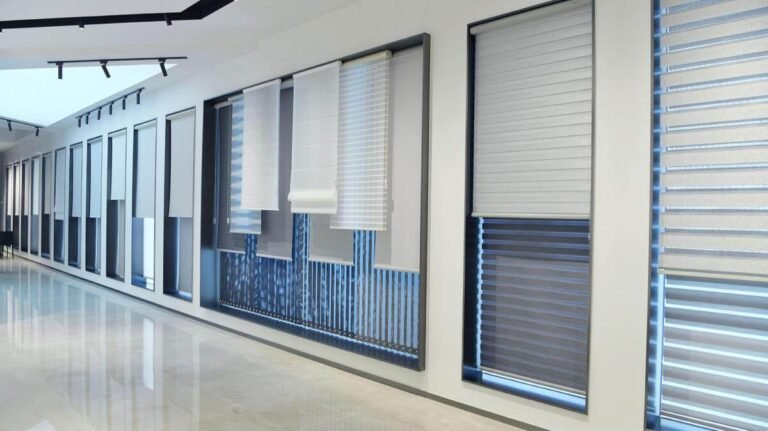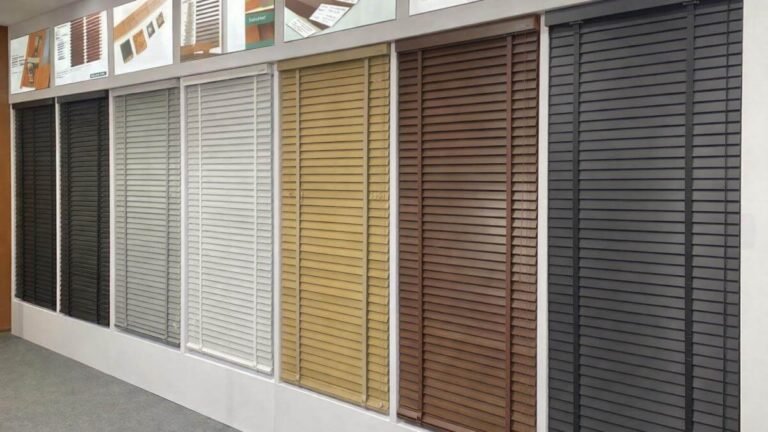
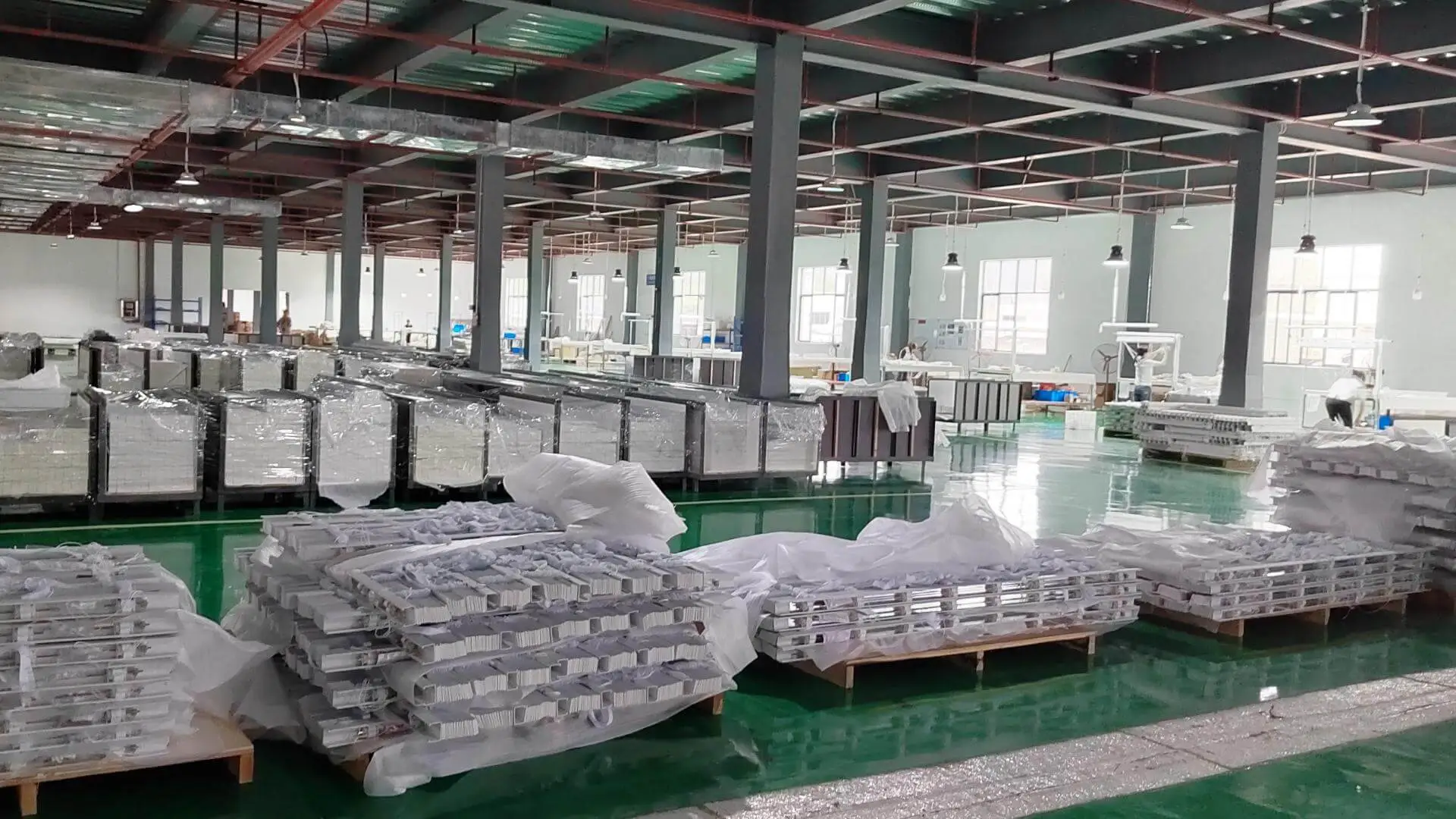
If you are an Australian or New Zealand wholesaler sourcing window blinds from China for the first time, the risk is rarely the unit price. It is everything you cannot see before the first container ships. Our Production Director entered the window furnishings industry in 1997, and these are the twelve questions we think any buyer should put to any supplier, us included. For context, our Shenzhen base covers 58,883 m² (including warehousing) with a combined capacity of 480,000+ sets a year, including 120,000 Venetian Blinds and 80,000 Window Shades. This list is a practical checklist, not survey data.
Who is really making my blinds, and how can I check?
Ask which production steps happen under the supplier's own roof, who inspects them, and whether the answer holds up on a video audit or visit. A real manufacturer can name its machines, lines and QC headcount without hesitation, and a trader usually cannot.
1. How do I tell a factory from a trading company?
Ask for evidence you can verify: live line video, equipment counts, and a QC team that sits apart from production. A trader resells, so it often cannot show where a specific slat was cut or how a rejected batch was reworked. Treat vague answers about "our partner factories" as information. We cover the full test in our factory-versus-trading-company guide.
2. Which parts are made in-house?
For Venetian Blinds, we make both wood and PVC slat blinds ourselves and run an independent hardware production system. For Window Shades, our in-house equipment includes 15+ sets of automatic roller fabric cutting and ultrasonic edge-sealing machines and 6 honeycomb heat-press lines. Ask every supplier for the same line-by-line list, and ask what they buy in, because every manufacturer buys something. Our capabilities page sets out our own list.
3. Is QC independent from production?
It should be. We run 16 dedicated QC staff who report to the quality director, separate from production, covering incoming (IQC), in-process (IPQC) and final (FQC) inspection. Independence matters because a team judged on output has a built-in conflict when it also decides whether a borderline batch ships.
Will the blinds meet ANZ safety and climate expectations?
Australia regulates corded blinds through mandatory national standards1, and New Zealand has announced it will make safety standards mandatory2 for new corded window coverings. Your customers' windows also face strong UV, heat and, on the coast, humidity. Ask how a supplier designs for both, and what documents support the claims, before you discuss price.
4. Are cordless options available, and what do they cost in maintenance?
Yes. Our Venetian Blinds come in cord-operated and cordless versions. Cordless removes the exposed cord, but the spring mechanism is designed for roughly 5,000–8,000 cycles, about 3–5 years of daily use. Once tension fades, slats stop holding position, and fixing it usually means re-stringing the whole unit, so most users replace the product. For hotels or rental portfolios, cord-operated models can cost less over their life, and we say so at quotation stage.
If you supply Australian retail or installers, read the mandatory supply and installation requirements1 for corded products before choosing them. For New Zealand, check the status of the announced mandatory standards2, which the government says will carry a one-year transition once made.
5. What documents should I ask for, and what does each one actually prove?
Ask for the actual document and read its scope, date and tested sample. Each document proves something narrow, and none proves every future batch.
| Document | What it can show | What it does not show |
|---|---|---|
| Third-party test report (UV ageing, salt spray, cord safety) | One sample met the stated method on the test date | That later batches match; check the formulation and batch named |
| Material or substance declaration | Declared composition or result for the stated material | That the whole range complies; declarations for different regulations are separate documents |
| Certificate from an issuing body | Holder, scope and validity at issue | That it covers your product; verify holder, scope and expiry with the issuer |
| Supplier's internal test records | Process control inside the factory | Independent verification |
| Factory audit report | Conditions on the audit day | Ongoing performance |
Our UV yellowing, moisture and structural-stability tests are internal quality checks. They are part of how we control quality, not a third-party certificate, and we will not present them as one. A supplier who cannot explain that difference is giving you its answer.
6. How do blinds cope with Australian UV and heat?
Ask whether the formulation is built for the exposure, and whether the supplier tests it. Our internal UV yellowing test is part of our quality system for ANZ conditions. The classic trap is standard indoor PVC slats used outdoors, which start chalking after about 18 months. The fix is an outdoor-grade formulation: UV absorber plus a hindered-amine light stabiliser, with plasticiser cut from 55 to 40 phr. It costs roughly 12–18% more and extends service life about threefold. If you are buying outdoor blinds, confirm which formula you are getting, and be wary of an indoor formula labelled "suitable for balconies".
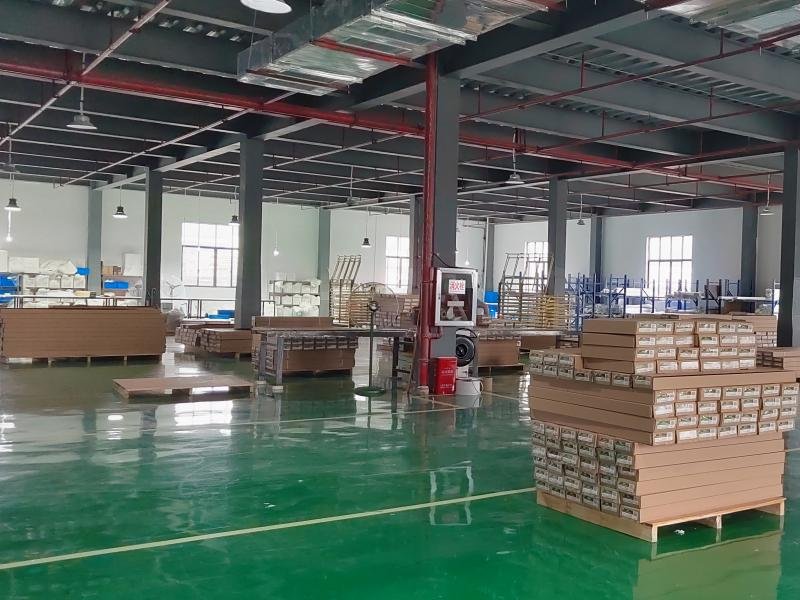
What happens to my container between Shenzhen and my warehouse?
Damage can also happen after production: condensation, crushing and badly planned mixed loads. Ask how the supplier packs, protects timber in transit, and checks the load before sealing the container.
7. Can I mix Venetian Blinds and Window Shades in one container?
Yes. We offer mixed full-container loading, so a wholesaler can build range without committing a whole container to one line. The risk is that different product types have different sizes and packing, so ask to see the packing plan for your actual mix, and ask how the longer-lead line affects the ship date.
8. How do timber blinds avoid condensation damage at sea?
Desiccant must sit between layers of cargo, not only on the container floor. We use 1 kg of coarse-granule silica gel per 2 m³ of container volume, plus a desiccant hanging bag on every timber pallet. Containers loaded in Shenzhen at about 30°C and 70% relative humidity can see temperature swings of up to 20°C as they alternate between equatorial heat and cold South Pacific air. Vapour condenses on cold steel walls and runs onto the cargo below.
The precaution adds about RMB 150–200 per container, while a single mould claim typically runs RMB 30,000–80,000 in our experience. Dry shipping does not make timber blinds suitable for wet rooms, though. In bathrooms, laundries and similar spaces, timber blinds last roughly 30–40% as long as aluminium or PVC. For those rooms we would point you to aluminium or PVC.
9. When should inspection happen, and is packaging tested?
Inspection should happen after 100% of goods are in cartons and before the container is sealed. Inspecting only finished product before packing misses scuffs, crushed corners and poor stacking. We have seen a third-party report that read "pass" while about 3% of goods arrived damaged. Our sequence is FQC, packing, then opening 10% of cartons after full loading, then the final pre-shipment report.
Our export carton types are validated with the ISTA 2A partial-simulation test3 and re-validated whenever packaging specifications change. We also run a sea-freight carton compression test. These are our packaging-validation procedures, not certificates. We expand on inspection timing in our PSI inspection article.
What does the first order look like: lead time, samples and risk?
Plan on about four weeks at the fastest, with Venetian Blinds taking longer than Window Shades. Treat the sample as a promise you still need to verify, and put sample standard, tolerances and inspection rights in writing.
10. How long from order to delivery?
Venetian Blinds take 20–30 days and Window Shades 7–15 days. The fastest overall delivery, order to receipt, is about four weeks. We keep the lines separate because averaging them misleads buyers on both.
| Product line | Lead time |
|---|---|
| Venetian Blinds | 20–30 days |
| Window Shades | 7–15 days |
| Fastest overall (order to receipt) | About 4 weeks |
Confirm timing for your own mix per order, and ask us for a ship date, not an estimate.
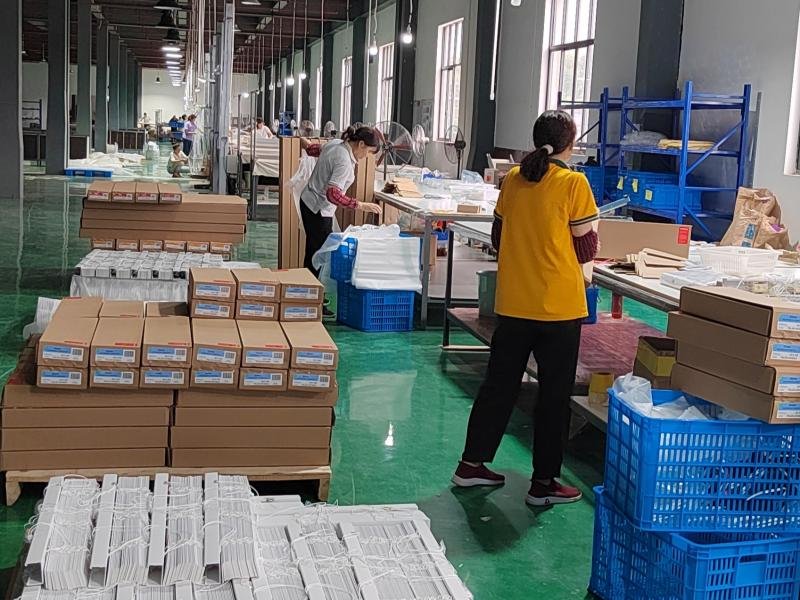
11. Will mass production match my sample?
Not automatically, because a sample is hand-finished while production runs on a line. Three steps stop the drift:
- Approve a pre-production sample (PPS) made with production materials and processes, not the initial development sample.
- Write "specification follows PPS" into the contract, with a tolerance table attached.
- Book third-party in-process inspection at about 50% completion, while there is still time to correct.
These steps move quality risk from "found after shipping" to "found while fixable". Our quick sampling takes 3–7 days, which makes the PPS step realistic before the first container order.
12. What about MOQ, pricing and territory protection?
We supply factory-direct, which removes middle layers between factory and wholesaler, and we handle small replenishment orders of 10–200 sets. We do not publish prices or a standard MOQ in this article. They are quoted per enquiry, so ask for a written quote. Our factory-direct pricing breakdown for ANZ distributors explains how we structure that conversation.
For qualifying long-term partners, we operate a territory protection policy under which, in principle, only one partner is authorised per region. Ask any supplier to put territory terms in writing, including how performance is assessed.
Frequently asked questions
What is the typical lead time for window blinds from China to Australia?
Our production lead time is 20–30 days for Venetian Blinds and 7–15 days for Window Shades. The fastest overall delivery from order to receipt is about four weeks. Mixed orders follow the longer line, so confirm the ship date for your own mix before you commit to a container.
Are corded blinds regulated in Australia and New Zealand?
In Australia, yes: separate mandatory standards1 cover the supply and the installation of corded internal window coverings. New Zealand has announced mandatory standards2 for new corded products, with a one-year transition once they are made. Check current rules before ordering.
Does a supplier's internal UV test mean it holds a safety certificate?
No. Internal tests, including our own UV yellowing, moisture and structural-stability checks, show how a factory controls quality. They are not third-party certificates. Ask for the actual document and confirm the holder, scope, product and expiry date with the issuer before relying on it.
How do I stop sample-versus-bulk quality drift?
Approve a pre-production sample made on production equipment, attach a tolerance table to the contract, and book third-party in-process inspection at about 50% completion. This catches problems while they can still be fixed, rather than after the container arrives.
Ready to test us before the first container?
If you are an ANZ wholesaler planning a first order, start small: request a sample (3–7 days) and a factory-direct wholesale quote, then check us against the twelve questions above. Send your target range and mix through our wholesale page or contact us. For the full audit approach, see How to Verify a Chinese Window Covering Factory, and for common buyer queries see our FAQs.