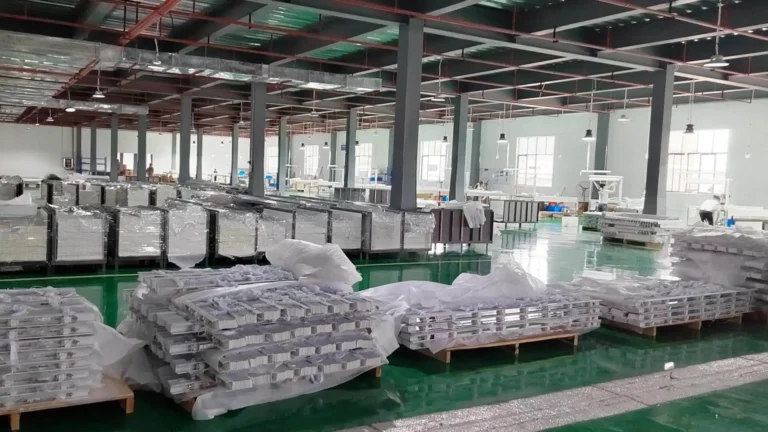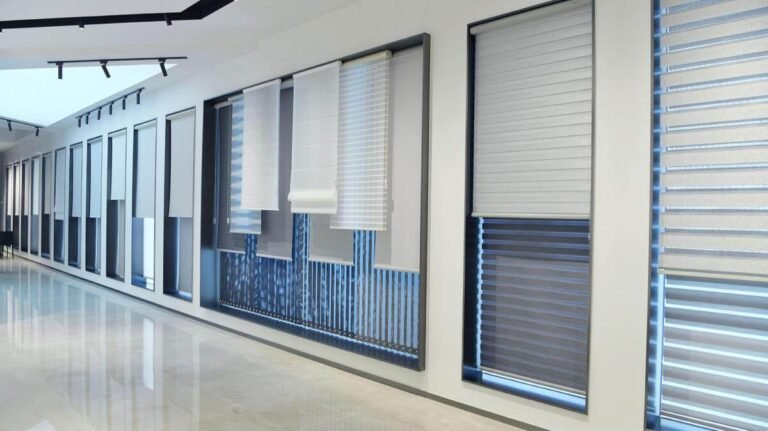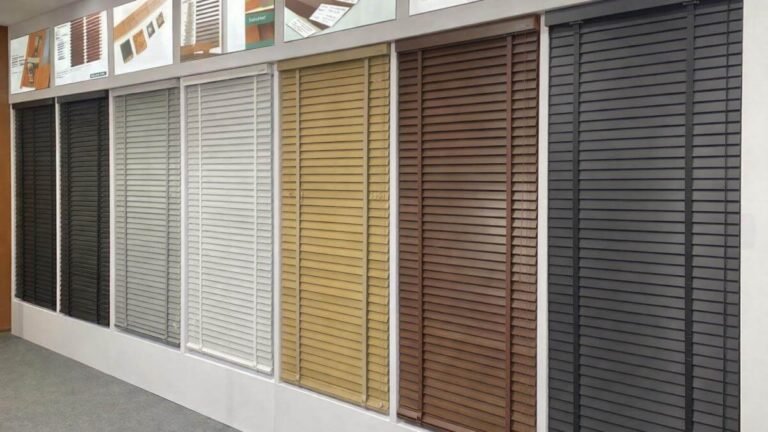

If you buy roller blinds for Australian and New Zealand wholesalers, the spec sheet will not tell you which choices fail after twelve months. Our Window Shades line has an annual capacity of 80,000 sets, and our roller fabric cutting and ultrasonic edge-sealing runs on 15+ automated units. Across that volume, the failures we have traced came down to decisions made at fabric, tube and assembly level that never show on a spec sheet. This guide covers what we would check if we were the buyer.
What should ANZ wholesalers check in a roller blind fabric before ordering?
Ask how the blackout coating is attached to the base fabric. Blackout and light-filtering fabrics and front-roll or reverse-roll fitting are the options most buyers compare. The coating process is easy to overlook, and in Australian heat it decides whether a blackout roller lasts or delaminates.
In 2017 we handled complaints on a batch of blackout roller blinds sent to Perth. The fabric was blistering and peeling apart. On a north-facing Perth window in summer, we measured fabric surface temperatures of 75–80°C. That batch used a heat-press lamination process for the blackout layer, and lamination starts separating under sustained heat above 65°C.
We moved every blackout roller on ANZ orders to chemical bonding, which holds to 80°C. That is now our standard process for those orders. The two fabrics look and feel almost identical, so you cannot judge them by eye or by hand.
| Lamination | Chemical bonding | |
|---|---|---|
| Sustained heat tolerance | Starts separating above 65°C | Holds to 80°C |
| Look and feel | Near-identical | Near-identical |
| Cost difference | Baseline | Roughly 8–12% higher |
| Expected life on a hot north-facing window | Can be 5+ years shorter | Longer |
| Quick check | Edge layering shows when a sample is bent 180° | Coating stays bonded when bent 180° |
The 180° bend test takes ten seconds. Fold a fabric sample back on itself and look at the edge. If the coating layer starts to separate, you are holding laminated fabric. Ask for this test on any blackout sample you are shown, ours included.
One limitation worth knowing: a blackout roller blind is not automatically a total light block. Reaching 99.9% or better blocking needs the blind paired with side channel guides, otherwise light leaks around the fabric edges. If a customer's priority is a fully dark bedroom, specify the side channels at quoting stage, not after complaints arrive.
How do you specify a motorised roller blind without a costly rework?
Check three variables together: blind width, fabric weight and tube diameter. A 38mm aluminium tube suits widths up to 2,500mm with fabric up to 250 g/m². If either limit is exceeded, step up to 45mm. Above 4,000mm width, use 60mm.
| Tube diameter | When to use it |
|---|---|
| 38mm | Width ≤ 2,500mm and fabric ≤ 250 g/m² |
| 45mm | Width above 2,500mm or fabric above 250 g/m², up to 4,000mm |
| 60mm | Width above 4,000mm |
Tube sizing is the most common cause of rework we see on integrated motorised projects. On one commercial project whose rework I oversaw, the designer had specified a 38mm tube on a 3,200mm-wide blind. The tube bent under the fabric and its own weight. The blind dropped unevenly, with the left side about 18mm ahead of the right, and the fabric wound onto the tube in a taper. About six months later the motor's overload protection was tripping repeatedly. Replacing the tubes and re-threading the fabric cost about 65% of the original contract value.
Since then we have treated the sizing table as a mandatory sign-off item at design confirmation, before anything goes into production. If you order motorised blinds for ANZ projects, ask your supplier to show how width and fabric weight are checked against tube size before they quote.
Spring-tension manual blinds follow the same logic. The spring pre-tension must match fabric weight and blind width. Our rule of thumb is spring torque (Nm) = fabric weight (kg/m²) × width (m) × drop (m) × 0.65, where 0.65 is an empirical coefficient. Correct tension means the blind stays where you leave it at the halfway point, with a slow drift of 0.5–1cm acceptable. Too little tension and the blind creeps down on its own. Too much and it snaps back and strikes the user's hand, and the repeated high-speed impact eventually ripples the fabric edge. On our assembly line, QC checks holding force with standard weights for each width and fabric-weight combination. Smaller workshops often skip this step.
What lead time, sampling and order quantity can ANZ buyers plan around?
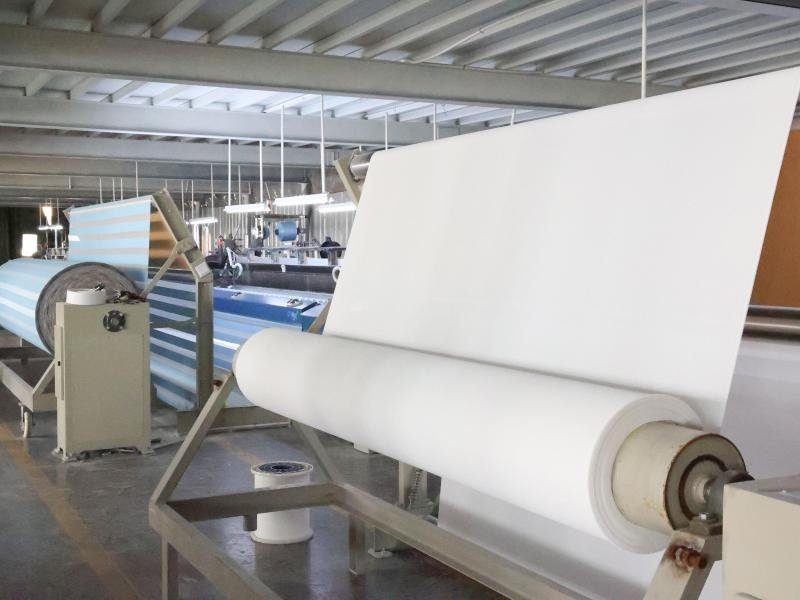
For roller blinds and the wider Window Shades line, lead time is 7–15 days, sampling takes 3–7 days, and small replenishment orders run from 10 to 200 sets. Exact minimum quantities depend on fabric, size mix and whether you are ordering a full container, so we confirm them per quote.
Keep the product lines apart when you plan a container:
| Product line | Lead time |
|---|---|
| Window Shades (rollers included) | 7–15 days |
| Plantation Shutters | 20–30 days |
| Venetian Blinds | 20–30 days |
| Fastest overall delivery, order to receipt | About 4 weeks |
If you mix rollers into a container with shutters or Venetian blinds, the longest line sets the schedule. Mixed-container loading is part of our standard supply service, so you do not need separate containers to bring roller blinds in alongside your other lines.
Our 16-person QC team is independent of production. For ANZ roller orders, we suggest asking any supplier who inspects what, and at which point, before you place a first order. The answer tells you far more than a sample does.
Which cord-safety and compliance questions should ANZ buyers ask a roller blind supplier?
Ask how the operating mechanism is designed, and for the documents behind any compliance claim. In Australia, roller blinds with operating cords fall under a mandatory safety standard for corded internal window coverings1, and a separate installation standard applies to whoever fits them. Cord design is a product decision made at the factory, not something a label fixes afterwards.
New Zealand is changing too. In June 2026 the government announced mandatory safety standards for corded window coverings2, with a one-year transition once the standards are made. The final scope is still being worked out, so check the current position before you commit stock.
A fair checklist for a supplier conversation:
- Which roller products are offered with cordless or cord-managed operation, and which still use exposed cords?
- Has the specific product, not the factory in general, been tested against the relevant safety requirement, and can they show the report?
- What is the supplier's own internal testing, and is it clearly separated from third-party certification?
- Which tests were done at batch level, and which were one-off type tests?
We will be direct about our own position. Our internal quality system includes UV yellowing tests, moisture and structural stability tests, and shipping-carton compression tests. These are internal controls. They are not the same as holding a third-party certificate, and we do not present them that way. If a supplier tells you their product is "compliant" without producing a report you can read, treat that as an open question rather than an answer.
Frequently asked questions
How can I tell bonded from laminated blackout roller fabric?
Bend a fabric sample back 180° and inspect the edge. A bonded blackout coating stays intact, while a laminated one tends to show layering at the edge. The two look and feel nearly the same, so the bend test is the practical check. Bonding is also the process we use on blackout rollers for ANZ orders, because lamination can separate above 65°C and bonding holds to 80°C.
What tube size does a 3,200mm-wide motorised roller blind need?
A 38mm tube is rated for widths up to 2,500mm, so a 3,200mm blind needs the next size up, 45mm, as a starting point. Confirm it against fabric weight at design sign-off. In a project we reworked, a 38mm tube on a 3,200mm blind bent and cost about 65% of the contract value to put right.
Can a roller blind block 100% of light?
A blackout roller blocks most light, but blocking 99.9% or more needs side channel guides as well, because light leaks around the fabric edges without them. If total darkness matters for a bedroom or media room, specify the channels when you quote.
What is the minimum order quantity for roller blinds?
We support small replenishment orders of 10–200 sets and mixed full-container orders. Exact minimums depend on fabric, size mix and order type, so we confirm them per quote rather than publishing a single figure.
Does Bright Shutters' internal testing mean its roller blinds are AS/NZS certified?
No. Our UV, moisture, structural stability and carton compression tests are internal quality controls, not third-party certification. If you need a specific certificate or test report for a product, ask us for it directly and we will confirm what is available.
Plan your first roller blind container with us
If you are sourcing roller blinds for Australian or New Zealand wholesale customers, our sampling takes 3–7 days. Request our roller shade sample book and we will talk through lead time and container mix for your first order. You can also see the full Window Shades range.