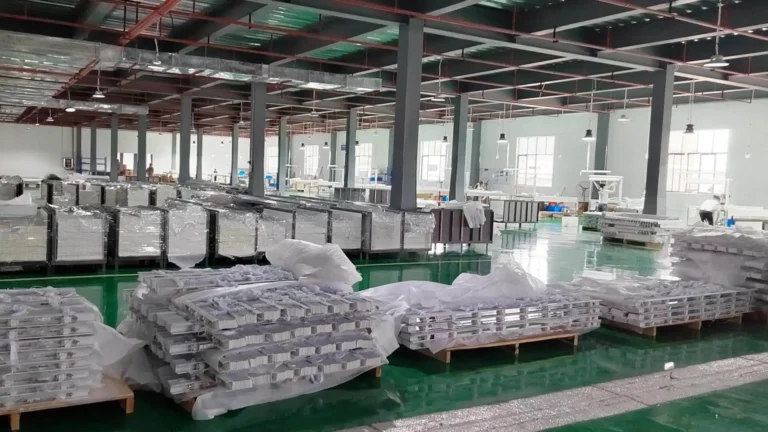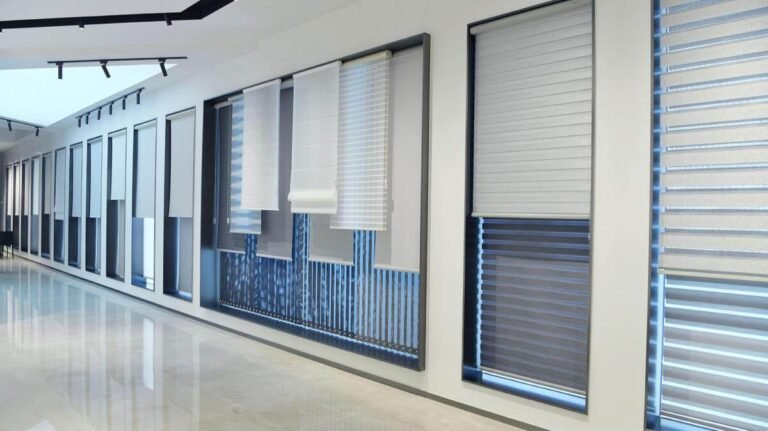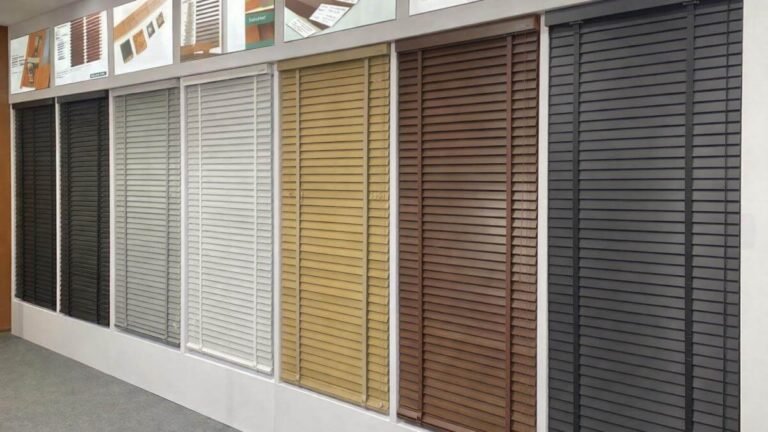

If you are building a window shades wholesale range for retail in Australia and New Zealand, three styles keep coming up: roller, zebra and cellular (honeycomb). We make all three in our Window Shades range at a 58,883㎡ production base, with annual Window Shades capacity of 80,000 sets and six in-house honeycomb heat-press lines. Our view after years of handling ANZ feedback is that the style which sells best is not always the one that returns least. This guide compares the three on the things that decide returns, and says plainly where each one is the wrong choice.
Which window shade should an ANZ retailer stock first: roller, zebra or cellular?
Start with roller shades if your customers mainly want straightforward blackout or semi-blackout cover. Add zebra for style-led retail where light layering matters, and add cellular where insulation is the reason to buy. The right order depends on which complaint your business can least afford.
| Roller | Zebra | Cellular (honeycomb) | |
|---|---|---|---|
| What the customer is buying | Privacy, blackout or semi-blackout cover | Light layering: sheer and opaque bands in one shade | Insulation |
| Light control | Blackout and semi-blackout fabrics | Adjustable between filtered and shaded light | Single-layer typically blocks 80–93% of light, so not full blackout |
| Thermal role | Depends on fabric | Depends on fabric | Core strength, from the air-cell structure |
| Main failure risk we have seen | Coating separation in hot windows (if laminated) | Moiré fringes if band alignment is loose | Real insulation below the quoted R-value if heat-press control is poor |
| Best retail fit | Volume lines, plus projects with correct tube sizing | Style-led retail, lower-dust spaces | Insulation-led buyers, living areas rather than dark bedrooms |
Across the industry, roller and zebra ranges tend to be refreshed often through fabric and colour, while cellular is closer to a performance purchase. That is background, not a Bright Shutters claim. What follows is what we have seen on our own production floor.
Why does a blackout roller shade that looks fine in the sample blister in a north-facing Australian window?
Because a sample is judged at room temperature, and this failure only appears under sustained heat. A laminated blackout coating can start separating above about 65°C. Fabric surfaces in north-facing Perth windows reached 75–80°C when we measured them. A chemically bonded coating tolerates up to 80°C.
In 2017 we dealt with a batch of blackout roller shades shipped to Perth. The customer reported bubbling and delamination. We traced it to the coating process: the batch used heat-pressed lamination, and a laminated layer begins to separate under sustained temperatures above 65°C. A north-facing Australian window in summer is well past that point.
Nothing in the sample would have shown the problem, because the two constructions look and feel almost identical. After that case we moved every ANZ-bound blackout roller shade to a chemically bonded coating. Bonding adds roughly 8–12% to the price, but in a hot Australian window the difference in service life can exceed five years. This is our own process change and internal standard, not a third-party certification.
You can screen for it yourself. Fold a sample fabric back 180 degrees. A bonded blackout layer stays put, while a laminated one tends to show layering at the edge. It is a quick check, not a laboratory test, but it is better than judging colour and handfeel alone.
Our roller range includes front-roll and reverse-roll systems, blackout and semi-blackout fabrics, and motorised options. For fabric choices and MOQ planning, see our guide to Roller Blinds Manufacturers for the Australian & New Zealand Trade. For commercial and motorised projects, see Motorized & Commercial Roller Shades for ANZ Project Builders.
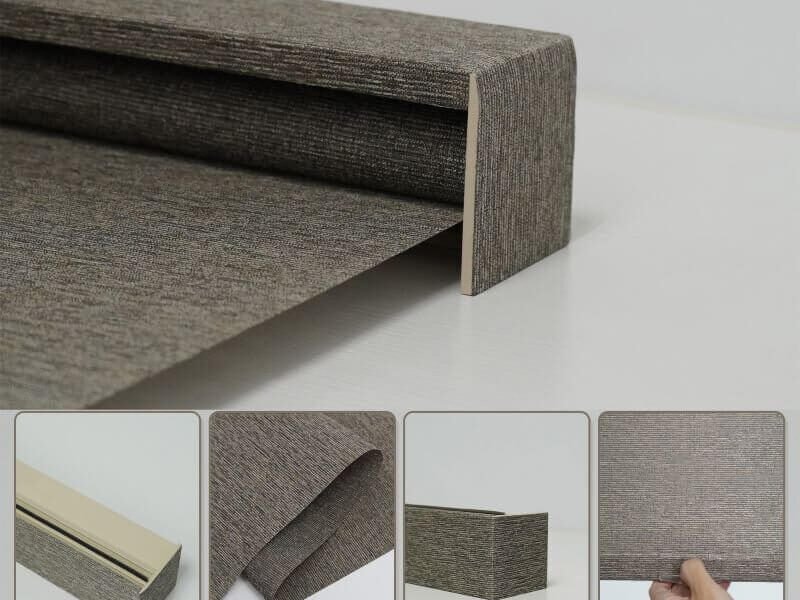
How do you spot a zebra shade that will cause moiré complaints, and what does it cost to keep clean?
Check the alignment tolerance, not the pattern. The light bands on the two fabric layers must line up within ±0.5mm to avoid moiré (interference fringes) from every viewing angle. Many factories assemble at ±1.0–1.5mm. Zebra shades also cost more to keep clean than rollers, which matters for commercial buyers.
In 2019 we introduced a purpose-made alignment fixture. Our assembly accuracy moved to ±0.3–0.4mm, and moiré complaints fell to a very low level.
There is a five-second test any buyer can run on a sample. Set the shade to about 50% open and face a bright window. Then step sideways until you are viewing the surface at roughly 45 degrees. If you see fringes, the alignment is not good enough. Many buyers never run this test because they do not know it exists. We cover it in full in Zebra Blinds Wholesale for Australia & New Zealand.
Keeping zebra shades clean is harder than it looks. The gap between the two fabric layers traps dust. You cannot take the shade down and rinse it like a roller, and you cannot wipe it slat by slat like a Venetian blind. Daily care means low-pressure compressed air from top to bottom, or a soft brush. Heavy dust build-up needs professional cleaning or replacement of the fabric assembly. In restaurants, hotel lobbies and open-plan offices, where the dust load is high, zebra shades will cost more to maintain than rollers or aluminium Venetian blinds. If you supply commercial buyers, say so in the proposal rather than waiting for the complaint.
Are cellular shades the right choice when your customer wants a dark bedroom?
Not if darkness is the priority. A single-layer cellular shade typically blocks 80–93% of light, depending on fabric, and that still leaves visible diffused light in a dark room. Cellular shades are an insulation product. For true blackout (99.9% or more) you need a blackout roller shade with side channel guides.
Cellular and blackout roller shades are not substitutes for each other. If your customer's priority is sleep and darkness, recommend the roller. If it is reducing heat transfer through the glass, cellular is the first choice.
Insulation claims need a closer look. The honeycomb shape is formed by heat-press forming, and the temperature must stay within ±2°C. Run too cool and the cell corners do not fold fully, so a cell designed at 38mm deep may end up only 32–34mm. Run too hot and the fabric fibres partly melt and the cell walls thin out. Both faults reduce real insulation performance.
The headline figure for a single-layer cellular shade is often R-2.0, calculated from standard cell geometry. Products with imperfect heat-press control may deliver only R-1.4 to R-1.7. These are US-scale figures; R-2.0 equals about 0.35 m²·K/W in the SI units used in Australia. Commonly quoted reference ranges on the US scale are about R-1.5 to R-2.0 for a single 25mm cell, R-2.0 to R-2.5 for a single 38mm cell and R-3.0 to R-3.5 for a double 25mm cell. If a specifier wants to rely on a shade's R-value in an energy calculation, the figure should come from independent testing of that product, not from a brochure.
There is no simple way to verify R-value when the goods arrive, so you are relying on the factory's process control. We run six honeycomb heat-press lines in-house, which means temperature control is something we manage directly, not something left to a subcontractor. You can see more of how we are set up on our production capabilities page. That is a statement about our process and not about any test certificate.
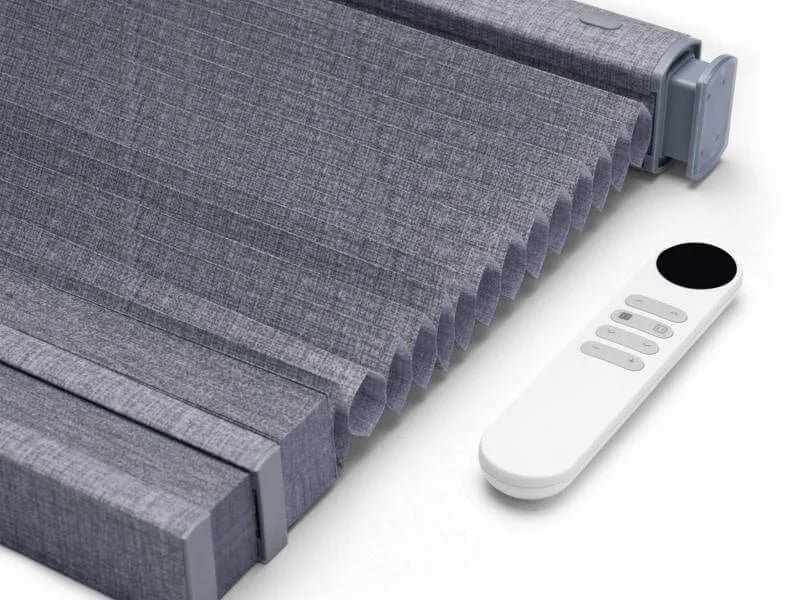
How do lead time, container mix and sampling work for window shades wholesale orders into ANZ?
Window Shades have a delivery cycle of 7–15 days, against 20–30 days for our Plantation Shutters and Venetian Blinds. The three ranges can ship together in one mixed container. Our fastest overall order-to-receipt time is about four weeks. We confirm exact timing per order at quotation.
| Window Shades | Plantation Shutters | Venetian Blinds | |
|---|---|---|---|
| Delivery cycle | 7–15 days | 20–30 days | 20–30 days |
| Annual capacity | 80,000 sets | 280,000 sets | 120,000 sets |
Other supply terms that matter for ANZ wholesale planning, which we cover on our wholesale page:
- Sampling: fast sampling in 3–7 days.
- Replenishment: small top-up orders of 10–200 sets.
- Mixed containers: full containers can combine Shutters, Blinds and Shades.
- Local sizing: we work with ANZ standard sizing.
The short Shades cycle is the useful part for a retailer. You can refresh fabrics and colours on the fast-moving range without tying up a shutters-length lead time. Mixed loading is a known weak point across the industry, because the three product lines have different dimensions and packing formats, so they damage easily when combined. Our export carton formats are tested to the ISTA 2A transport-simulation procedure1 and re-validated whenever packing specifications change. That is an internal standard and not a certification.
Project buyers should note that tube sizing for motorised rollers affects both timing and rework risk. We deal with it in Motorized & Commercial Roller Shades for ANZ Project Builders <!-- LINK-TODO CLUSTER-3: add /blog/ URL when published -->.
What cord-safety questions should ANZ retailers ask before listing any corded shade?
Ask for written confirmation that each corded product meets Australia's mandatory rules for corded internal window coverings, and ask which cord configuration that confirmation covers. This guide sets out the questions to put to any supplier, including us. It does not claim any certification, and it does not cover New Zealand's requirements, which you should check separately.
Australia has two mandatory instruments, administered by the ACCC and state and territory regulators, that apply to corded internal window coverings2. The supply regulations apply to corded products supplied from 30 December 20103 and set labelling requirements for the product and its packaging. A separate installation standard has applied since 1 January 2015. Under it, a cord loop of 220mm or longer must sit at least 1,600mm above floor level4, and the product must be installed using the components its instructions specify5 for cord safety. The ACCC has reviewed these rules before, so check the current text on the ACCC's Product Safety Australia site before you rely on any summary, including this one.
Three questions will tell you most of what you need:
- Which product and cord configuration does the confirmation cover? A statement for one operating system does not cover another.
- What sits behind it? A supplier statement is not the same as a test report from a third-party laboratory. Ask which one you are getting.
- Will your installers and retail customers receive the installation instructions and any safety components? The installation rules depend on them being used.
Our Venetian Blinds range includes a cordless option. For any specific shade, ask us to confirm the operating configuration in writing, and ask exactly which documents we can supply with your quote.
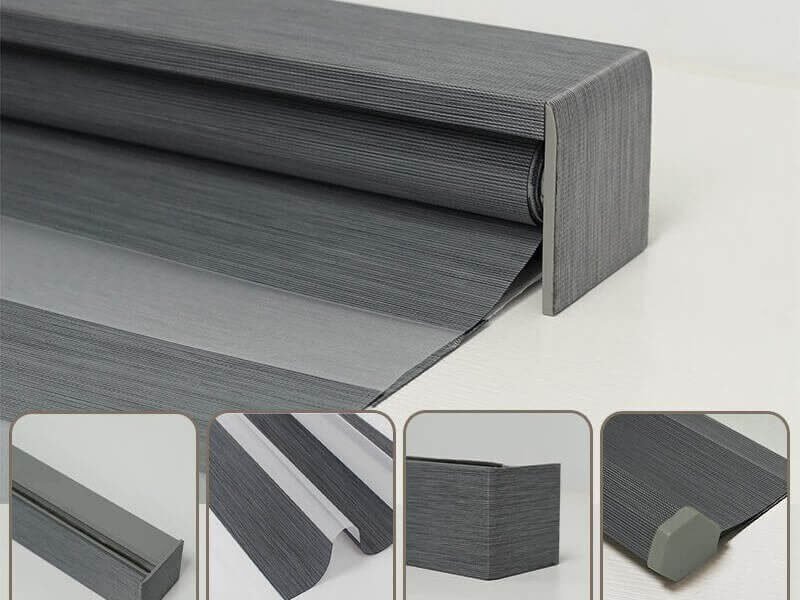
Which shade should you not recommend for a given customer?
Do not recommend cellular for a bedroom where full darkness matters. Do not recommend zebra for a dusty commercial space with a tight cleaning budget. Do not accept a laminated-coating blackout roller for a hot, north-facing window. These are mismatches we have seen behind returns.
None of the three is a bad product. Each is a poor fit for a specific job, and the cost of that mismatch lands on your returns, not on your supplier's. If your customer base looks like one of these cases, a different shade, or a different range, will serve you better than the one that looks best in the sample pack.
Planning a window shades wholesale range for ANZ? Tell us which of the three styles you want to stock and who you sell to, and we will reply with a factory-direct wholesale quote and confirm timing for your order. Sampling takes 3–7 days. If your main need is a full-darkness bedroom range or a high-dust commercial fit-out, say so first and we will tell you plainly which style we would pick.
Request a factory-direct wholesale quote · Talk to our team
FAQ: Window shades wholesale for Australia and New Zealand
Which window shade is best for wholesale in Australia and New Zealand: roller, zebra or cellular?
There is no single best style. Roller shades suit volume lines and blackout needs, zebra shades suit style-led retail with lower dust loads, and cellular shades suit buyers who want insulation. Pick by the complaint you can least afford: heat-related coating failure on rollers, moiré on zebra, or an insulation shortfall on cellular. The three styles suit different jobs, so you can stock more than one.
Are cellular shades suitable for a blackout bedroom?
No. A single-layer cellular shade typically blocks 80–93% of light, which still leaves visible diffused light in a dark room. True blackout (99.9% or more) needs a blackout roller shade with side channel guides. Cellular is an insulation product, so recommend it where heat transfer is the priority, and recommend a blackout roller where sleep and darkness are.
How long does a window shades wholesale order take?
Our Window Shades delivery cycle is 7–15 days, compared with 20–30 days for Plantation Shutters and Venetian Blinds. Our fastest overall order-to-receipt time is about four weeks, and the three ranges can ship in one mixed container. Exact timing depends on the order, so we confirm it at quotation. Sampling takes 3–7 days.
Does your internal testing mean Bright Shutters holds a third-party certificate for its window shades?
No. The coating, alignment and heat-press figures in this guide are our own process standards, not third-party certifications. If you need a specific certificate or test report for a product, ask when you request a quote. We will confirm in writing what we can supply before you place an order.
Open this to see what the ISTA 2A packaged-product transport test covers and which weight class it applies to. ↩
Open this for the ACCC's overview of the mandatory supply and installation standards for blinds, curtains and window fittings. ↩
Open this to confirm which products the supply regulations cover and from what date. ↩
Open this for a government notice setting out the installer height and labelling requirements in plain language. ↩
Open this to read the installation standard itself, including the labelling and component requirements. ↩