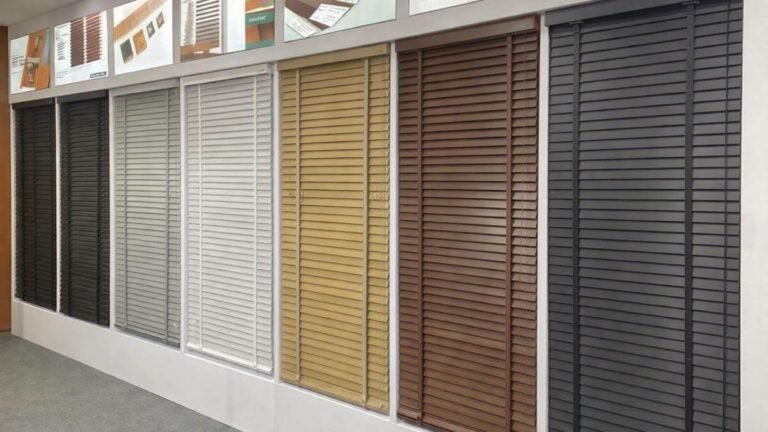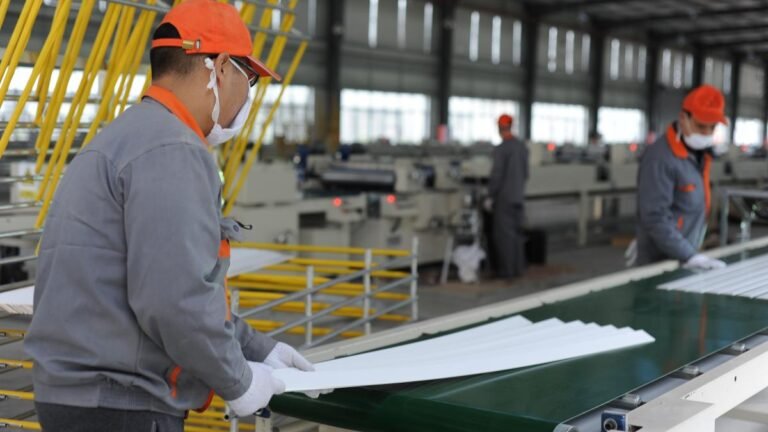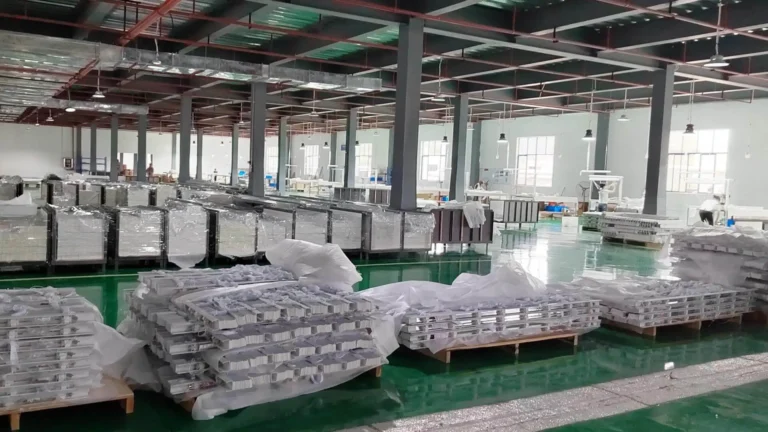
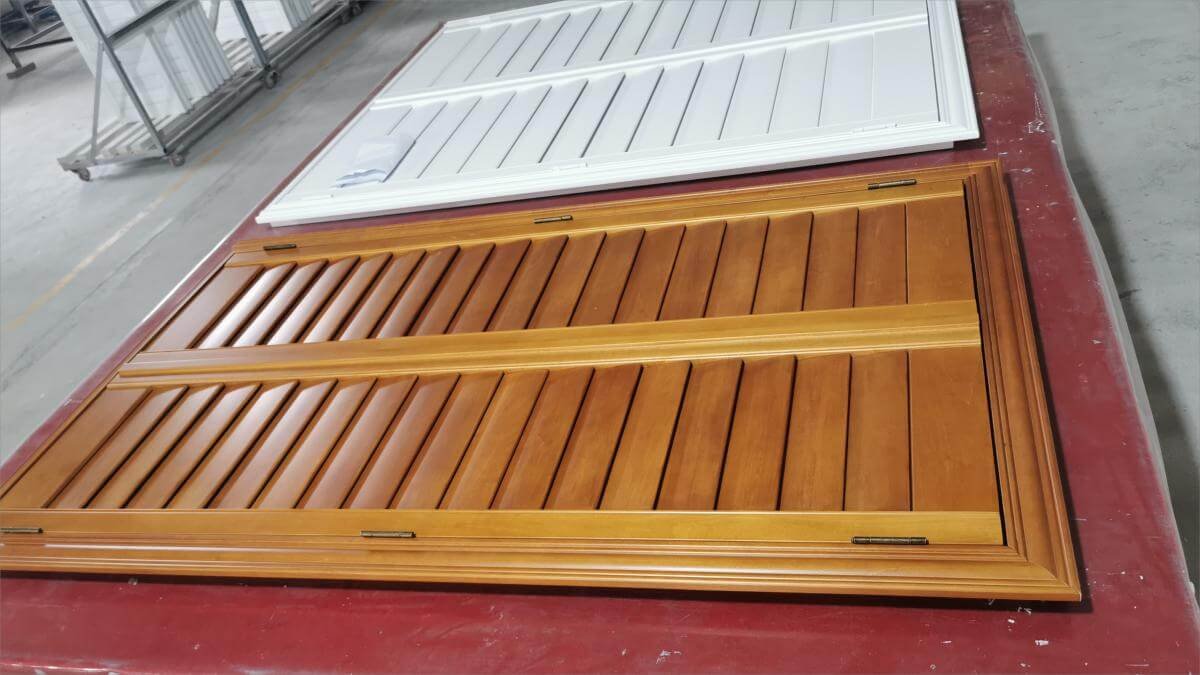
If you import window blinds into Australia or New Zealand, you have probably seen the same claim on a dozen supplier websites: "We are a factory." Our own base in Shenzhen covers 58,883 square metres, including warehousing, and 16 dedicated QC staff who report separately from production. Even so, we would not ask you to take that on trust. A supplier's claim tells you very little. What tells you something is what they can show you: production records, inspection timing and how they behave when the sample and the mass-production run diverge. Here is how we would check a supplier if we were the buyer.
What actually separates a blinds factory from a trading company?
The difference is control, not the title on a business card. A factory controls its production lines and can answer for each process step. A trading company sources from one or more factories and cannot always trace a defect back to the line that caused it. Neither model is automatically dishonest, but they carry different risks.
In blinds and shutters manufacturing, the clearest test is which stages a supplier does in-house. Across the industry, mid-sized suppliers often buy in extruded profiles or standard hardware, while larger manufacturers run their own extrusion, coating and hardware production. That is general industry background, not a rule. What matters is what your specific supplier can demonstrate.
For reference, here is what we run ourselves (the full list is on our manufacturing capabilities page). Our timber shutter line covers the full process from log sourcing and sawing through panel joining, finger-jointing, moulding and spray-finishing to final assembly. Our PVC line uses 50+ in-house extrusion lines. Our machinery includes 20+ CNC machining centres and 3 automated coating lines, and we run an independent hardware production system. Our Venetian Blinds are made in timber and PVC. We list this so you can compare it with what any other supplier tells you, not as proof that we are the right fit.
| Factory | Trading company | Hybrid (factory plus outsourced lines) | |
|---|---|---|---|
| Who controls the production schedule | The supplier | The subcontracted factory | Split between both |
| Can trace a defect to a line or shift | Usually, if records exist | Often only to the subcontractor | Depends on which line made it |
| Questions they can answer on process | Detailed, with records | General, often deferring to "the factory" | Strong on in-house steps, vague on the rest |
| Evidence to ask for | Equipment list, live line tour, process records | Subcontractor names and audit access | Written list of what is in-house vs outsourced |
| Main risk for an ANZ buyer | Minimum order or capacity limits | Traceability gaps and a hidden margin layer | Inconsistent quality between lines |
A trading company can still be a sensible choice, especially for small mixed orders or when you want one contact managing several factories. The risk is not the model itself. The risk is not knowing which model you are buying from. Australian and New Zealand importers who ask the question directly, and get a written answer, are already ahead of many buyers.
Which questions and documents prove a supplier really controls production?
Ask for evidence that only a working production line can generate. A supplier that owns its lines can hand over process records, explain a defect back to a specific step and let you observe the line, live or by video. A supplier that cannot is probably relaying someone else's answers.
Here are checks we would run, in order of how hard they are to fake:
- Business licence scope. Check that manufacturing is listed, not only trading or import and export.
- Equipment list matched to the products you are buying. A blinds supplier claiming PVC or timber slat production should be able to name the machines involved.
- A live or recorded walk-through of the actual line, ideally showing the specific product and headrail you are ordering.
- In-process records. Ask to see, for example, what the first-off check on a riveting station looks like.
- A root-cause explanation for a past defect. A real factory can describe one and what changed afterwards.
To show what a process record looks like, take the tilt mechanism on a Venetian Blind headrail. The tilt drum is fixed to the headrail with rivets. If the rivet pull-out force is too low, the drum spins without moving the slats. This failure cannot be repaired on site, and the whole headrail assembly has to be replaced. Our in-house pull-out standard is 45–50 kgf.
We learnt why we hold that number the hard way. On one batch, air-pressure fluctuation in the riveting machine left the actual pull-out force at only 32–35 kgf. The complaints started arriving about three months after shipment. We now test the first rivet of every shift for pull-out force and log an hourly spot check. This is our own control, not an official certification requirement. It is also exactly the kind of record you can ask any supplier to show you.
A second example is the ladder cord position. We clamp the cord 3–4 mm from the slat edge, with a drawing tolerance of 3.0 ± 0.5 mm. Beyond 4 mm, the slats hang slightly tilted, stack unevenly when raised and leave uneven light gaps when closed. Buyers see the result as a "stacking" complaint, but rarely know that the difference between 3 mm and 5 mm is the cause. A supplier who knows this dimension and its tolerance is working from real line experience.
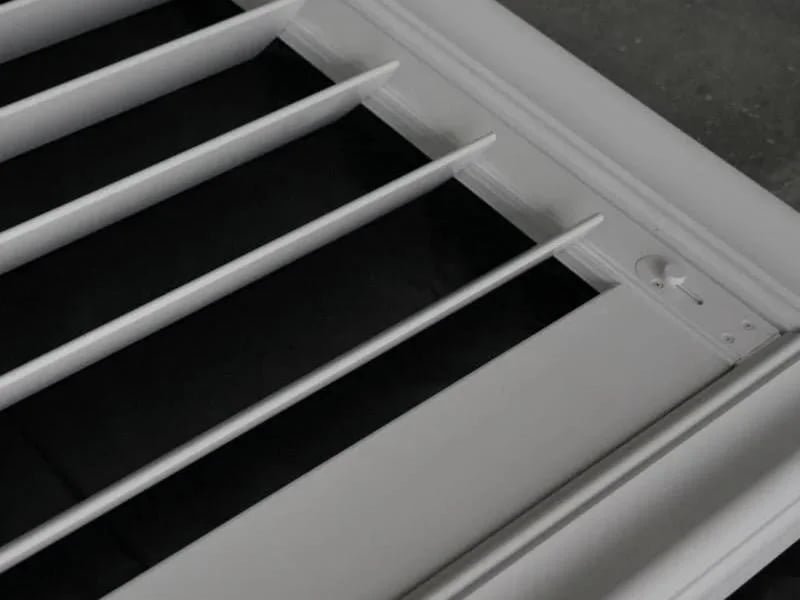
Why can a "passed" inspection report still arrive with damaged cartons?
Because many inspections happen before packing. A report stating "pass" can be accurate for the goods as inspected and still miss damage added afterwards. The correct pre-shipment inspection (PSI) time is after 100% of goods are packed into cartons and before the container is sealed.
This is an easily overlooked detail when sourcing from China. Final quality control (FQC) is usually done on finished products before packing. That is a necessary check, but it cannot see what happens next: knocks during packing, cartons stacked too high, or goods loaded loosely. I have seen a third-party inspection report marked "pass" where around 3% of the products arrived at port already damaged inside the container. Nobody had supervised the packing stage after FQC.
For an importer receiving containers at an Australian or New Zealand port, this matters because the damage is discovered at your warehouse, after the money has moved and the goods are thousands of kilometres from the people who could have prevented it.
| Inspection point | What it can find | What it cannot find |
|---|---|---|
| In-process inspection (mid-production) | Process drift, wrong materials, early defects while they can still be corrected | Packing damage, final loading problems |
| Final QC (FQC), before packing | Product defects, dimensions, finish, function | Damage from packing, stacking or loading |
| PSI after 100% packed, before container sealing | Carton condition, packing method, quantity, random unit checks from opened cartons | Problems inside sealed cartons not sampled |
Our current internal procedure is: FQC inspection, then packing, then after 100% of goods are packed we open 10% of cartons for a re-check, and only then issue the final PSI report. This sequence is possible because we run packing in-house. When a supplier outsources packing or loading, the inspection point often ends up in the wrong place by default, which is one more reason to ask who controls each step.
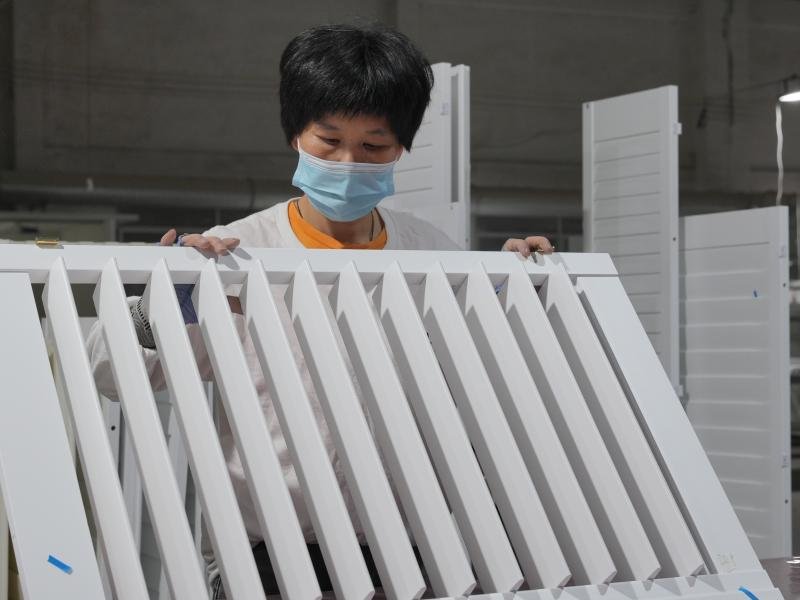
Does buying factory-direct remove the risk? What it cannot do for you
No. Buying from a factory shortens the chain and improves traceability, but it does not remove the gap between an approved sample and mass production. That gap exists at every supplier and has to be managed deliberately with contract terms and inspection timing.
This is a very common quality problem in international purchasing. A sample is often built carefully by hand. A production run comes off a line at speed. The gap between them does not close by itself. You can narrow it, and we would suggest three steps regardless of whom you buy from:
- Ask for a pre-production sample (PPS), not the original development sample. A PPS is made with production materials and production processes, so it represents the batch you will actually receive.
- Write "specification per PPS" into the contract, with a batch tolerance table attached. This turns "looks the same" into something measurable.
- Arrange a third-party in-process inspection (IPI) at around 50% completion of your first large order. At that point there is still time to correct problems before the goods are finished.
Together these turn quality drift from something you discover after shipment into something you can catch while it is still fixable.
A factory-direct relationship also brings its own trade-offs. A factory may have capacity limits or scheduled production windows that a trading company can smooth over by switching subcontractors. A trading company may be easier for a very small mixed order. Which model suits you depends on your volume, your need for traceability and how much of the inspection work you want to run yourself.
How to use this before your next order
If you are comparing suppliers for an Australian or New Zealand import programme, use the checks above as a shortlist filter: licence scope, equipment list, a line walk-through, process records, a defect explanation and a written PSI timing. Any supplier who answers them clearly, whether factory or trading company, is easier to trust than one who repeats "factory direct" without evidence. And whichever supplier you choose, put the inspection point and PPS terms in writing before the first deposit.
Want to see what our records and inspection sequence look like? Request our factory audit information pack and we will send the process and inspection documentation you can compare with any other supplier's. If you distribute in Australia or New Zealand and want to discuss regional terms, see our wholesale programme.
Frequently asked questions
How can an Australian importer check whether a blinds supplier owns its production line?
Ask for three things in writing: the manufacturing scope on the business licence, an equipment list matched to the exact product you are buying, and a live or recorded walk-through of that line. Then ask for one in-process record, such as a first-off check log, and a root-cause explanation of a past defect. Suppliers who own their lines can produce these quickly.
When should pre-shipment inspection happen for blinds shipped to Australia or New Zealand?
After 100% of the goods are packed into cartons and before the container is sealed. Inspecting only finished goods before packing misses damage from packing, stacking and loading. Our own sequence is FQC, then packing, then a 10% carton re-check, then the final PSI report. Whatever supplier you use, put the inspection point in writing.
Is a factory-direct blinds supplier always cheaper than a trading company?
Not always. Factory-direct buying removes intermediary layers, which can improve your purchasing cost and margin, but the outcome depends on order size, minimum quantities and how much inspection work you take on. A trading company can be more practical for small mixed orders. Compare total landed cost and traceability, not the unit price alone.
Does a supplier offering cordless Venetian Blinds automatically hold AS/NZS 4201.1 certification?
No. A cordless option is a product design feature, and it is not the same as holding a certificate. We offer a cordless option on our Venetian Blinds, but this article makes no certification claim. Australia has mandatory safety standards for corded internal window coverings1 covering supply, labelling and installation. Ask any supplier, including us, for the third-party test report and certificate number.
An overview of the two mandatory standards covering the supply, labelling and installation of corded blinds and curtains in Australia. ↩