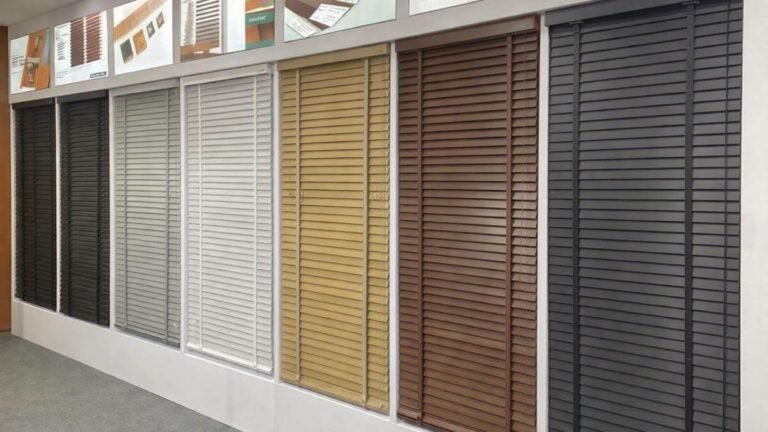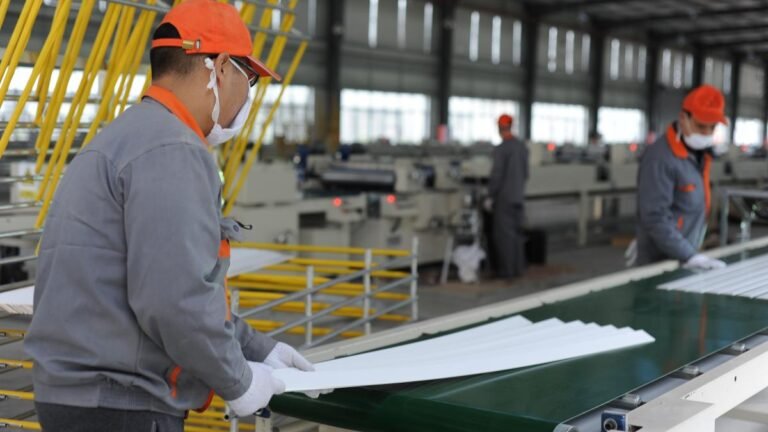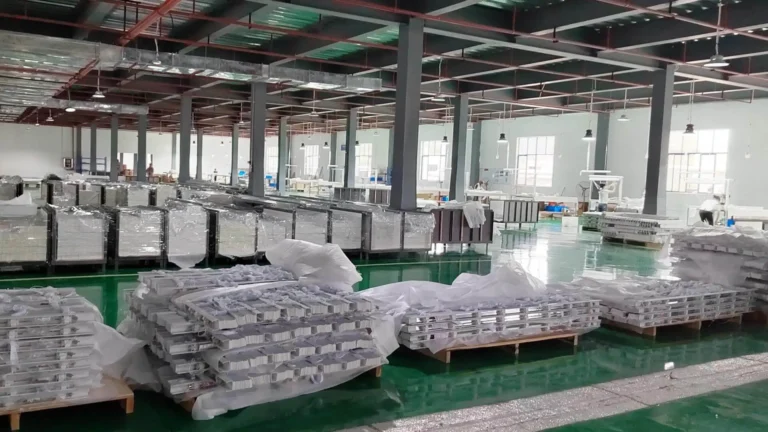
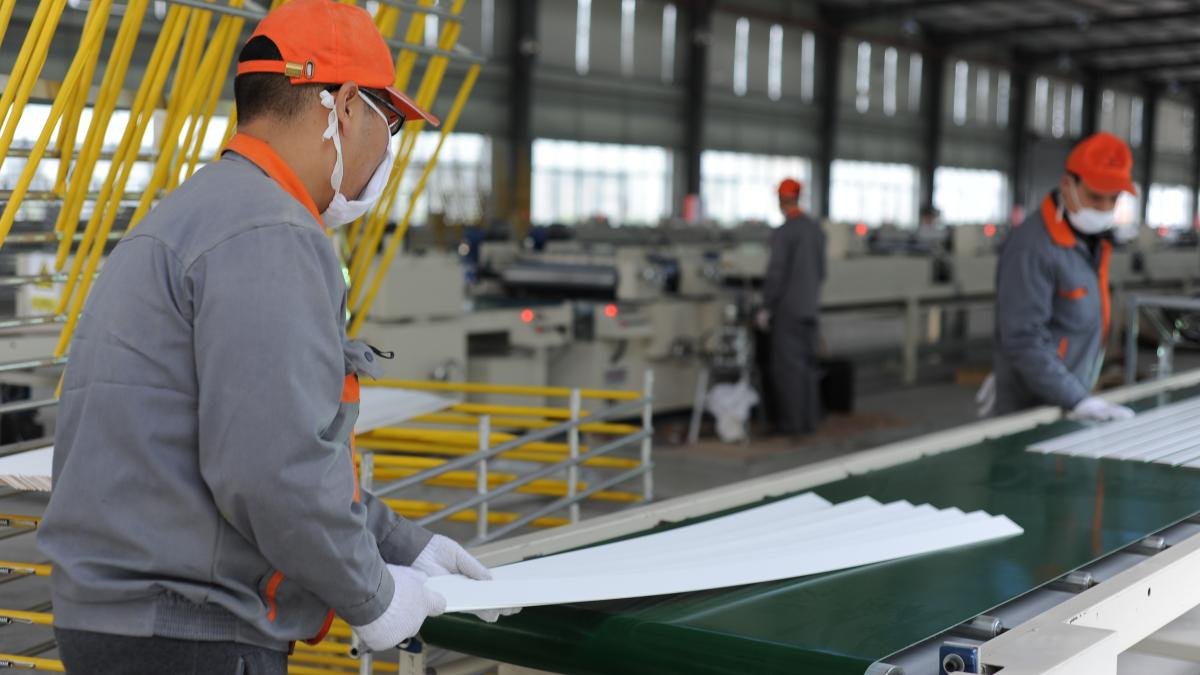
Bright Shutters runs its production out of a 58,883㎡ self-owned facility in Shenzhen, with 400+ staff, 12 dedicated product lines, and more than 11 million units shipped since 2010. Numbers like that are easy to put on a website. What they don't tell you is whether a supplier will still be a good partner three years and forty container loads from now. That's a different question — and it's the one most wholesale buyers don't ask until it's too late.
Why Price Alone Fails as a Selection Criterion
Most searches for wholesale blinds suppliers start with price comparisons across a handful of factories. That's a reasonable first filter, but it rarely predicts how a relationship actually plays out. Two suppliers can quote within 5% of each other and still produce completely different outcomes eighteen months in — one keeps color consistent across ten reorders, the other doesn't; one discloses a product's real limitations upfront, the other lets you find out the hard way.
The short answer: evaluating a wholesale blinds supplier for a long-term relationship comes down to six factors — full-category supply capability, child-safety design readiness, hardware reliability, batch consistency, honest disclosure of limitations, and long-term territory commitment — and price alone predicts almost none of them. Each factor below surfaces a different way a "cheaper" supplier ends up costing more.
Factor 1 — Full-Category Supply Capability
A wholesaler ordering blinds today is very likely to need shutters or shades next quarter — retail customers don't shop by manufacturing category, they shop by room. A supplier who only produces venetian blinds forces you to manage two or three separate factory relationships, two or three sets of lead times, and two or three quality standards to hold in your head at once.
The more useful question isn't "can this factory make blinds well," it's "can this factory fill a mixed container with blinds, shutters, and shades without the packaging or scheduling turning into a mess." Suppliers with genuine full-range manufacturing — rather than a blinds factory that resells shutters from a subcontractor — can consolidate your ordering into fewer, larger, better-planned shipments.
Factor 2 — Cordless & Child-Safety Design Readiness
For buyers supplying the Australian and New Zealand markets specifically, this is the factor that gets asked about earliest and most often. Across the wider window furnishings industry, cordless operation has moved from a premium option to a baseline expectation in ANZ retail and wholesale channels, largely driven by child-safety concerns around accessible cords and chains — this is a market-wide shift, not a claim about any one supplier's certification status.
That distinction matters when you're evaluating a specific supplier: a factory's cordless product design and internal testing capability are not the same thing as holding a formal third-party safety certification. What you should be asking a prospective supplier isn't just "do you have cordless options" — most do — but two separate questions: how deliberately cordless design is built into their standard range versus offered only as a costly upgrade, and exactly what compliance documentation (not just internal design intent) they can put in writing. A supplier whose cordless mechanism is a design afterthought tends to also be the one with the highest field failure rate on that mechanism (see Factor 5).
Factor 3 — Hardware Reliability Under Real Use
This is the factor that's hardest to evaluate from a sample and easiest to get burned by at scale. Venetian blind tilt mechanisms depend on rivets holding the tilt drum to the headrail with enough pull-out force — the working standard is 45–50 kgf. Drop below that and you get a specific, hard-to-diagnose failure: the buyer pulls the tilt cord, the drum spins freely inside the headrail, and the slats don't move. It can't be fixed on-site; the whole headrail assembly has to be replaced.
This isn't a hypothetical. One production run affected by rivet-gun air pressure fluctuation shipped at only 32–35 kgf, and complaints started arriving within about three months. The fix wasn't just catching it once — it was building first-piece rivet pull-tests into every shift and hourly spot-checks into the ongoing process. That's the kind of process change worth asking a supplier about directly: not "do you have quality control," but "what specific check catches a hardware failure mode before it ships."
Slat gauge matters here too. Aluminum venetian blind slats are commonly specified at 0.18mm for entry-level residential use, stepping up to 0.20–0.22mm for commercial and high-frequency applications like hotel rooms. A supplier who can't tell you which gauge they're quoting — or why — probably hasn't thought about your specific end-use case.
Factor 4 — Color & Batch Consistency for Repeat Orders
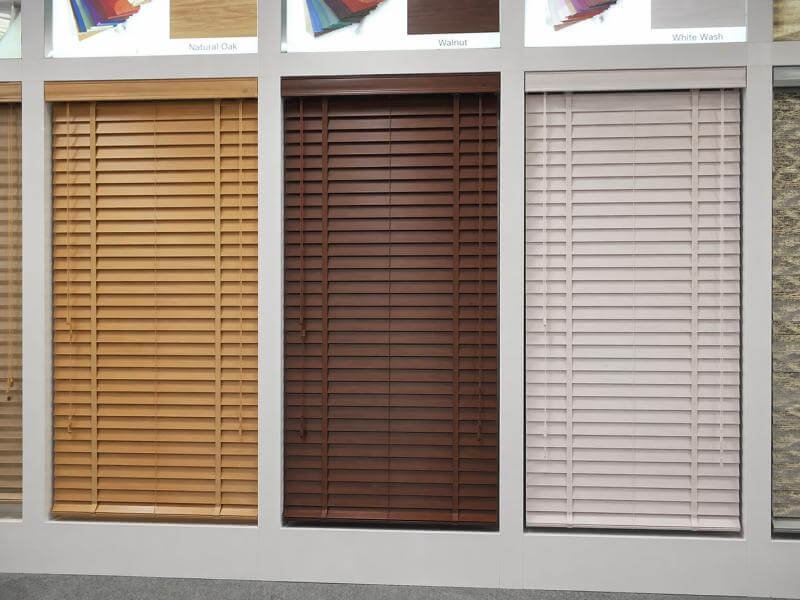
Ask any established wholesale blinds distributor what their most common supplier complaint is, and color mismatch on reorders comes up constantly. The same "Pure White" from two different production runs can look noticeably warmer or cooler under natural light, even when both batches were technically "within spec."
The underlying fix is a batch color lock-in system: measuring a customer's first production run with a spectrophotometer (D65 light source, 10° viewing angle) to set a permanent Lab* reference, then comparing every subsequent batch against that reference with a defined tolerance — typically ΔE ≤1.0 acceptable, above 1.5 requiring a re-match before shipment. This requires dedicated equipment and an actual color archive per customer, which is exactly the kind of infrastructure smaller factories tend to skip. If a supplier can't describe how they manage color consistency across reorders, assume they don't.
Factor 5 — Honest Disclosure of Product Limitations
This is the factor buyers rarely think to evaluate, and it's arguably the most predictive of all. A supplier who tells you what their product can't do is more trustworthy than one who only tells you what it can.
Cordless venetian blinds are a good example. The spring mechanism that makes cordless operation possible has a real, finite service life — typically 5,000 to 8,000 open-close cycles, or roughly three to five years of normal use. Once spring tension decays, the blind won't hold position or retract fully, and repair usually means a full teardown and re-threading that most end users won't bother with — they replace the unit instead. For a hotel or rental property portfolio doing large repeat orders, that means the full-lifecycle maintenance cost of corded blinds can actually run lower than cordless, even though cordless wins on the safety argument.
A supplier who raises that trade-off with you at the quoting stage — rather than only after a maintenance complaint — is telling you something important about how they'll handle problems later.
Factor 6 — Territory Protection & Long-Term Commitment
Price and product quality answer "can this supplier deliver a good order." Territory protection answers a different question: "will this supplier still be a good partner once you've invested a year building a market for their product." A territory protection policy — where a supplier limits how many distributors it authorizes within a given region — is one of the clearer signals that a manufacturer is thinking about your business's long-term viability, not just this quarter's order volume.
This matters more in window furnishings than in many other building material categories, because distributors typically invest real time in sampling, catalog development, and installer relationships before volume picks up. A supplier unwilling to discuss any form of territory arrangement is telling you, implicitly, that they see you as one of several equally replaceable buyers in your market.
A Quick Checklist Before You Commit
- Can this supplier fill a mixed container across blinds, shutters, and shades — or only one category?
- Is cordless/child-safety design built into their standard range, or only offered as a costly add-on?
- What specific process step catches a hardware failure before it ships, not just "we have QC"?
- Can they describe, concretely, how they manage color consistency across reorder batches?
- Did they mention any product limitation unprompted — or only positives?
- Will they discuss territory protection, or avoid the topic entirely?
Frequently Asked Questions
What's the difference between a wholesale blinds manufacturer and a trading company? A manufacturer owns the production lines, materials processing, and QC systems that make the product — a trading company resells output from other factories, often without visibility into the actual production process. Ask a prospective supplier directly which one they are before comparing quotes.
How long should cordless venetian blind hardware last before it needs maintenance? A cordless spring mechanism typically has a service life of 5,000 to 8,000 open-close cycles, which works out to roughly three to five years of normal daily use before spring tension decays enough to affect performance.
Is a lower quote from a wholesale blinds supplier always the better deal? Not necessarily. A lower unit price doesn't account for downstream costs like color mismatch on reorders, hardware failures under real-world use, or lack of territory protection — all of which affect the total cost of a supplier relationship over time, not just the first order.
Where This Leaves You
None of these six factors show up on a price sheet, which is exactly why they're worth asking about directly and early — before a purchase order, not after the third reorder goes sideways. A supplier's willingness to answer specific, sometimes uncomfortable questions about hardware failure rates, color management, and product limitations tells you more about the next three years than any quoted unit price will.
Bright Shutters manufactures Plantation Shutters, Venetian Blinds, and Window Shades across wood, PVC, and aluminium from a 58,883㎡ Shenzhen facility, supplying wholesale and distribution partners across North America, Europe, and — as a current strategic focus — Australia and New Zealand.
Ready to evaluate our capability directly? Schedule a factory capability discussion