Most wholesalers walk a factory floor looking at the right things: annual output, CNC equipment, finished samples from the display shelves. Those checks matter. But the question that actually determines whether a supplier relationship holds together over three, five, or ten years rarely makes it onto an audit checklist — and it only surfaces the second time you reorder.
That question is: when your customer installs a new batch of "Pure White" shutters alongside the ones from six months ago, do they match?
This page covers how we approach that problem, what our manufacturing footprint looks like, and what any ANZ trade buyer — whether or not they're buying from us — should be checking during supplier qualification.
Why Most Factory Audits Miss the One Thing That Breaks Long-Term Orders
A standard factory verification visit for plantation shutters typically covers capacity (annual output, production lines), equipment (CNC centres, finishing lines), product quality (sample inspection, louvre action, frame tolerances), and pricing structure.
What it almost never covers is batch-to-batch colour consistency — because the problem is invisible on day one.
The first order arrives. It looks right. Your customer is happy. Eighteen months later, they reorder for the second stage of the same development project. The installer calls: the new shutters don't quite match the ones already on the wall. Neither batch is technically wrong by its own standard. They were just never locked to the same reference.
By that point, you're managing a customer complaint, not a factory audit.
The Reorder Problem: Why "Pure White" Isn't Always the Same White
Colour names in the window coverings industry are commercial labels, not scientific specifications. "Pure White" from one production run can drift measurably warmer or cooler depending on pigment batch variation, mixing ratios, and curing conditions — all without triggering a standard visual QC rejection.
The only way to prevent it across long-term supply is a formal colour locking system.
How Batch Colour Drift Happens
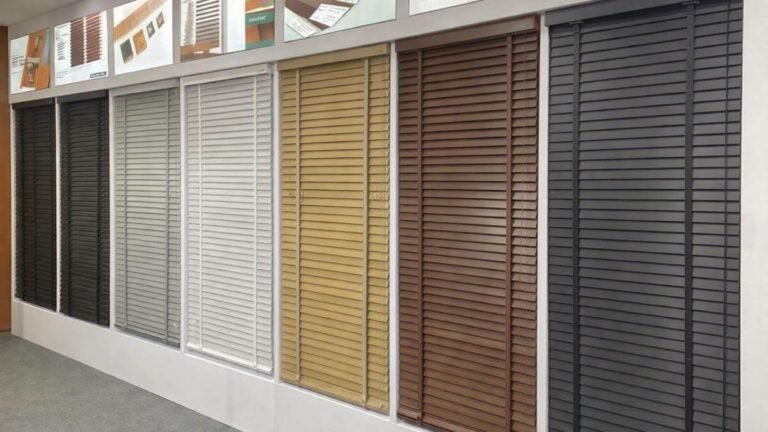
The root cause is the absence of a permanent numerical reference. Most small-to-mid-size factories do visual matching against a physical colour chip — which fades over time, varies under different lighting conditions, and can't be mathematically compared across production batches.
Without an instrument-based reference, two batches can each look "correct" to the production team while diverging by ΔE 2.0–3.0 in measured colour space. That's a difference the human eye detects clearly when the shutters are installed side by side in a sun-filled room.
Our Standard: Spectrophotometer Locking + ΔE Thresholds
Our approach is to lock the colour numerically at the first production run for each client.
When a customer's first batch goes to production, we measure the finished louvre colour using a spectrophotometer set to D65 illuminant (daylight simulation) at a 10° observer angle. The recorded Lab* values become that customer's permanent colour master sample. Every subsequent production run for that colour is checked by pulling five louvres at random from the batch and comparing them to the master sample under the same conditions.
The pass/fail threshold is unambiguous:
- ΔE (2000 formula) ≤ 1.0 → approved to ship
- ΔE > 1.5 → mandatory colour correction before the batch ships
This system requires a calibrated spectrophotometer and a maintained colour archive. It's operationally straightforward — but it doesn't exist at many smaller factories, which is why the "second reorder problem" is so prevalent across the industry.
The right question to ask any supplier during factory qualification isn't "what's your colour range?" — it's "how do you lock colour between batches, and what's your ΔE tolerance for reorders?"
Why Your Own Showroom Lighting Might Be Giving You False Confidence
There's a second colour consistency problem that exists on the buying side, not just the production side.
When ANZ importers and wholesalers receive samples or conduct verification inspections, most do it under whatever lighting is available in the office or warehouse — typically cool-white fluorescent tubes at around 4,000K colour temperature. Plantation shutter louvres will eventually be installed under natural daylight conditions, which corresponds to approximately D65 (6,500K).
What That Gap Actually Looks Like in Practice
For strongly saturated colours, the difference between 4,000K and D65 is noticeable but manageable. For white and off-white — the dominant colour family in the ANZ plantation shutter market — it's where the discrepancy is largest and most commercially significant.
Two louvre samples that appear identical under 4,000K fluorescent lighting can show a measured colour difference of ΔE 2.5–3.0 when evaluated under a D65 light source. That's well within the range of clear human perception — the kind of difference that reads as "these don't match" to a homeowner looking at them together.
The practical implication: any colour approval conducted under non-D65 lighting is not a reliable colour approval. A D65-compliant lightbox (colour temperature 6,500K, CRI Ra ≥ 90) should be the standard tool for all final colour sign-off.
We recommend that ANZ buyers specify D65 conditions as a non-negotiable requirement for both supplier sign-off and any internal QC before goods are released to their own customers.
Colour verification under 4,000K fluorescent lighting gives you a result. D65 gives you a reliable result. For white shutters going into finished homes, that gap is the difference between a satisfied customer and a return call.
Full-Category Manufacturing: What It Actually Means for Your Supply Chain
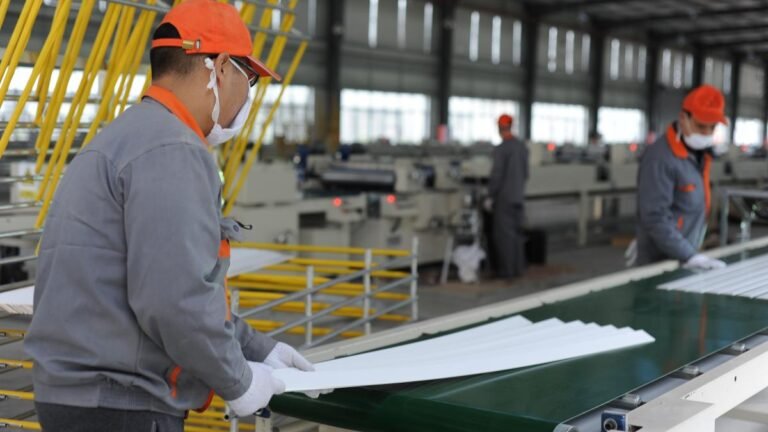
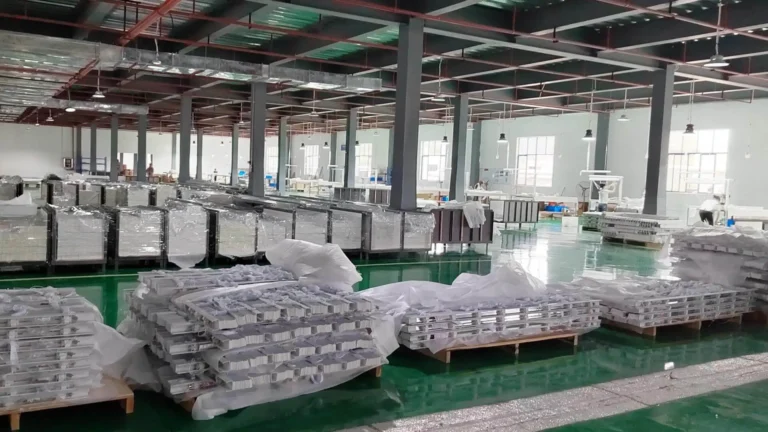
Bright Shutters operates from a 50,000+ m² production facility in Shenzhen with 400+ staff and 12 dedicated production lines across product categories. Since 2010, we have shipped over 11 million units across all product lines to markets in North America, Europe, Southeast Asia, and Australia and New Zealand.
Current annual production capacity by product line:
| Product Line | Annual Capacity |
|---|---|
| Plantation Shutters | 280,000 sets |
| Venetian Blinds | 120,000 sets |
| Window Shades | 80,000 sets |
| Total | 480,000+ sets |
For ANZ trade buyers, the manufacturing scope matters because it determines what you can consolidate into a single container under a single quality relationship.
The Three Material Systems — and When Each Makes Sense
Our plantation shutters are manufactured across three material systems, each with its own production process and primary application:
| Material | Core Advantage | Typical Application |
|---|---|---|
| Timber (Basswood, Paulownia, Ash, Poplar, Pine) | Natural grain aesthetic, superior thermal performance, eligible for lifetime warranty | High-end residential, dry climates |
| PVC (solid and hollow profiles, 200+ extrusion profiles, self-manufactured) | Moisture resistance, cost-effective for large runs, stable colour reproduction | Bathrooms, kitchens, humid environments |
| Aluminium (lightweight structural design, indoor/outdoor rated) | Zero warping, structurally stable, any colour custom finish | Commercial projects, coastal environments, modern residential |
All three material systems are manufactured in-house. We operate 50+ PVC extrusion lines and handle the full timber process — from sawn timber procurement through CNC profiling, finishing, and assembly. This is not a trading arrangement where product lines are sourced from different suppliers and consolidated under one roof.
Special Structure Support
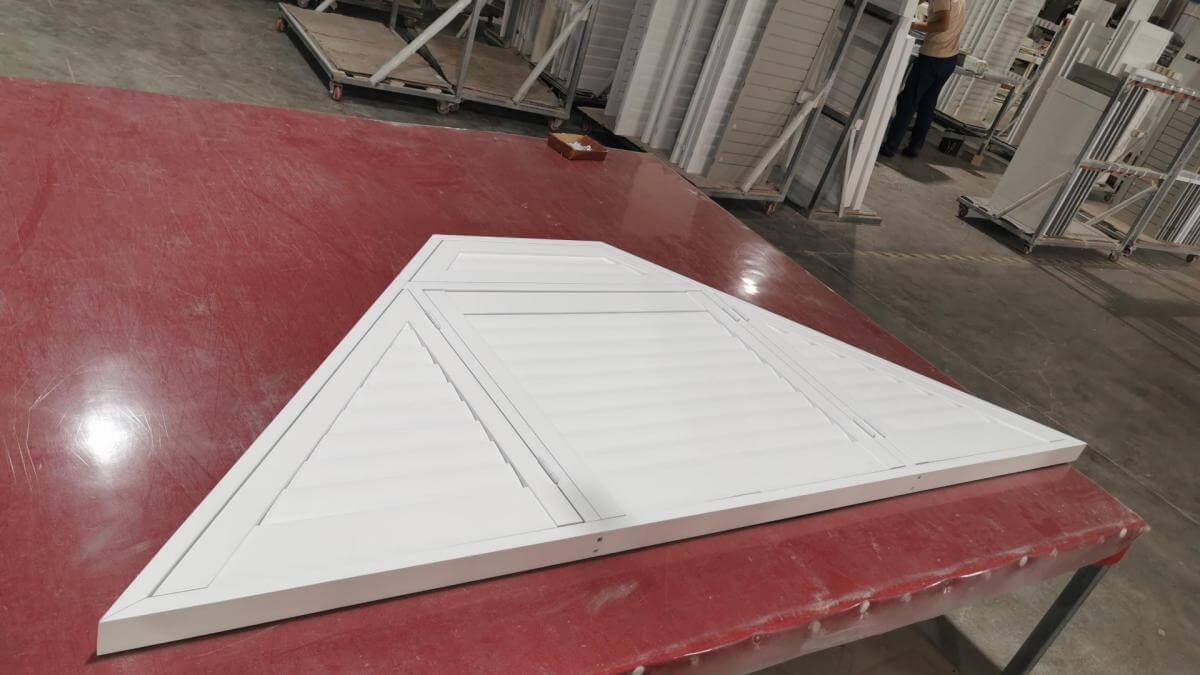
Beyond standard window configurations, we produce plantation shutters for:
- Arch-top windows
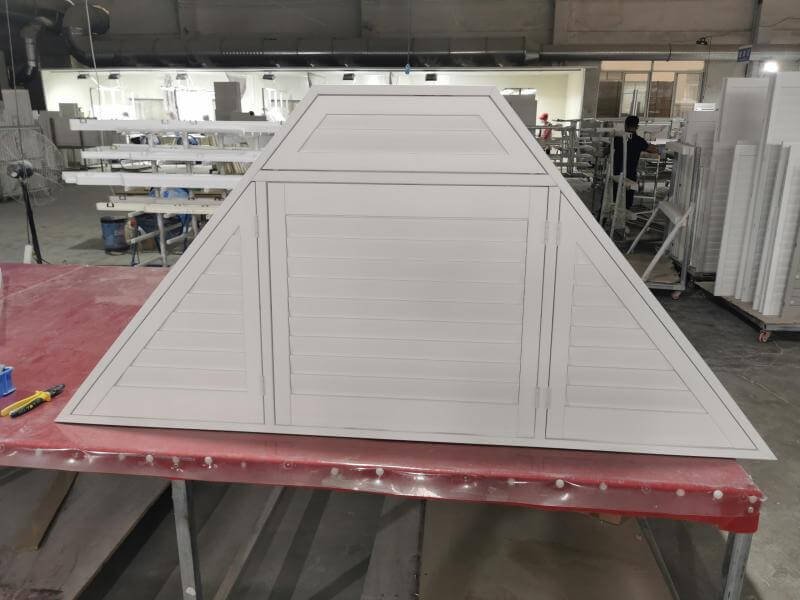
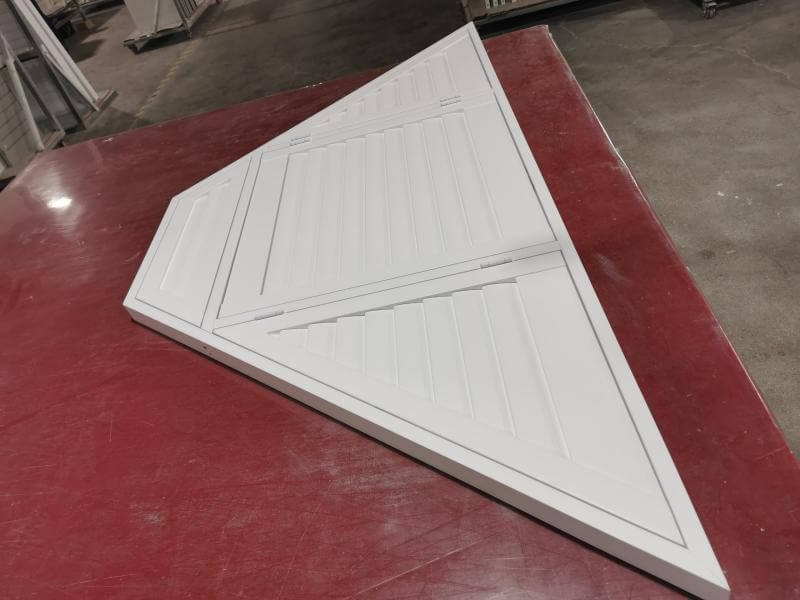
- Trapezoid and angled frames
- Bi-fold and sliding panel configurations
- Solid panel doors
- Commercial-grade hardware systems
For project builders dealing with non-standard window openings — particularly in heritage or architecturally designed residential developments — each of these configurations requires precise on-site measurement drawings before production begins. Our team can advise on measurement requirements during the quoting stage.
For full-category supply across plantation shutters, venetian blinds, and window shades, see our Window Covering Manufacturer Overview.
The Engineering Standards Behind Our Quality Benchmarks
We don't ask trade buyers to accept quality claims without a basis for verification. Below are two of the testable standards that underpin our internal production benchmarks — both of which ANZ buyers can request documentation for when qualifying a new product line.
Surface Coating Adhesion — AS/NZS 1044
For our timber plantation shutters, coating adhesion is validated using the cross-cut test method referenced in AS/NZS 1044:1995. The procedure:
- A 1mm-interval grid is cut into the coated surface using a standard blade
- Standard adhesive tape is applied firmly over the grid and removed sharply
- The result is classified on a 0–5 scale (0 = no detachment; 5 = >65% area loss)
Our internal standard requires Grade 0 or Grade 1 (less than 5% surface detachment). One important procedural note: testing must be conducted no earlier than 48 hours after coating application. Results taken before full cure are not a reliable measure of final adhesion performance — a detail that matters if you're conducting your own verification inspection timing.
UV Yellowing Resistance — ASTM G154
For PVC plantation shutters destined for ANZ markets, our internal benchmarks reference the ASTM G154 accelerated weathering test method (Cycle 1: UV-A 340nm lamp, 60°C irradiation 4h + 50°C condensation 4h, continuous cycling).
Our standard for ANZ-bound PVC product: colour shift after 500 hours of testing must remain at ΔE (CIE 2000) ≤ 1.5. Samples reaching ΔE > 3.0 are not production-approved for ANZ supply. ANZ buyers can request third-party test reports from SGS, Intertek, or Bureau Veritas; reports should identify the specific material batch by reference number so the data remains traceable to production.
These are internal performance benchmarks and testing methodologies we apply to our own production processes. They are not third-party product certifications.
What We'd Tell You to Check, Even If You Weren't Buying From Us
The most consistent risk in China-sourced window coverings isn't that factories produce bad product. It's that the gap between a carefully made pre-production sample and actual production output is never zero — and most buyers have no structured plan to catch that gap before it becomes a shipped container.
Three measures close most of that risk:
-
Require a Pre-Production Sample (PPS), not just a development sample. A PPS is made with production-grade materials on the actual production line, not hand-fabricated in a sample room. It's the only sample that genuinely represents what your container will contain. Specify in your purchase agreement that the PPS — not the development sample — is the approved reference standard.
-
Define tolerances in your purchase contract, not in email. Acceptable colour ΔE, dimensional tolerances, and coating adhesion grade should be written into the agreement with reference to the PPS as the benchmark. "Same as sample" is not an enforceable specification.
-
Schedule an In-Process Inspection (IPI) at the 50% production mark. A final pre-shipment inspection catches problems when it's too late to fix them. An IPI at the halfway point gives enough time to correct issues before the remaining production run is completed.
These three steps convert quality risk from "discovered after arrival" to "managed during production." We apply all three as standard elements of our own production workflow, and we recommend any trade buyer apply them regardless of which manufacturer they're working with.
For a more detailed breakdown of what to evaluate during supplier verification visits, get our Factory QC Evaluation Guide.
Lead Times and Territory Protection for ANZ Trade Partners
Delivery Lead Times from Order Confirmation
| Product Line | Production + Shipping Lead Time |
|---|---|
| Plantation Shutters | 20–30 days |
| Venetian Blinds | 20–30 days |
| Window Shades | 7–15 days |
| Fastest end-to-end (order to delivery) | Approximately 4 weeks |
Full-container mixed loading across product lines is supported. Plantation shutters, venetian blinds, and window shades can be consolidated into a single container — reducing logistics complexity and per-unit freight cost for buyers sourcing across multiple product categories.
Territory Protection Policy
For wholesalers and distributors who intend to develop a regional market seriously, we offer territory protection arrangements. In principle, we work with one authorised trade partner per defined region for Bright Shutters supply.
Territory protection is available to long-term partners who meet agreed performance criteria. Contact our trade team to confirm current regional availability before initiating discussions.
- ANZ wholesalers: Wholesale Partner Enquiry
- Project builders and property developers: Project Builder Enquiry
Frequently Asked Questions
What plantation shutter materials are available for supply to Australia and New Zealand? We manufacture in three material systems: timber (species including Basswood, Paulownia, Ash, Poplar, and FSC-certified Pine), PVC (solid and hollow profiles, self-manufactured via 50+ extrusion lines, 200+ profile options), and aluminium (lightweight, indoor/outdoor rated, fully custom colour). All three are produced in-house at our Shenzhen facility.
What is the minimum order quantity for plantation shutters? We support small-batch replenishment from 10–200 sets alongside standard full-container orders. Contact our trade team for current MOQ structures by product line and destination port.
How do you ensure colour consistency between reorders? Each customer's colour is locked at first production using spectrophotometer measurement (D65 illuminant, 10° observer angle) to create a permanent Lab* master reference. Every subsequent batch is checked against this reference, with a pass threshold of ΔE ≤ 1.0. Any batch exceeding ΔE 1.5 requires colour correction before it ships.
Do you offer territory exclusivity for ANZ distributors? Yes. We apply a territory protection policy that limits authorised supply to one trade partner per defined region. Availability by region varies — contact our trade sales team to confirm current status for your area before discussing partnership terms.