The gap between what a Chinese shutter manufacturer presents and what they actually produce is real — and it is most visible to buyers who have not built a verification process into their sourcing workflow. This guide provides a practical framework for verifying a Chinese shutter manufacturer's capabilities, documentation, and quality systems before committing to a wholesale order.
Why Verification Matters More Than Price Negotiation
Most sourcing conversations with Chinese manufacturers begin with pricing. That's understandable — price is the reason the conversation is happening. But it is the wrong starting point.
A manufacturer who cannot pass a structured capability and documentation review will not become more reliable because you negotiated harder on price. And a quality failure on your first container — warping timber, yellowing PVC, incorrect powder coating DFT on aluminium hardware — will cost more than you saved on the product.
The correct sequence is: verify capability → negotiate terms → confirm price. This article focuses on the verification step.
Stage 1: Documentation Verification (Before You Visit or Sample)
These are the documents you should request in writing before investing time in sampling or factory visits. Suppliers who cannot or will not provide them are giving you information.
FSC Chain of Custody Certificate (for timber products) Request the certificate number and verify it independently at info.fsc.org. Confirm: Active status, correct certificate holder name, product scope covers plantation shutters or the relevant timber product category. Certificates require annual audits — a lapsed certificate can still appear on company brochures.
Material Test Reports (MTR) (for aluminium products) The MTR should confirm alloy (6063), temper state (T5, not T4), and key mechanical properties including yield strength (≥145 MPa) and Vickers hardness (≥60 HV). This document traces back to the aluminium billet supplier and the specific production batch.
PVC Compound Specification Sheet (for PVC products) Should state TiO₂ loading in phr. For ANZ market product: ≥8 phr minimum, ≥10 phr preferred. Request the accompanying TGA (thermogravimetric analysis) batch report as evidence — this is an analytical document, not a self-declaration.
REACH/RoHS Compliance Declaration For any product containing plastics, coatings, or hardware, a supplier-level REACH SVHC declaration (covering the current SVHC candidate list) confirms compliance with European and Australian chemical regulations. This is particularly relevant for PVC compounds, surface coatings, and hardware plating.
ISO 9001 Certificate (if claimed) Verify independently at the certifying body's website (SGS, Bureau Veritas, Intertek, TÜV). ISO 9001 certificates are scope-specific — confirm the scope covers the products you are purchasing.
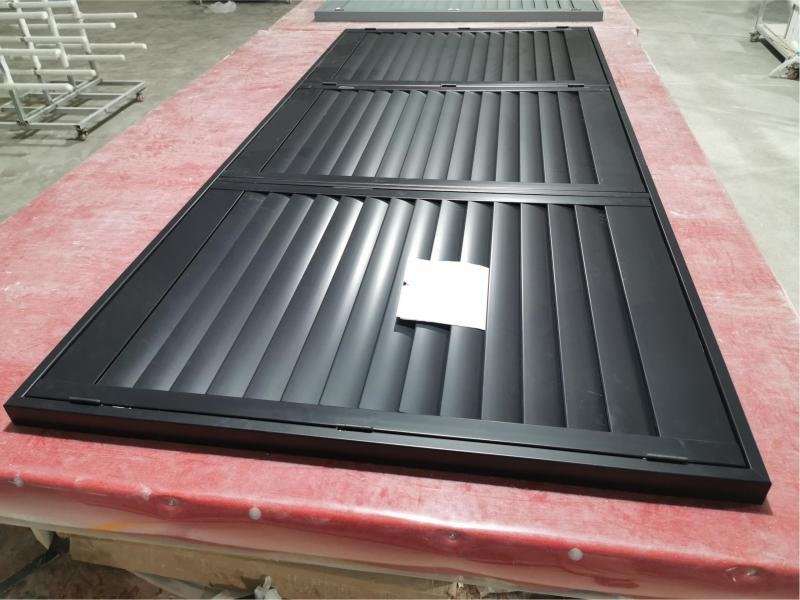
Stage 2: Sample Evaluation
Samples are the starting point for quality assessment, but they require systematic evaluation rather than visual impression.
What a sample tells you:
- Profile geometry and dimensional accuracy
- Surface finish and colour consistency
- Hardware function and operating mechanism quality
- Packaging quality
What a sample does not tell you:
- Whether mass production will match the sample quality
- Whether the PVC compound TiO₂ loading is correct
- Whether timber moisture content is at specification
- Whether the powder coating DFT meets specification
For each of these invisible variables, documentation is the only verification mechanism at the sample stage.
Request a Pre-Production Sample (PPS) — not just an initial development sample. A PPS is specifically defined as a unit manufactured using:
- Production-line raw materials (not sample-workshop stock)
- Production-line equipment and processes
- Production-line assembly personnel
Define in your purchase order that the PPS is the contractual quality baseline. The production run must match the PPS on all specified parameters. This single contractual term changes the supplier's incentive structure.
Stage 3: Factory Audit (Direct or Third-Party)
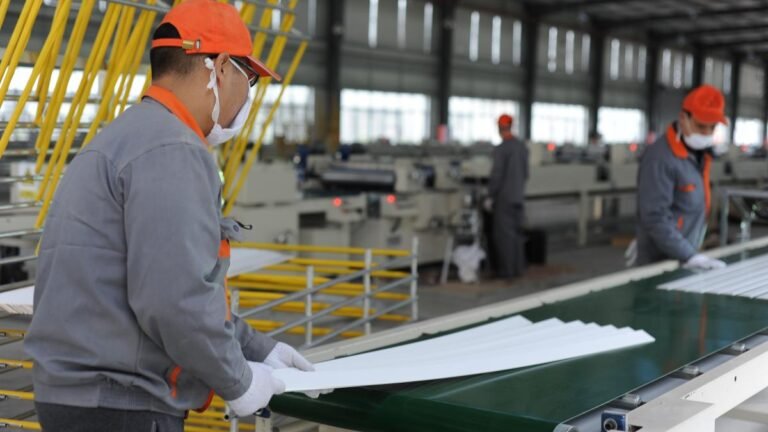
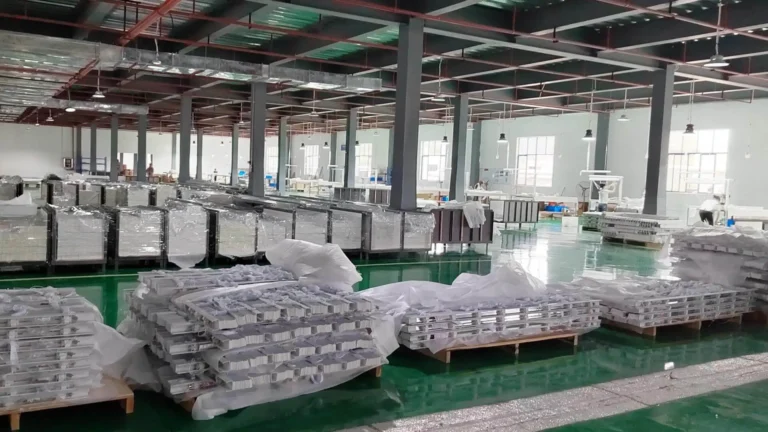
A factory audit — whether conducted directly or through a third-party inspection agency (SGS, Bureau Veritas, QIMA, or similar) — provides visibility into process controls that no document review or sample evaluation can replicate.
The most important inspection timing principle: verify after product is packed into boxes, but before the container is loaded and sealed.
This is a point that many buyers miss. A final inspection conducted before packing — which is the most common timing for factory QC reports — misses all damage and quality issues that occur during the packing process: surface scratches from handling, bent louvres from stacking pressure, mismatched sets in the same carton.
The correct timing is: product packed → boxes sealed → 10% of cartons randomly opened for inspection → container loaded after inspection passes. Factories that resist this timing should be treated as suppliers with something to conceal.
Key process checkpoints during an audit:
Incoming Material Control (IQC)
- Timber: is cross-section moisture testing being performed, or only surface pin-meter reading?
- PVC compound: are TGA batch reports being received and filed with each delivery?
- Aluminium: are MTRs being received and filed?
- Hardware: are incoming hardware batches being sampled for dimensional accuracy and finish quality?
In-Process Control (IPQC)
- Is slat thickness measured at calibrated intervals during extrusion or machining, or only checked visually?
- Is the colour management system active — are colour readings (Lab* under D65) being taken and compared against the master standard for each production batch?
- Is hardware torque being measured during assembly, or assembled by feel?
Finished Goods (FQC)
- Is there a documented list of inspection criteria with accept/reject thresholds?
- Is the inspection sample size defined (AQL level)?
- Are rejection records available for review — what gets rejected and at what rate?
The rejection record question is particularly revealing. A factory that reports 0% rejection at FQC is almost certainly not inspecting rigorously. Real QC systems catch defects; the question is whether they are catching them before or after the product reaches you.
Stage 4: In-Process Inspection During Your First Order
For your first order with any new Chinese manufacturer, arrange a third-party In-Process Inspection (IPI) at approximately 50% of production completion.
At 50%, the inspection can identify:
- Colour deviation from the PPS
- Dimensional non-conformances (slat width, frame dimensions, hardware fit)
- Surface defect patterns (scratches, coating inconsistencies)
- Hardware quality issues (hinge fit, tilt rod operation)
At 50%, there is still half the production run remaining — enough time to implement corrections before the entire batch is completed. This is the window that makes IPI valuable. A final inspection at 100% can identify problems but not prevent them.
Third-party inspection costs for a plantation shutter container typically range from AUD 800–1,500 for a one-day IPI report, depending on inspector location and scope. This is approximately 1.5–3% of a typical container value — the lowest-cost insurance available for your first-order quality risk.
Supplier Verification: Red Flags Summary
These are the response patterns that warrant serious caution:
| Response | Implication |
|---|---|
| Cannot provide FSC certificate number for independent verification | FSC claim may not be current or valid |
| Cannot provide TGA documentation for PVC compound TiO₂ loading | Cannot verify ANZ UV specification compliance |
| Resists Pre-Production Sample request | May not have a distinct sample production workflow |
| Resists IPI access at 50% production | Process control or quality confidence concern |
| Reports zero FQC rejection rate | Inspection rigour questionable |
| Inspection timing only available before packing | Misses packing-process damage |
| ISO 9001 certificate cannot be independently verified | Certificate authenticity questionable |
Bright Shutters' Verification Process for New Buyers
At Bright Shutters, we recognise that first-order trust is built through transparency, not assertion. Our standard onboarding process for new ANZ wholesale accounts includes:
- FSC CoC certificate verification link (current, active status)
- PVC compound TGA batch reports provided with first order confirmation
- Pre-Production Sample at no additional charge for orders above threshold
- Third-party IPI access welcomed and facilitated — we provide audit scheduling support through our production planning team
- Full post-shipment inspection report included with shipping documents
Our 50,000m² Shenzhen facility has supplied ANZ wholesale accounts since 2010. We operate a regional exclusivity model — one account per territory — so our commercial interest in your market success is direct and sustained.
Start the verification process →
Key Takeaways
- Verify before negotiating on price — a failed container costs more than the price saving
- Request FSC, MTR, PVC compound TGA, and REACH declarations before sampling or visiting
- Define the Pre-Production Sample as the contractual quality baseline in your purchase order
- Schedule In-Process Inspection at 50% production — the only point where corrections are still possible
- Require packed-product inspection timing — before container loading, after cartons are sealed
- Treat zero rejection rates and IPI resistance as significant red flags
Frequently Asked Questions
How much does a third-party factory inspection cost in China?
A standard one-day In-Process Inspection report from agencies such as QIMA, Bureau Veritas, or SGS typically costs USD 250–400 per man-day for factories in the Shenzhen/Guangdong region. A plantation shutter container IPI usually requires one to two inspector days, putting the cost at AUD 500–1,200 — approximately 1.5–2.5% of a typical container value.
What is the difference between a Pre-Production Sample and a regular sample?
A Pre-Production Sample (PPS) is produced using actual production-line materials, equipment, and personnel — not a dedicated sample workshop. It is specifically intended to represent what mass production will deliver. A regular or development sample may be produced with higher-grade materials or more individual attention than the production line applies. Specifying the PPS as the contractual quality standard closes this gap.
Should I visit the factory in person before my first order?
A personal factory visit is valuable for evaluating scale, process maturity, and relationship quality — but it is not a substitute for document verification and third-party inspection during production. If a personal visit is not practical for a first order, a structured third-party audit (documentation review + facility audit + IPI) provides comparable visibility at lower cost and without travel time.
What documents should I receive with every shipment from China?
Minimum documentation for a plantation shutter shipment to ANZ: commercial invoice, packing list, bill of lading, FSC transaction certificate (for timber products), certificate of origin, ISPM 15 confirmation for timber packaging, and any product-specific compliance declarations (REACH, RoHS). Request these in the purchase order terms rather than chasing them after shipment.