Most quality problems in plantation shutters don't show up at the factory. They show up 12 to 18 months after installation — a PVC louvre that starts yellowing, a lock-fit that develops a light gap down the middle, an aluminium shutter that won't hold its tilt position anymore. By the time the complaint reaches the importer, the container has long since cleared customs and the original inspection report is sitting in a folder marked "passed."
This is the core challenge in sourcing plantation shutters suppliers from China: the things that separate a reliable factory from a risky one are rarely visible in a standard audit. Capacity, certificates, and a clean showroom tell you very little about whether a supplier controls wall-thickness tolerance on the extrusion line or checks core moisture content before timber goes into production. This guide walks through what actually predicts long-term consistency — and what to ask for before you commit to a 20GP order.
Why Standard Factory Audits Miss the Real Risks
A typical supplier visit covers floor space, machine count, and finished-goods samples on display. These are useful baseline checks, but they don't tell you much about process discipline — the in-line testing frequency, the raw material specification tolerances, the documentation trail that exists (or doesn't) behind each batch.
For wholesale buyers evaluating a China plantation shutters factory, the more useful question isn't "how big is the facility" but "what happens when a measurement drifts 0.2mm out of spec — does anyone catch it before the batch ships?" That's the distinction this checklist is built around.
Material & Process Control: What Separates Reliable Suppliers from the Rest
PVC Profile Tolerance & Lock-Fit Reliability
One of the more delayed-onset failure modes in PVC plantation shutters is wall-thickness drift during extrusion. A finished panel can pass outgoing inspection cleanly, and the fault only surfaces 12–18 months later as a "light gap when closed" complaint from the end customer.
The root cause is typically a wall-thickness tolerance that has drifted from a design spec of ±0.1mm out to ±0.3mm. That 0.2mm difference doesn't affect appearance at the point of shipping. But after the louvre goes through repeated thermal expansion and contraction — factory, sea freight, warehouse, installed window — the cumulative dimensional drift can widen the lock-fit clearance from a designed 0.2mm to over 0.5mm, producing a visible gap down the centre when the shutter is closed.
Suppliers who control this risk typically run in-line wall-thickness checks every 30 minutes on the extrusion line, rather than the more common 4-hour interval. It's a simple process control question worth asking directly: how often is wall thickness measured during extrusion, and is there a record?
For UV stability specifically, ASTM G154 is the relevant test standard. It uses a UV-A 340nm cyclical exposure (60°C radiation / 50°C condensation), and the result is read as colour delta (ΔE, CIE 2000 formula) after 500 hours. A ΔE of 1.5 or under after 500 hours is considered good performance; anything above 3.0 is a fail. A supplier who can produce a recent third-party ASTM G154 report — ideally from SGS, Intertek, or BV — with the batch number noted on it, is signalling a level of formulation control that's worth more than a verbal assurance about UV resistance.
Timber Moisture Content & Shipping Stability
Timber plantation shutters carry a specific risk that doesn't always show up in standard incoming inspection: case hardening. This happens when the drying cycle is compressed or the temperature ramp isn't staged correctly. The result is a panel where the outer layer dries and locks in its dimensions while the core retains a much higher moisture content — sometimes as high as 14%, even when a surface reading with a handheld pin-type moisture meter shows a passing 11%.
The problem is that standard moisture meters only read the outer 5–8mm of the timber. They don't reach the core. Once the shipment is loaded and exposed to temperature swings inside the container during transit, the moisture differential drives stress release from the inside out — and that's what produces the bow or warp that shows up on arrival, often concentrated in the centre panels of a batch.
A more reliable incoming inspection protocol includes a cross-section check: cutting a sample plank in half and measuring moisture content at both the surface and the core, with an acceptable differential capped at around 2%. If a supplier only quotes surface moisture readings, ask whether core moisture is checked separately — and how.
Aluminium Temper Grade — A Detail Most Buyers Never Check
Aluminium plantation shutters are typically specified in 6063 alloy, but the temper state (T5 vs T4) makes a measurable difference in long-term performance that's completely invisible on inspection. T5 (artificially aged after extrusion) has a yield strength of around 145 MPa; T4 (naturally aged) comes in at roughly 110 MPa.
That 35 MPa gap matters specifically at the louvre pivot points, which carry a cyclical bending moment every time the tilt mechanism is operated. Under T4-grade material, the pivot hole tends to enlarge through micro-plastic deformation after roughly 3–5 years of normal use, leading to louvres that won't hold their tilt position in the middle range — sometimes described as the louvre "dropping."
Because T4 and T5 are visually identical and the price difference is modest (roughly 8%), temper substitution is a real risk in this category. The only reliable verification is a hardness test report: T5-grade material should test at ≥60 HV (Vickers hardness); T4 typically comes in under 55 HV. This is a reasonable document to request before a first bulk order, not after a complaint.
Third-Party Test Reports Worth Requesting
Beyond the material-specific checks above, a small set of standardised test reports gives a useful, comparable signal across suppliers:
| Standard | What It Verifies | Recommended Threshold |
|---|---|---|
| ASTM B117 | Salt-spray corrosion resistance for metal hardware and powder-coated finishes | 500 hrs minimum (no red rust); 1,000 hrs for coastal markets |
| ASTM G154 | UV resistance / colour stability for PVC formulations | ΔE ≤1.5 after 500 hrs (CIE 2000) |
| ISTA 2A | Export packaging performance under simulated transport vibration and shock | Passed full cycle without product damage on re-inspection |
None of these reports are exotic or hard for an established supplier to produce. If a factory can't locate a recent version of any of these for a relevant product line, that's worth treating as a signal in itself.
Sample Approval Isn't the Same as Bulk Production Quality
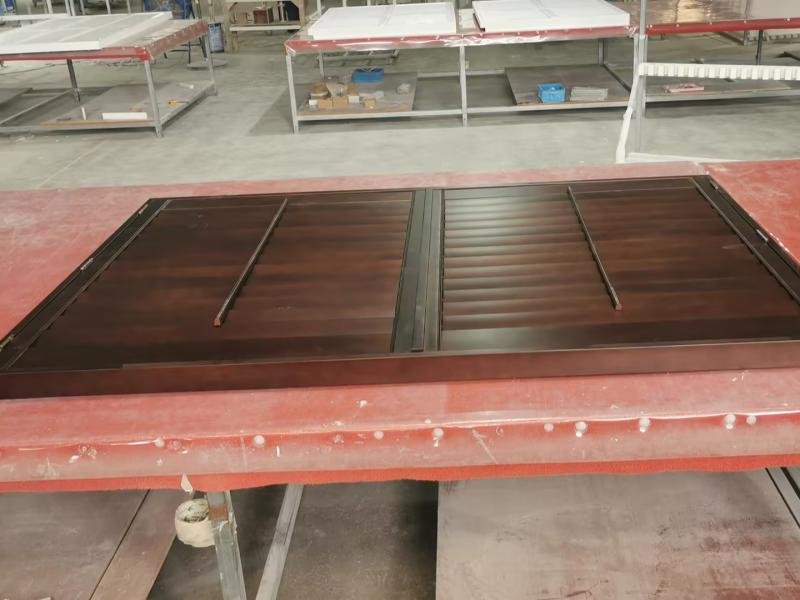
This is one of the most common — and most avoidable — gaps in international sourcing. A sample is typically hand-finished by a skilled technician. Bulk production runs on a line, at speed, with normal process variance. The quality drift between the two is real, and it doesn't close on its own simply because the sample looked good.
There are three practical steps that meaningfully reduce this risk:
- Request a Pre-Production Sample (PPS), not just the original development sample. A PPS is made using actual bulk-production materials and tooling, which makes it a far better predictor of what the container will actually contain.
- Write the PPS into the contract as the quality reference, with a documented tolerance table attached, rather than leaving "matches the sample" as a vague verbal standard.
- Schedule an in-process inspection (IPI) at roughly 50% production completion for first-time bulk orders. At that point there's still time to correct a drifting batch — which isn't true once 100% of the order is finished and packed.
Shipping & Export Packaging: Where Quality Often Breaks Down After the Factory
A supplier can control every variable inside the factory and still lose quality between the production line and the customer's warehouse if export packaging and shipping protocols aren't treated as seriously as production itself.
Container condensation is a frequently underestimated risk for timber products. Sea freight containers can experience an internal temperature swing of up to 20°C as they cross different climate zones, and the resulting condensation on the container's interior steel walls can drip onto cargo and cause mould damage — particularly when desiccant is placed only at the base of the container rather than distributed through each cargo layer. A reasonable benchmark is roughly 1kg of coarse-grain silica desiccant per 2m³ of container volume, layered through the load rather than concentrated at the bottom.
Inspection timing matters more than most buyers realise. The correct sequence is: finished goods inspection (FQC) → packing → a post-packing spot check (commonly 10% of cartons opened and re-checked) → final Pre-Shipment Inspection (PSI) report. A common but flawed shortcut is running the PSI before packing is complete, which misses damage introduced during the packing process itself — knocks, crushing, or poor stacking that a "passed" FQC report would never capture.
Colour verification under inconsistent lighting is a recurring source of disputes that has nothing to do with the product itself. Factory lighting is typically cool white fluorescent (around 4000K), while standard daylight reference is D65 (6500K). For whites and off-whites especially, two panels that look identical under factory lighting can show a ΔE of 2.5–3.0 under D65 — a difference visible to the naked eye. The reliable fix is straightforward: colour acceptance should happen under a D65 standard light box (Ra >90 colour rendering index), checked against a retained Colour Master Sample, not under whatever lighting happens to be in the inspection room that day.
A Quick Reference Checklist
| Check | What to Ask For |
|---|---|
| PVC wall-thickness control | In-line measurement frequency; recent ASTM G154 UV report with batch number |
| Timber moisture content | Core moisture verification method (not just surface meter readings) |
| Aluminium temper grade | Hardness test report confirming T5 (≥60 HV) vs T4 |
| Hardware corrosion resistance | ASTM B117 salt-spray report (500hrs minimum, 1,000hrs for coastal markets) |
| Export packaging integrity | ISTA 2A transport simulation report |
| Sample-to-bulk consistency | Pre-Production Sample (PPS) + documented tolerance table in contract |
| First bulk order quality control | Mid-production in-process inspection (IPI) at ~50% completion |
| Shipping damage prevention | Desiccant distribution method for timber cargo |
| Inspection sequencing | Confirm PSI happens after packing, not before |
| Colour consistency | D65 light box used for acceptance, not factory lighting |
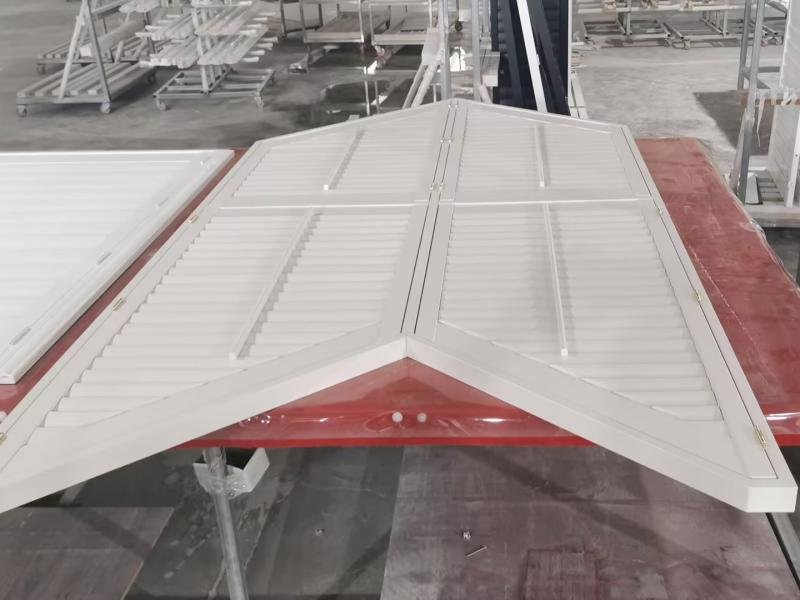
Where Bright Shutters Fits
Bright Shutters operates a 50,000㎡+ production facility in Shenzhen with full in-house manufacturing across PVC (200+ extruded profiles), timber, and 6063-T5 aluminium plantation shutters, supported by a six-stage QC process that includes UV anti-yellowing and moisture-resistance structural testing before goods are packed. Standard lead time for plantation shutters is 25–35 days on a 20GP mixed-container order, which can combine plantation shutters with venetian blinds and window shades from the same factory.
Bright Shutters works on a regional exclusivity model — one authorised wholesale partner per territory in Australia and New Zealand — and offers 3–7 day sampling ahead of a full container commitment. For importers who want to apply the checklist above against an actual supplier, that's a reasonable place to start the conversation.
FAQ
What's the minimum order quantity for factory-direct plantation shutters? Most factory-direct suppliers set MOQ at one 20-foot container (20GP). Plantation shutters, venetian blinds, and window shades can typically be combined in a single mixed container.
How long does production take for a 20GP plantation shutters order? Standard lead time is generally 25–35 days for plantation shutters once a 20GP mixed-container order is confirmed, separate from sampling time.
What test report should I request for a coastal or high-humidity market? For metal hardware, an ASTM B117 salt-spray report rated to at least 1,000 hours is the relevant benchmark for coastal exposure. For PVC components, request an ASTM G154 UV ageing report.
Does a good sample guarantee the bulk container will match? Not on its own. Samples are typically hand-finished, while bulk runs on a production line. A Pre-Production Sample plus a mid-production in-process inspection meaningfully closes that gap.