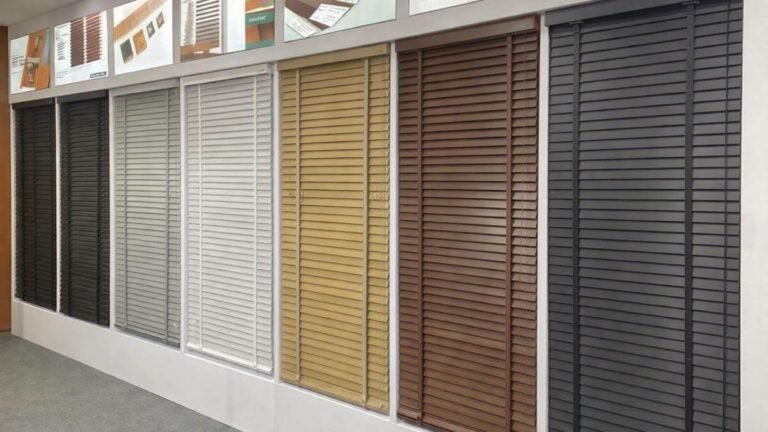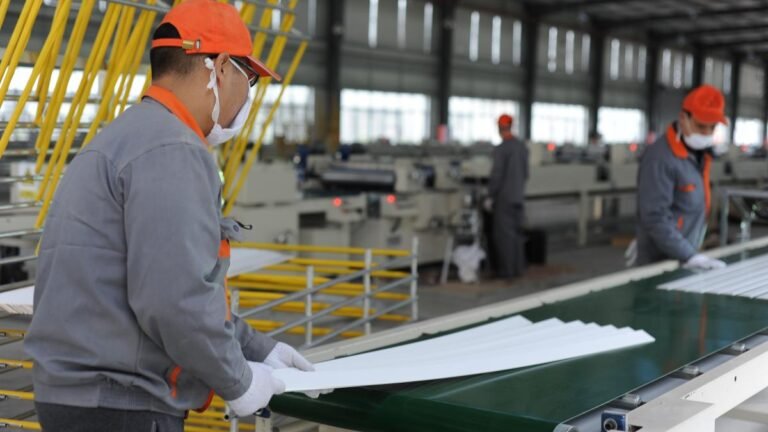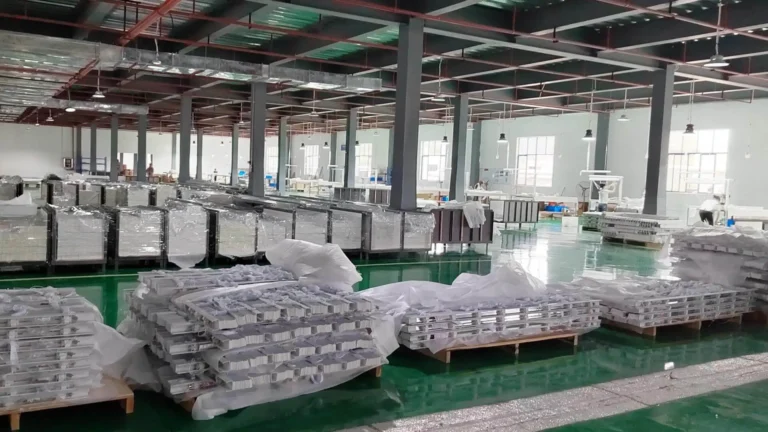
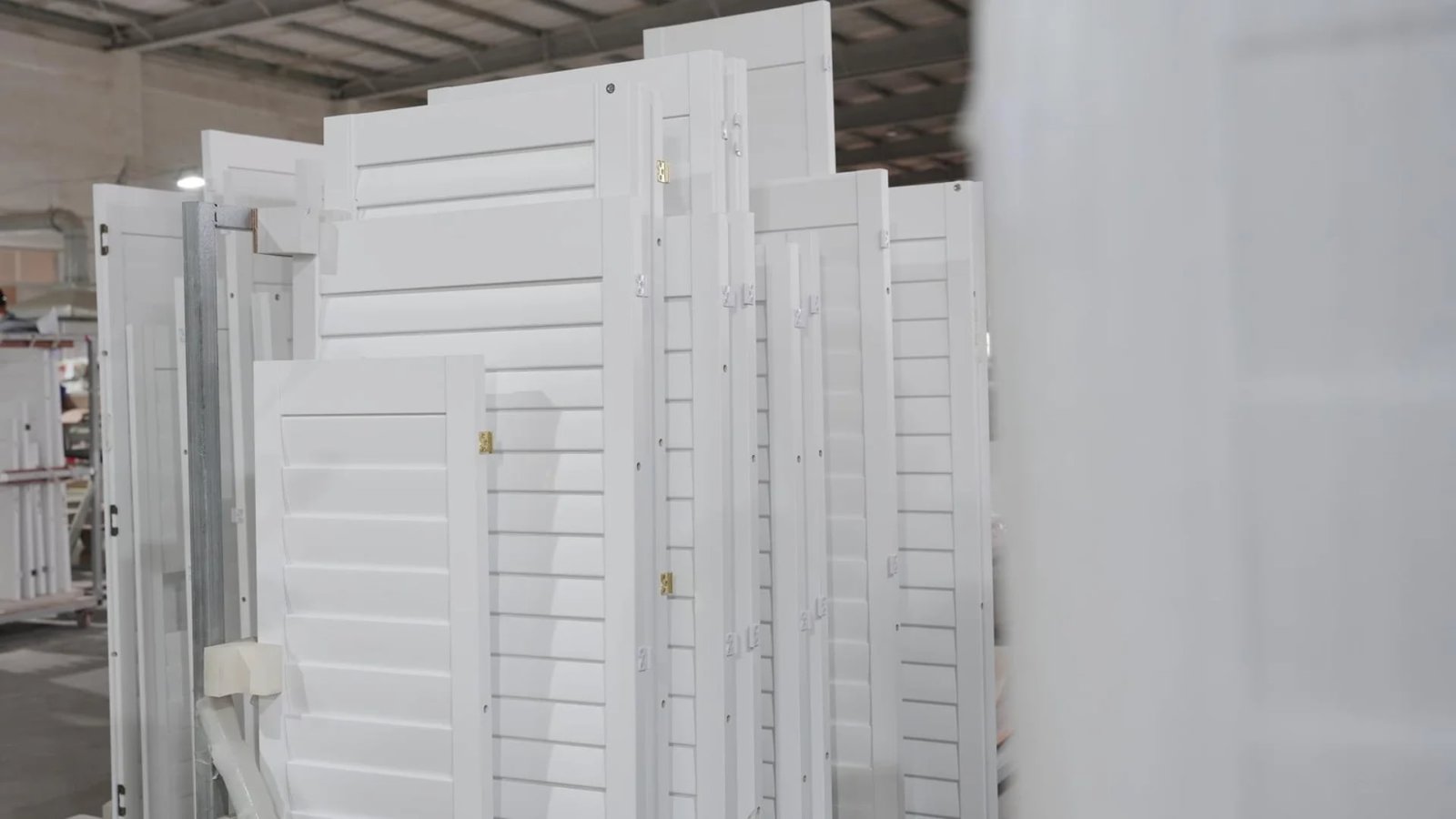
China produces roughly 70% of the world's window coverings by volume, according to industry research compiled by Zhongyan Puhua (中研普华). That scale is real — but production volume alone tells a buyer almost nothing about whether a specific factory will deliver consistent quality, on time, container after container. For wholesale buyers researching "plantation shutter manufacturers," the harder question isn't who makes shutters, but which manufacturers actually control the variables that determine long-term product reliability.
This guide walks through the technical checkpoints that separate a dependable factory partner from a sourcing risk — covering material control, quality systems, the sample-to-bulk quality gap, and shipping considerations specific to plantation shutters.
Why "Manufacturer" Doesn't Always Mean Full Control
Not every company that calls itself a plantation shutter manufacturer controls the same parts of the production chain. Three common models exist in the market:
- Pure OEM assembly — the factory assembles components sourced from third parties (profiles, hardware, coatings) with limited visibility into upstream quality.
- ODM with partial integration — the factory designs and assembles, but still outsources key materials such as PVC profiles or timber processing.
- Vertically integrated manufacturing — the factory controls raw material processing in-house, from PVC extrusion or raw log processing through to finished assembly.
The distinction matters because most of the quality issues that surface 12–18 months after installation trace back to a material or process variable the factory didn't directly control. Asking a prospective supplier which parts of the chain they actually own is a more useful question than asking about their finished-product specifications alone.
Material Control: The First Checkpoint
PVC Profile Extrusion
PVC plantation shutters depend heavily on extrusion consistency, and one of the more common failure modes in this category is delayed: shutters pass inspection at the factory, ship, and only 12–18 months later does a buyer see complaints about light leaking through the centre of a closed louvre.
The root cause is usually extrusion wall-thickness drift — design tolerance is typically ±0.1mm, but on a poorly monitored line this can widen to ±0.3mm. That difference doesn't show up visually at the factory. It becomes a problem after the product experiences repeated thermal expansion and contraction across the shipping and installation environment, which gradually widens the lock-fit clearance between louvres from a design target of around 0.2mm to over 0.5mm — at which point light leakage becomes visible when the louvres are closed.
Manufacturers who monitor wall thickness in-line every 30 minutes (rather than every 4 hours, which is a more common baseline) catch this drift before it ships. It's a reasonable, specific question to ask a prospective supplier: how frequently is extrusion wall thickness checked, and is it checked in-line or only at the finished-product stage?
This kind of control is realistically only available to factories that extrude PVC profiles in-house. A manufacturer sourcing profiles from a third-party extruder has limited ability to monitor — let alone correct — this variable in real time.
Timber Sourcing and Moisture Management
For timber plantation shutters, the equivalent checkpoint is moisture content verification. A handheld pin-type moisture meter — the tool most commonly used for quick on-site checks — only measures moisture at a depth of roughly 5–8mm below the surface (per the principles behind ASTM D4442). It does not detect core moisture.
This matters because timber can pass a surface moisture check while the core still holds significantly higher moisture content, particularly if the drying cycle was shortened to meet a deadline. The mismatch only resolves itself in transit, as the timber's surface and core moisture levels equalise inside a sea container — and the resulting internal stress is what produces warping after delivery, not before it.
A more rigorous incoming-material inspection method involves cross-sectioning a sample batch and measuring both surface and core moisture separately, with a target difference of 2% or less between the two readings. Asking a supplier whether their incoming inspection process includes cross-section moisture verification — not just surface readings — is a fair way to gauge how seriously they treat this risk.
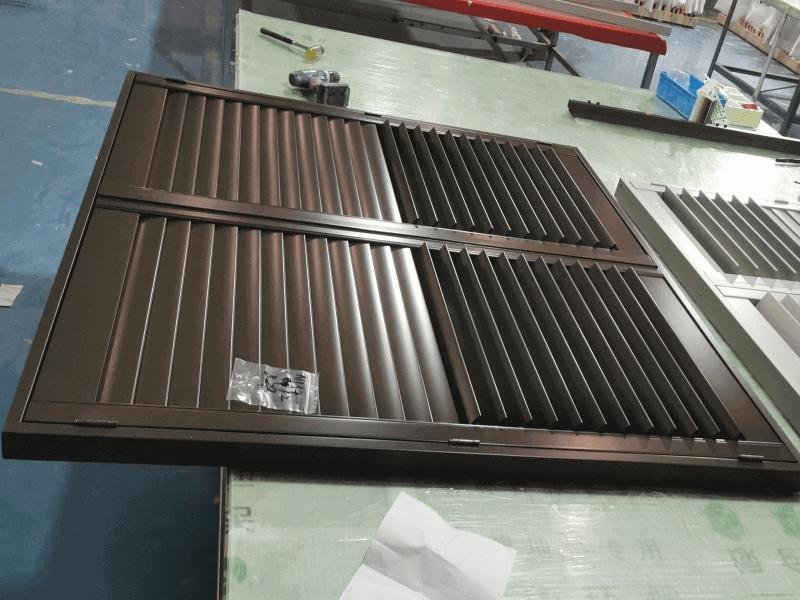
Quality Control Systems Worth Asking About
Beyond materials, the structure of a factory's QC process tells you a lot about how problems get caught — or missed.
Pre-shipment inspection (PSI) timing is one detail buyers frequently overlook. The correct timing is after 100% of the goods are packed into their shipping cartons, but before the container is sealed. A common shortcut — inspecting only at the finished-goods stage, before packing — misses damage introduced during the packing process itself: knocks, crushing, or irregular stacking. Industry experience suggests that when the packing stage isn't supervised after FQC, around 3% of products can arrive at port already damaged, even when the third-party inspection report on file says "passed." Ask a supplier directly: does your PSI happen after full carton packing, or only at the finished-goods stage?
Hardware corrosion testing is the relevant standard for any metal components — hinges, brackets, tilt mechanisms — destined for coastal markets. ASTM B117 salt spray testing (5% NaCl solution, 35°C, continuous spray) is the recognised method, graded against ASTM D610 (rust rating) and ASTM D714 (blistering). For coastal ANZ projects, 500 hours without red rust is generally treated as a minimum threshold, with 1,000 hours considered the stronger benchmark for premium coastal applications.
Transit damage testing under ISTA 2A simulates the vibration and shock a container actually experiences across trucking, sea freight, and warehousing — including randomised vibration across a 4Hz–100Hz range and multiple drop-shock tests calibrated to product weight. Packaging that hasn't been validated against this standard is, in effect, untested for real-world transit conditions.
A factory with a dedicated QC team — separate from the production line and reporting independently — combined with documented testing against these standards, is a meaningfully different risk profile than one relying solely on a final visual check before loading.
The Sample-to-Bulk Quality Gap (and How to Close It)
One of the most consistent issues in international sourcing is the gap between sample quality and bulk production quality. Samples are typically hand-finished with extra care; bulk production runs on a production line under throughput pressure. This gap is preventable, but it doesn't close on its own.
Three practical safeguards address this directly:
- Request a Pre-Production Sample (PPS), not just a development sample. A PPS is made using the actual bulk-production materials and tooling, which makes it a far more reliable indicator of what a full container will actually look like.
- Write the PPS into the contract as the quality reference, with a documented tolerance table attached, rather than relying on a verbal agreement about "matching the sample."
- Schedule an In-Process Inspection (IPI) at roughly 50% production completion for first-time bulk orders. This is late enough to reflect real production conditions, but early enough that corrections are still possible before the full run is complete.
None of these measures eliminate the sample-to-bulk gap entirely, but together they shift the risk from "discovered after it's too late to fix" to "caught while there's still time to correct it."
Shipping & Packaging: The Overlooked Risk Window
Quality control inside the factory is only half the picture — a meaningful share of claims on timber products originate after the goods leave the factory floor, during the ocean transit itself.
Condensation inside sea containers is a frequently underestimated cause of mould damage on timber shutters. Containers loaded in warm, humid conditions can experience temperature swings of up to 20°C across a long ocean voyage, as the route passes through different climate zones. Warm, moisture-laden air inside the container condenses on the cooler steel walls and drips down onto cargo stacked below.
The standard preventive measure is distributing silica gel desiccant — roughly 1kg of coarse-grain desiccant per 2m³ of container volume — throughout the cargo layers, not just at the base of the container. This is a low-cost measure relative to the damage it prevents; a single mould-related claim on a timber shipment typically costs far more than the desiccant required to prevent it across an entire container run.
For buyers sourcing timber plantation shutters specifically, it's worth asking a prospective manufacturer directly whether desiccant placement is standard practice across all timber pallets, or only applied on request.
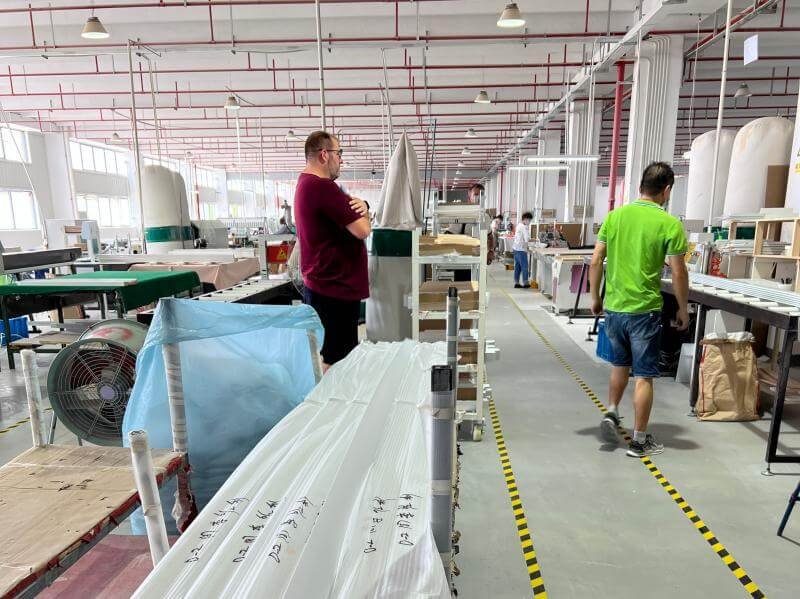
Regional Standards Buyers Should Confirm
Cordless and child-safety compliance has become a stricter baseline globally. ANSI/WCMA A100.1-2022, the North American window covering safety standard, now requires the elimination of accessible operating cords on custom window coverings. While Australia and New Zealand don't mandate an identical standard, the Australian Competition and Consumer Commission (ACCC) enforces cord-safety requirements for blinds and shades supplied into the consumer market under Consumer Protection Notice 2014 No. 7 — covering maximum cord loop diameter, cord-to-floor clearance, and the availability of cord-safety devices.
Plantation shutters themselves typically operate via louvre tilt rods rather than pull cords, so this requirement is more directly relevant to venetian blinds and roller shades supplied alongside shutters in a mixed container. Buyers reselling into ANZ retail channels should confirm that any corded products in an order — even if shutters themselves aren't affected — carry a compliance statement for the relevant market.
A Practical Checklist Before You Commit to a Container
Before placing a bulk order with a plantation shutter manufacturer, it's worth confirming the following in writing:
- A Pre-Production Sample (PPS) — not a development sample — is available and written into the contract as the quality reference
- Extrusion wall-thickness monitoring frequency for PVC profiles (in-line, not just at finished-goods stage)
- Core moisture verification method for timber components (cross-section testing, not just surface pin-meter readings)
- Salt spray test reports (ASTM B117) for any coastal-bound metal hardware, with the tested coating thickness specified
- PSI timing — confirmed to occur after full carton packing, before container sealing
- Desiccant protocol for timber shipments, distributed through cargo layers rather than only at the container base
- Cord-safety compliance documentation for any corded blinds or shades included in a mixed container destined for ANZ retail
A manufacturer that can answer each of these specifically — rather than with general assurances — is generally a more reliable long-term sourcing partner than one judged on price or catalogue breadth alone.
Frequently Asked Questions
What's the difference between OEM and a fully vertically integrated plantation shutter manufacturer? An OEM assembler typically sources key materials like PVC profiles or processed timber from third parties. A vertically integrated manufacturer controls those processes in-house, allowing tighter control over variables like extrusion tolerance and moisture content.
How can I verify a manufacturer's quality control claims before placing a bulk order? Ask for specific documentation: salt spray test reports (ASTM B117), PSI timing in the production workflow, and moisture testing methodology — not general statements about "strict QC."
What sample should I request — a development sample or a pre-production sample (PPS)? Request a PPS. It's made with actual bulk-production materials and tooling, making it a far more reliable predictor of full-container quality than a hand-finished development sample.
What shipping risks are specific to timber plantation shutters? Container condensation from temperature swings during ocean transit can cause mould damage if desiccant isn't distributed through all cargo layers — not just placed at the container base.