
Every year, dozens of Australian and New Zealand distributors place their first order with a Chinese shutter factory. Most of them spend the first three months making preventable mistakes — the wrong MOQ structure, missing certifications, miscommunicated sizing, a shipment held at customs. A smaller number get it right from the start because they did the groundwork before they signed anything.
This guide is written from the factory side of that transaction. We have been supplying Australian and New Zealand distributors for over 15 years, and we have seen both sides of every common problem. What follows is the process we wish every new importer knew before their first enquiry.
Step 1: Define Your Product Requirements Before You Contact Any Factory
The single biggest mistake first-time importers make is approaching factories with vague requirements — "I want plantation shutters" — and expecting the factory to configure the right product for them. A factory's job is to manufacture what you specify. Your job is to know what you need.
Before you send a single enquiry, document the following:
1. Material. PVC, solid wood (which species), or aluminium? If you are unsure, read our comparison of PVC vs Wood vs Aluminium Plantation Shutters first.
2. Louvre width. The most common widths in the AU market are 63mm and 89mm. 47mm is used in heritage and period properties. 76mm exists but has a smaller market. Pick one or two to start.
3. Size range. What are the most common window sizes in your target market? Australian standard window heights cluster around 900mm, 1,200mm, 1,500mm, and 1,800mm. Width varies more. Define your core 8 to 12 size SKUs — you do not need to carry every size from the start.
4. Colours. White (Vivid White / Antique White) accounts for approximately 70% of AU shutter sales. Start with 2 to 3 whites and one grey or charcoal. Custom colours come later once you have sales velocity.
5. Target retail price point. Know what your local market will pay before you negotiate with a factory. Work backwards: target retail price × (1 minus your desired margin) = maximum landed cost per panel. Landed cost includes FOB price, freight, customs duty (5% for most shutter categories under AU tariff), and your inland delivery.
Pro Tip: AU import duty on wooden shutters typically falls under HS code 9404.90 or 4418.79 depending on the product configuration. Check with your customs broker before finalising your cost model — the difference between classifications can be 5 percentage points of landed cost.
Step 2: Find and Vet a Factory — What Actually Matters
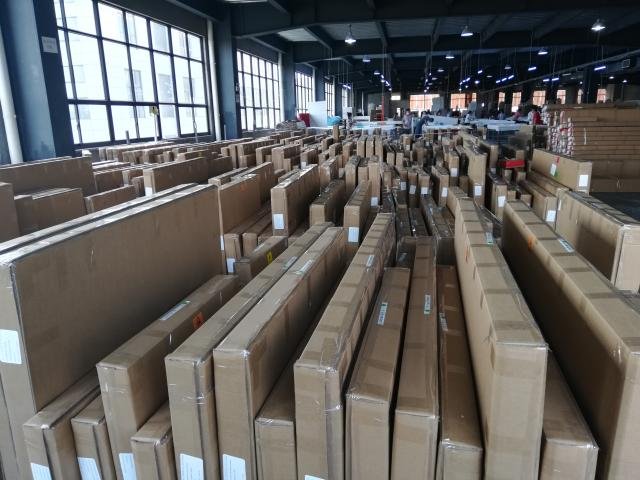
Finding factories is easy. Vetting them correctly is where most importers take shortcuts they later regret. Here is the process we recommend:
A. Start with factories that export specifically to AU/NZ.
A factory that has been shipping to Australian distributors for several years understands the market's requirements — sizing conventions, certification expectations (FSC, CARB), packaging for sea freight, and the lead time expectations that AU builders and developers work to. This market knowledge is not trivial. A factory's first AU shipment is their learning curve. You do not want to be that learning curve.
B. Verify the factory is the actual manufacturer, not a trading company.
Ask for the factory registration certificate (营业执照) and confirm the manufacturing address matches the address on their export documentation. Trading companies present themselves as factories regularly on B2B platforms. This is not inherently a problem — some trading companies offer good service — but know what you are dealing with, because your leverage and transparency are different.
C. Request the following documents before visiting or ordering:
- Business licence (营业执照) — verifies legal entity
- ISO 9001 certificate — verifies quality management system
- FSC Chain of Custody certificate — required for timber products going into green-rated AU builds
- CARB Phase 2 certificate — required if any composite wood components are used
- Product test reports — ask for EN 13659 or equivalent mechanical test reports
- Export records to Australia — ask for a list of current AU/NZ clients (they may not name them, but the request tells you a lot about how they respond)
D. Assess their responsiveness and communication quality.
The person you are emailing before the order is placed is not necessarily the same person who will handle your account after. Ask to be introduced to your account manager and assess whether they can answer technical product questions accurately and in clear English. If they cannot explain the difference between basswood and paulownia, or cannot tell you what moisture content their IQC tests to, that is a signal.
Pro Tip: A factory that cannot answer technical product questions clearly before the order usually cannot resolve technical problems clearly after. Communication quality pre-sale is a reliable predictor of after-sale support.
Step 3: Request Samples and Evaluate Them Correctly
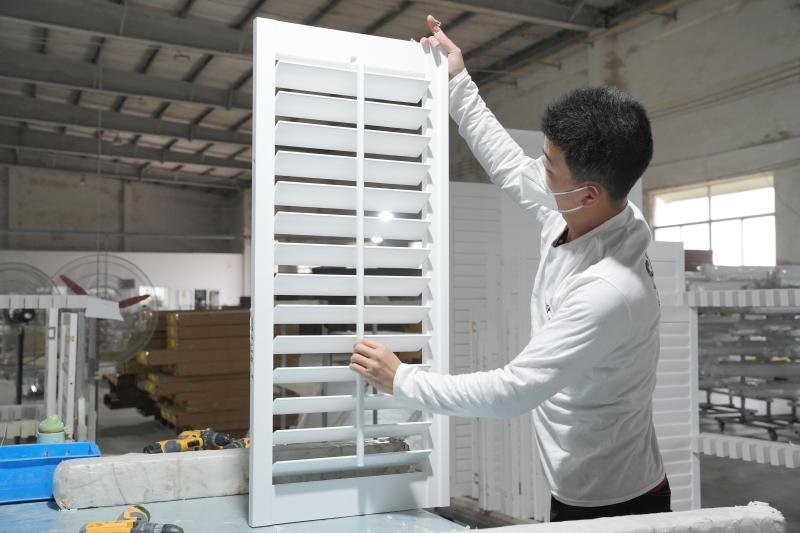
Samples are the most important step in the sourcing process and the step most importers rush. The right approach:
Request a sample set that covers your full intended range, not just one product. If you plan to stock PVC in white, basswood in white and antique white, and aluminium in grey, request samples of all three materials in those colours. You are evaluating the consistency of finish across their range, not just one panel.
Evaluate samples against these specific criteria:
-
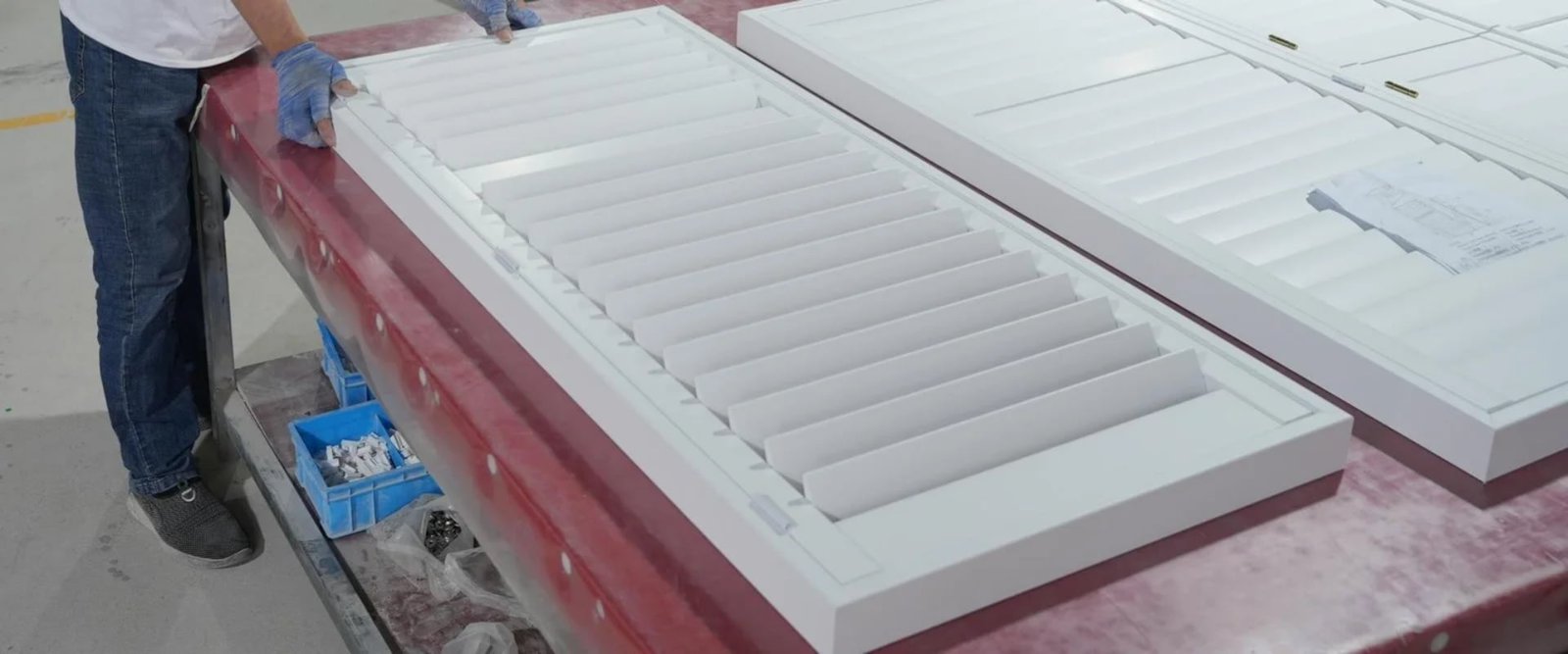
Louvre pitch consistency. Hold the panel up to the light and look across the blades at a shallow angle. All blades should appear perfectly parallel when the panel is closed. Any unevenness indicates jig tolerance problems on the assembly line.
-
Paint adhesion. Use a 1-cent coin and scratch firmly across an inconspicuous area of the louvre. The coating should not flake or lift. If it does, the surface preparation or primer schedule is inadequate.
-
Tilt rod operation. Open and close the louvres 50 times. The action should be smooth and consistent throughout. Any catching or stiffness after 20 cycles indicates mechanism fit problems.
-
Frame squareness. Measure both diagonals of the sample panel. They should be within 2mm of each other. An out-of-square frame will gap at the perimeter and look unprofessional on the wall.
-
Colour accuracy. If you ordered antique white, compare it to your RAL or NCS target. Ask the factory for the specific colour formula code they used so reorders match.
-
Weight. Weigh the panel and compare it to the factory's stated specification. Significant deviation (more than 8%) suggests a different material compound or density than specified.
Pro Tip: When you receive samples, immediately label them with the factory name, date received, and the colour/material/size code. When you place your first order and the production samples arrive, put them side by side with the original samples under identical lighting. Any colour or finish shift should be raised before production proceeds.
Step 4: Negotiate Terms and Structure Your First Order Correctly
Most AU importers underestimate how much the structure of their first order matters. The goal of your first order is not maximum volume — it is validated supply chain and market-tested product. Here is how to structure it:
Container size: A 20GP container is the right starting point for a new importing relationship. It holds approximately 900 to 1,100 standard shutter panels depending on size mix, and gives you enough product to test your market without overcommitting capital.
SKU mix for a first container:
- Anchor SKUs (60–70% of volume): Your 3 to 4 best-guess best-sellers in your most common sizes. These are the products you are most confident about. Ordering depth on them gives you sales data quickly.
- Test SKUs (30–40% of volume): Products you think will sell but want to validate — a second colour, a different louvre width, a wood species you have not stocked before. Keep quantities modest (50 to 80 panels per new SKU).
Payment terms: Standard first-order terms with reputable Chinese factories are 30% deposit on order confirmation, 70% balance against copy of Bill of Lading before release. Do not agree to 100% upfront for a first order regardless of how the factory positions it. Established factories with genuine export track records do not require 100% upfront.
Lead time: Build in buffer. If the factory quotes 30 days production, allow 35 days in your planning. Sea freight from Chinese ports to Australian east coast is 18 to 22 days. Add 3 to 5 days for container dehire and your customs clearance timeline. From order confirmation to product in your warehouse, plan for 55 to 65 days.
Pro Tip: Confirm public holiday impacts before placing your order. Chinese New Year (late January to mid-February) is the most significant — factories close for 2 to 3 weeks and production queues back up for 4 to 6 weeks either side. If your order falls in the November-to-January window, confirm your factory's closure dates and whether your order will ship before or after the break.
Step 5: Manage Production and Shipment — What to Monitor and When
Once your order is placed, your job is not to wait — it is to track.
Week 1 to 2 after order confirmation: Request production confirmation (written acknowledgement that your order is in the production schedule with a confirmed start date) and a pre-production sample sign-off. For a first order, always request pre-production samples — a physical sample produced from the actual production run materials and colour batch — before full production proceeds.
Week 3 to 4: Request mid-production photos. Any reputable factory will send you images of production in progress on request. You are looking for: panels that match your samples, consistent finish across the batch, and correct labelling on packaging.
Before shipment: Request the following documents from the factory:
- Commercial Invoice (CI)
- Packing List (PL)
- Certificate of Origin (CO) — required for Australian customs clearance
- Fumigation Certificate (if timber products) — required by DAFF for all timber goods entering Australia
- Test reports — FSC or CARB as applicable
- Loading photos — images of the container being loaded
On receipt: Before your receiving team unpacks the container, photograph the container seal number and the container interior before unloading. Any damage claims against shipping insurance require evidence of condition on delivery.
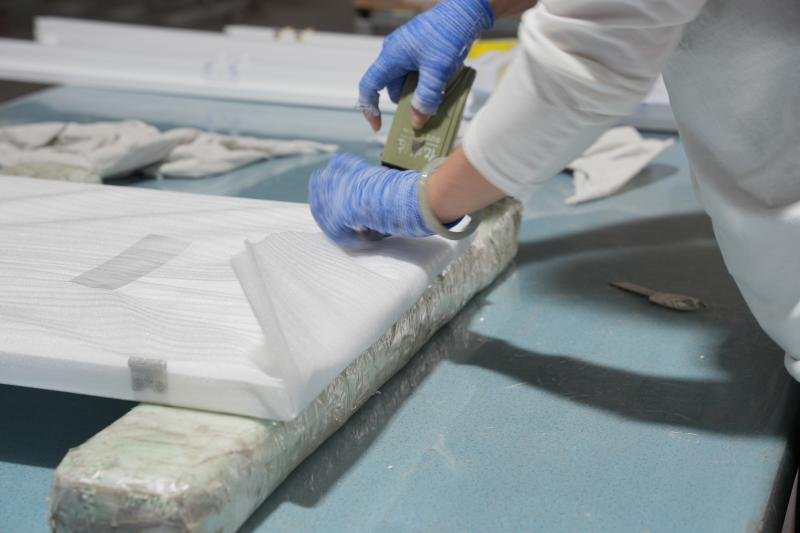
Inspect your first container thoroughly — open every carton. Document any quality discrepancies with photos and send to your factory contact within 7 days of receipt. Established factories have a claims process and will address legitimate quality issues. How a factory handles the first quality claim tells you more about the relationship than how they handled the first order.
Sourcing Done Right Pays Dividends for Years
Getting your first import right is not complicated, but it requires doing the preparation work that most importers skip. Define your product requirements before you approach factories. Vet suppliers against documents, not just presentations. Evaluate samples against objective criteria, not gut feeling. Structure your first order to validate rather than maximise. Monitor production and document receipt.
We have supplied Australian and New Zealand distributors through this exact process thousands of times. Our 15-year track record with the AU/NZ market means we understand sizing conventions, certification requirements, freight timelines, and the seasonal patterns that affect your inventory planning.
Ready to start your sourcing process with a factory that knows the AU/NZ market? Contact us here to request our wholesale catalogue, current pricing, and sample programme details.
Related reading: PVC vs Wood vs Aluminium Plantation Shutters: What AU Distributors Need to Know