For most wholesale buyers, "shutters from China" isn't really a search about whether Chinese factories can make plantation shutters — it's a search about whether a specific factory's quality holds up after a 4–6 week sea voyage, a humid Australian summer, and three years of daily use. The manufacturing capability has never really been the question. The verification process is.
This guide walks through the parts of that verification process that experienced importers check — and that first-time buyers usually only discover after a problem batch has already landed.
Why "Shutters from China" Searches Usually Mean a Bigger Question
China remains the dominant global production base for plantation shutters, venetian blinds, and window shades, supplying factory-direct stock to wholesalers across Australia, New Zealand, North America, and Europe. The cost advantage of sourcing direct from a manufacturer — rather than through a distributor layer — is real and well documented. But cost advantage only matters if the product performs over its expected lifespan, and that's where buyer due diligence actually needs to focus.
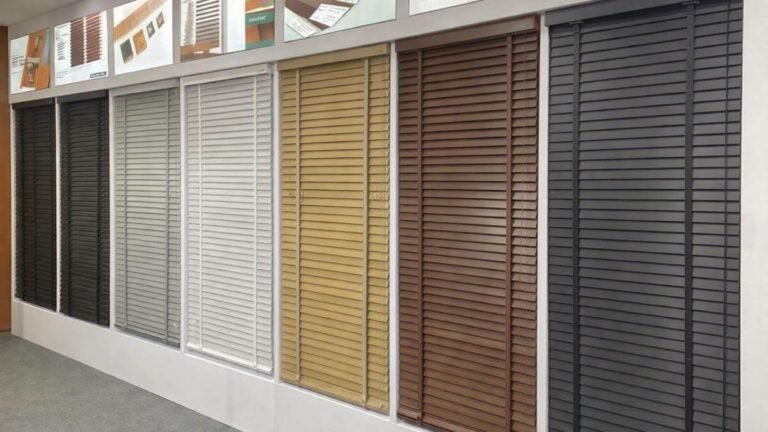
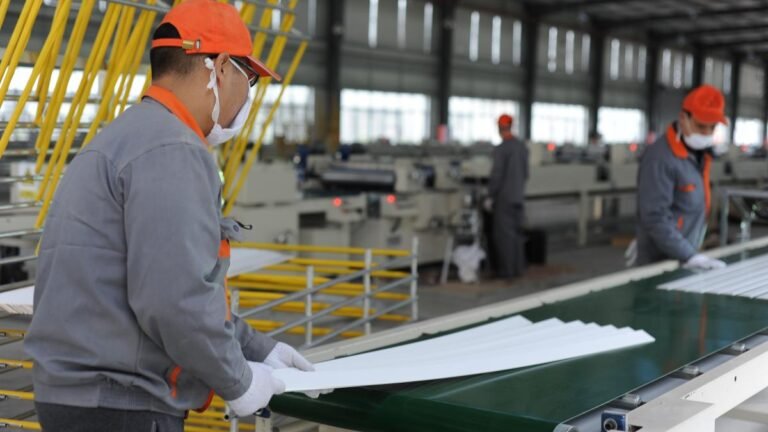
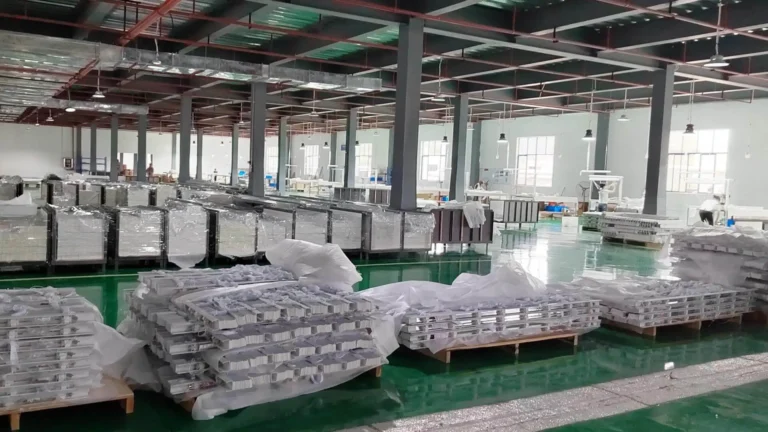
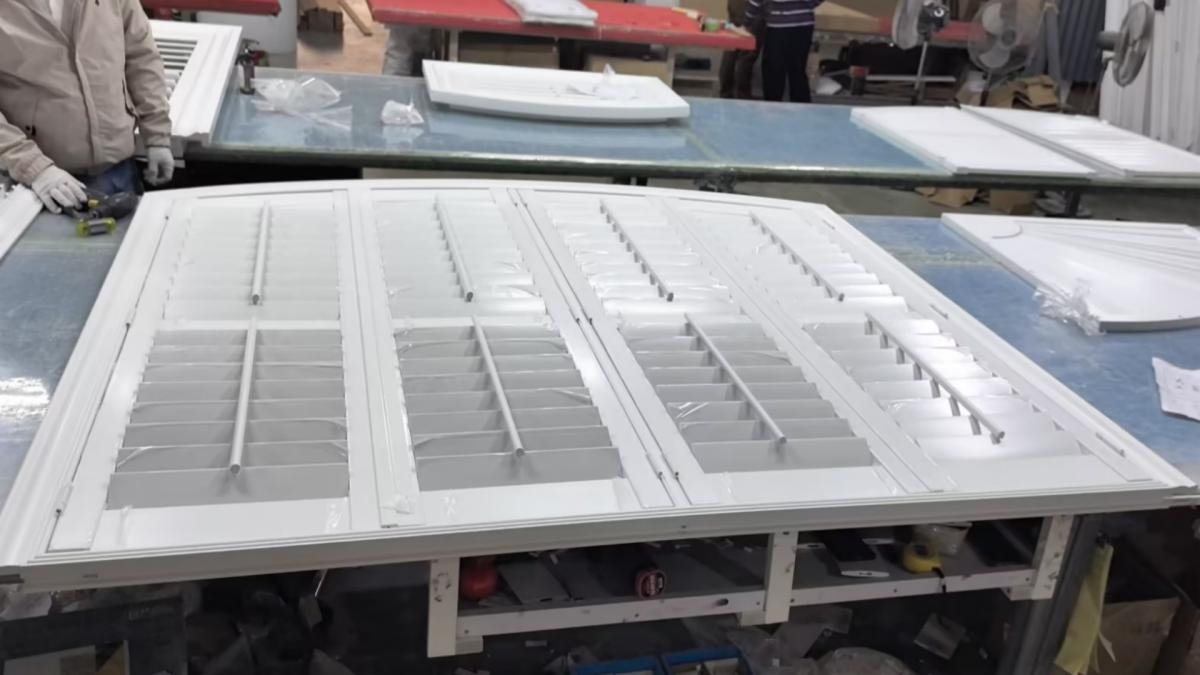
Bright Shutters operates a 50,000㎡+ automated production facility in Shenzhen, manufacturing plantation shutters in timber, PVC, and 6063-T5 aluminium, alongside venetian blinds and a full window shades range — all of which can be mixed within a single 20-foot container (20GP). That kind of full-category, factory-direct setup is exactly what most wholesale buyers searching this term are trying to locate. But the right question isn't "does a factory like this exist" — it's "how do I confirm the quality claims before I commit to a container."
The sections below cover the specific checkpoints that separate a reliable long-term supplier relationship from a costly one-off mistake.
The Hidden Risk Most Buyers Don't Ask About: Sample vs. Bulk Quality Drift
One of the most common — and most overlooked — risks in international shutter sourcing is the gap between sample quality and bulk production quality. Samples are typically produced with extra care, often semi-manually finished by a factory's most experienced staff. Bulk production runs through standard production lines at standard speed. The two processes don't automatically produce identical results, and this drift is a structural risk in B2B sourcing generally — not a sign that a particular supplier is acting in bad faith.
There are three checkpoints that meaningfully reduce this risk:
- Request a Pre-Production Sample (PPS), not an initial development sample. A PPS is made using the same materials and the same production line as the bulk order will be — it's a far more reliable predictor of what a container will actually contain.
- Write the PPS into the contract as the quality benchmark. Specify that bulk production must match the PPS, with any tolerance ranges attached as a contract annex.
- Schedule an in-process inspection (IPI) at roughly 50% production completion for first-time bulk orders. This is early enough to still correct course if something has drifted from spec.
None of these steps are unusual requests. A factory confident in its own consistency should have no friction accommodating them.
UV Resistance: The Failure Mode That Shows Up 12–18 Months After Delivery
For PVC plantation shutters specifically, one of the most common failure modes in high-UV markets like Australia is premature yellowing — and it's a failure mode that won't show up at the point of inspection. It only appears after the product has been installed and exposed to sustained sunlight for over a year.
The underlying cause is usually under-dosed titanium dioxide (TiO₂) in the PVC compound. TiO₂ is the pigment that provides UV stability; formulations intended for high-UV markets should carry a TiO₂ loading of 10 phr (parts per hundred resin) or higher. Because some suppliers reduce this loading to control raw material cost — sometimes to as low as 4 phr — and because Australian UV intensity runs roughly 40% higher than in much of Europe, under-dosed product can begin showing visible yellowing within 12–18 months, well short of the service life a buyer would reasonably expect.
The practical safeguard is to request a TGA (thermogravimetric analysis) report for the specific PVC compound batch being used, which verifies actual TiO₂ content rather than relying on a supplier's stated formulation. This is a low-cost ask for the factory and a meaningful risk reduction for the buyer — particularly because, by the time the problem is visible, the container has long since cleared customs.
What Happens Inside the Container: Export Packaging & Condensation Risk
A less obvious risk in shutters from China sourcing is what happens to timber components during the sea voyage itself, independent of product quality at the point of loading. Containers shipped from Chinese ports cross multiple climate zones, and internal temperature swings of up to 20°C across a single voyage are not unusual. When warm, humid air inside the container meets a cooler steel container wall, condensation forms and runs down the interior — settling onto cargo below, which can trigger mould development on timber products by the time the container is opened at the destination port.
The standard mitigation is to pack desiccant — typically silica gel in a coarse-grain format for better moisture absorption surface area — at a rate of roughly 1kg per 2m³ of container volume, distributed between cargo layers rather than concentrated only at the base of the container. This is a packaging detail worth asking about directly: a supplier who can describe their desiccant placement methodology in specific terms is generally one who has actually thought through export packaging, rather than treating it as an afterthought.
When Should Inspection Actually Happen? (Most Buyers Get This Wrong)
Timing matters more than most buyers assume when arranging a pre-shipment inspection (PSI). A common mistake — common enough that it's worth flagging explicitly — is scheduling the inspection before packing is complete, which effectively limits the inspection to a finished-goods check (FQC) and misses any damage introduced during the packing and loading process itself: knocks, crushing, or poor stacking.
The correct sequence is:
- FQC — 100% finished goods inspection
- Packing into export cartons
- Loading into the container
- Random open-case verification on roughly 10% of packed units, after loading
- Final PSI report issued
If a third-party inspection is booked before step 2, it isn't capturing the packing-stage risk at all — and that risk is exactly where a meaningful share of in-transit damage claims originate.
Export packaging itself should also be validated against a recognised transport simulation standard. ISTA 2A testing simulates the vibration and shock cargo experiences during truck, sea, and warehouse handling — typically 4Hz–100Hz random vibration for around 90 minutes per axis, plus 2–3 free-fall drop tests calibrated to product weight. Packaging that has been defined through ISTA 2A testing, and re-validated whenever the packaging spec changes, is a reasonable baseline to ask about before committing to a full container order.
Hardware Durability: What a Salt Spray Test Report Actually Tells You
For aluminium shutters and metal hardware components, coastal climate resistance is a frequent point of failure in markets like Australia and New Zealand, where a large share of the population lives within a few kilometres of the coast. The relevant verification standard is ASTM B117, a salt spray (fog) test conducted using a 5% NaCl solution at 35°C under continuous spray, with results graded against ASTM D610 (rust grade) and ASTM D714 (blistering grade).
As a working benchmark: coastal projects within 1–5km of the shoreline should look for a minimum of 500 hours with no red rust (ASTM D610 grade 8 or higher); premium coastal residential and commercial projects are better served by a 1,000-hour benchmark. When requesting a salt spray report from a supplier, it's worth confirming the report specifies the coating type and thickness of the tested sample — a result without that context is difficult to interpret meaningfully.
A Practical Checklist Before You Commit to a Container
Pulling the points above together, here's a working checklist for evaluating a shutters-from-China supplier before placing a full container order:
- [ ] Can the supplier provide a TGA report verifying TiO₂ loading for PVC compounds intended for high-UV markets?
- [ ] Does the inspection process include a post-packing, post-loading open-case check — not just a pre-packing FQC?
- [ ] Can the supplier provide a third-party ASTM B117 salt spray report, with coating type and thickness specified?
- [ ] Has the export packaging been validated through ISTA 2A transport simulation testing?
- [ ] Will the supplier produce a Pre-Production Sample (PPS) using bulk materials and processes, rather than a hand-finished development sample?
- [ ] Does the supplier offer flexibility to combine plantation shutters, venetian blinds, and window shades within a single 20GP container — useful for wholesalers managing multiple SKUs against one MOQ?
A supplier who can answer these questions with specifics — test reports, documented procedures, named standards — is operating differently from one who answers only with reassurance. For B2B sourcing relationships intended to run for years rather than one order, that difference tends to matter more than unit price.
Bright Shutters manufactures plantation shutters (timber, PVC, and 6063-T5 aluminium), venetian blinds, and a full window shades range from a 50,000㎡+ facility in Shenzhen, with all three product lines combinable in a single 20GP container. Wholesale partners can request samples, test reports, or container quote details directly.
Frequently Asked Questions
Are shutters from China good quality? Quality varies significantly by factory. The reliable indicator isn't the country of origin but whether a supplier can provide verifiable test data — UV compound reports, salt spray results, and post-packing inspection records — rather than general assurances.
What should I check before ordering a container of shutters from China? At minimum: a TGA report for PVC UV stability, a third-party ASTM B117 salt spray report for hardware, confirmation that inspection happens after packing (not before), and a Pre-Production Sample matching bulk materials.
How long does it take to import shutters from China to Australia? Standard lead times run roughly 25–35 days for plantation shutters, 20–30 days for venetian blinds, and 7–15 days for window shades, based on a 20GP mixed container order, plus sea freight transit time.
Do Chinese shutter factories offer sample orders? Most factory-direct manufacturers offer sampling ahead of a full container commitment, typically with a lead time in the range of a few days to a week, depending on customisation level.
What certifications should I ask a Chinese shutter supplier for? For timber products, FSC Chain of Custody certification is the relevant standard for responsibly sourced material. For hardware durability, ask for ASTM B117 salt spray test reports rather than certification alone.
Can I mix plantation shutters, blinds, and shades in one container? Yes, where a supplier manufactures all three product lines in-house. This allows wholesalers to meet a single container MOQ across multiple SKUs rather than ordering each category separately.