
In 2021, a window covering distributor based in Melbourne was running a healthy business — steady revenue, established installer relationships, reasonable margins. But when they sat down to map their actual numbers, something was uncomfortable. They were buying plantation shutters from a local wholesaler at a landed cost that left them 28% gross margin on shutters after freight. Their venetian blind range delivered 41%. Their roller shades delivered 48%.
Shutters were their fastest-growing product category by customer demand. They were also, by a significant margin, their worst-performing category by margin. The gap between what they charged customers and what they made per panel was being absorbed by the local wholesaler sitting between them and the factory.
This is the story of what they did about it, how long it took, and what the numbers looked like at the other end.
The Problem: Three Layers Between Factory and Market
The traditional AU plantation shutter supply chain looks like this: Chinese factory → Chinese trading company or export agent → Australian importer/national wholesaler → regional distributor → installer → homeowner.
Each link in that chain takes a margin. By the time a shutter panel has moved through a trading company, a national wholesaler, and a regional distributor, the factory FOB price has typically been marked up 180 to 250% before it reaches the end customer. Some of that markup covers genuine costs — freight, warehousing, risk, credit terms, product support. Some of it is simply the cost of structural inefficiency.
For a distributor with the volume to support direct importing, the opportunity is significant. Removing one or two layers from the chain does not just improve your margin — it changes your competitive position entirely.
The Melbourne distributor's situation: at the time they began evaluating direct importing, their local wholesaler was supplying them basswood shutters at a landed cost of approximately AUD $142 per panel (63mm louvre, average residential size). Their average retail price was AUD $198. Gross margin per panel: AUD $56, or 28.3%.
Their question was straightforward: if they were buying the same product from the same factory the wholesaler was buying from — or a comparable factory — what would their landed cost be?
The Evaluation Process: Six Months Before the First Order
The distributor did not move quickly. They spent six months in evaluation before placing their first direct order. Here is what that process looked like:
Months 1 to 2: Market research and supplier identification.
They identified three Chinese factories through a combination of industry contacts, trade show research (Domotex Asia, Guangzhou Building Materials Fair), and direct enquiry. They were explicit in their criteria: factories exporting directly to AU/NZ with verifiable track records, minimum 10 years in operation, FSC certification available, English-speaking account management.
Month 3: Factory audits (virtual and physical).
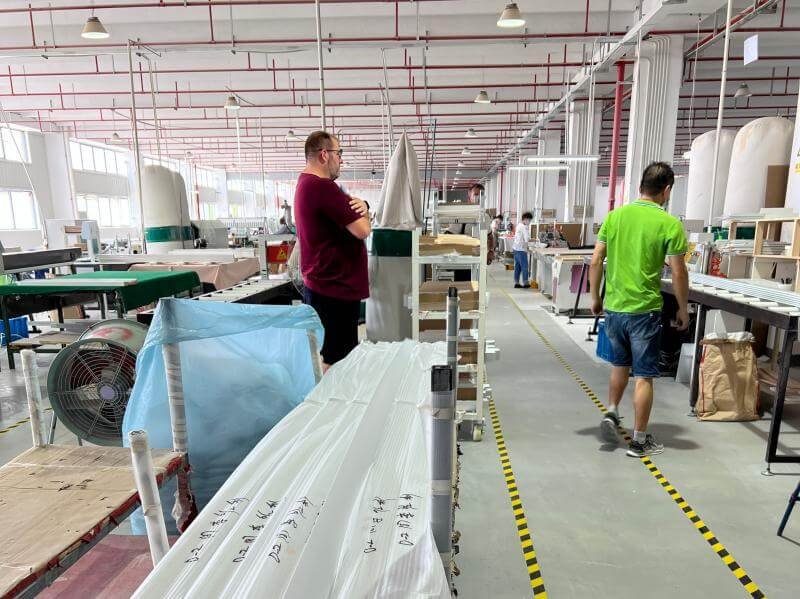
One factory was audited remotely via video call and documentation review. Two factories were visited in person during a five-day China trip. The in-person visits were, in their assessment, the most valuable part of the process: "You can tell within 20 minutes of walking a factory floor whether their quality claims are real or aspirational."
The evaluation criteria were: production scale (could they handle a 20GP container in 30 days without disrupting other customer orders?), quality system maturity (was their FQC process documented and visibly enforced, not just described?), and communication quality (would the account manager they met during the visit be their actual point of contact post-sale?).
Months 4 to 5: Sample evaluation and first-order planning.
They requested full sample sets from two shortlisted factories — six panels per factory, covering PVC white, basswood white, basswood antique white, and aluminium grey. Samples were evaluated against their existing stock using the criteria described in The Complete Guide to Sourcing Plantation Shutters from China.
One factory's basswood samples showed inconsistent louvre pitch visible under direct light. That factory was removed from consideration. The second factory's samples were assessed as equal to or better than their existing wholesale-sourced stock.
Month 6: First-order structure.
They placed a 20GP container: 480 PVC panels (anchor — their fastest-moving SKU), 240 basswood panels (anchor — established demand from premium installer accounts), and 120 roller shades (test — a new product category they wanted to introduce). Total: 840 units across three product types.
Production time: 32 days. Sea freight to Melbourne: 19 days. Customs clearance and container dehire: 4 days. First container in their warehouse: 55 days from order confirmation.
The Numbers: Before and After
The first container landed with a total cost — FOB price, freight, insurance, customs duty, and inland delivery — of AUD $87,400 for 840 units. Average landed cost per unit: AUD $104.
Their previous average landed cost per shutter panel from the local wholesaler: AUD $142.
Landed cost reduction: 26.8% on shutters.
At their existing retail price of AUD $198 per shutter panel, their new margin was:
- Previous margin: AUD $56 per panel (28.3%)
- New margin: AUD $94 per panel (47.5%)
- Margin improvement: AUD $38 per panel, +19.2 percentage points
On 720 shutter panels in that first container (the PVC and basswood combined), the incremental margin improvement versus their previous supply arrangement was approximately AUD $27,360 on a single container.
Their freight cost per container was approximately AUD $4,800 to Melbourne. Their local wholesaler had been absorbing this within their price — but the net saving after direct freight cost was still AUD $22,560 per container above what they had been making before.
The Complications: What They Did Not Expect
This is the part most case studies leave out. Direct importing introduced three complications that took time to manage:
1. Cash flow timing changed.
With the local wholesaler, they paid on 30-day terms after delivery. With direct importing, they paid 30% deposit upfront and 70% before shipment — effectively 8 to 10 weeks before product arrived in their warehouse. This required reconfiguring their working capital position. They negotiated a short-term trade finance facility with their bank, which cost approximately 1.8% of the order value — a cost that reduced but did not eliminate the margin improvement.
2. Their buffer stock requirement increased.
With the wholesaler, they could reorder and receive product within 2 to 3 weeks. With direct importing, they needed to maintain 10 to 12 weeks of forward stock for their anchor SKUs to avoid stockouts during the 55-day supply cycle. This increased their average inventory holding by approximately 40% for the first 12 months while they calibrated their reorder triggers to their actual sales velocity.
3. Quality resolution became their responsibility.
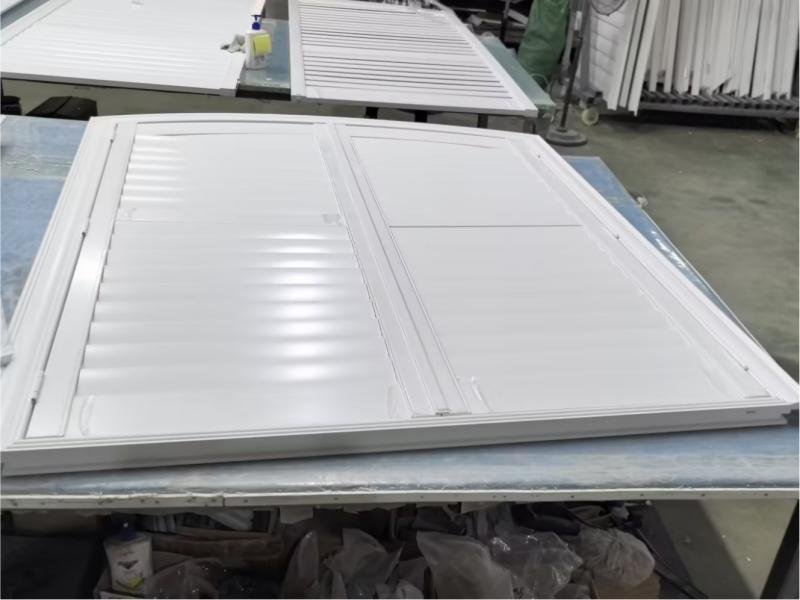
When a quality issue arose with their first container — 14 panels with minor finish inconsistencies in one carton — they had to manage the resolution directly with the factory rather than escalating to a local wholesaler. The factory replaced the affected panels in the next shipment without dispute. But the process took three weeks of communication and documentation, compared to a same-week swap with the local wholesaler. This was manageable; it was just not instant.
The distributor's assessment: "The complications were real, but they were finite. We solved the cash flow issue in month three, calibrated our buffer stock by month six, and understood the quality resolution process by month four. The margin improvement was permanent. It was the right decision — we just wish someone had told us what we were walking into."
Twelve Months On: The Business Impact
At the 12-month mark of direct importing, the distributor's shutter business looked materially different:
Margin improvement on shutters: From 28% to 47%, as calculated above. Sustained across three container cycles.
Revenue growth: The margin improvement allowed them to reduce their retail price on PVC shutters by 8% while maintaining a 43% gross margin. The price reduction increased their conversion rate on new installer accounts by approximately 35% over the 12-month period, as measured by the ratio of quotes to confirmed orders.
Range expansion: By their third container, they had added aluminium shutters, two timber-look venetian blind SKUs, and a cellular shade range — all sourced from the same factory on mixed container orders. Their product breadth increased from 6 product types to 14 without adding a new supplier relationship.
Territory position: Because of their improved margin structure and price competitiveness, they won two installer accounts that had previously been buying from a competing distributor in their region. Both cited price as the primary reason for switching.
Annual revenue from shutters: Up 62% year-on-year from the start of direct importing to the 12-month mark, with a higher margin on every panel sold.
What This Means for Distributors Evaluating Direct Importing
The Melbourne distributor's experience is not unusual. It is a fairly typical trajectory for a distributor making the transition from wholesale supply to factory-direct importing at the right time in their business development. A few observations that apply broadly:
The margin improvement is real and permanent. Removing a layer of the supply chain is not a temporary gain — it is a structural change to your cost base. The 19 percentage point margin improvement in this case is toward the higher end of what we see, but 12 to 18 percentage points is common for distributors moving from national wholesale supply to factory-direct.
The complications are manageable but not trivial. Cash flow, buffer stock, and quality resolution all require active management. Distributors who underestimate this tend to have stressful first six months. Distributors who plan for it tend to find the transition straightforward.
Volume threshold matters. Direct importing makes sense when you can fill a 20GP container within a reasonable inventory cycle — typically 90 to 120 days for a distributor with established installer accounts. If your shutter volume is below this threshold, the working capital cost and management overhead of direct importing may outweigh the margin benefit. The right time to start is when you are reliably selling through 150 to 200 panels per month.
Ready to discuss whether direct importing makes sense for your business? Contact us here to request our wholesale pricing and a sample programme — no commitment required.
Related reading: The Complete Guide to Sourcing Plantation Shutters from China (for AU/NZ Importers)