
We have onboarded dozens of first-time plantation shutter importers in Australia and New Zealand over the past 15 years. Some of them have built businesses generating several million dollars in annual revenue. A smaller number placed one container, found the market harder than they expected, and did not reorder. The difference between these outcomes is rarely luck or timing — it is almost always preparation.
This article is written from the factory side of the relationship. It is what we wish every new AU shutter distributor knew before they contacted us for the first time. It covers the market structure, the business model options, the startup capital requirements, the common mistakes, and the practical steps to getting a first container ordered and sold.
Understanding the Australian Plantation Shutter Market
Australia has one of the highest plantation shutter penetration rates in the world. Industry estimates suggest that plantation shutters are installed in approximately 35% of Australian homes, with penetration growing steadily as shutters replace venetian blinds and curtains in both new build and renovation markets. The combination of strong sunlight, privacy requirements, and increasing preference for clean architectural aesthetics makes Australia structurally well-suited to shutter products.
The market is served by three tiers of distributor:
National importers and wholesalers — large companies importing full containers (multiple per month) and supplying to regional distributors, installer networks, and builders across multiple states. These players have established logistics infrastructure, credit facilities, and installer training programmes.
Regional distributors — the most common entry point for new market participants. A regional distributor focuses on one or two states, builds relationships with local installers and builders, and sources from either a national wholesaler or directly from a factory. Regional distributors at the established end of the market are typically importing 2 to 6 containers per year.
Installer-distributors — businesses that both supply and install shutters, typically serving a specific metropolitan area. Installer-distributors have lower volume requirements, higher margin per panel (capturing both the product margin and the installation margin), and tighter geographic focus.
Understanding which tier you are entering — and which tier your target customers occupy — shapes every decision that follows, from your product range to your pricing to your minimum order structure.
The Business Model Decision: Installer-Distributor vs Pure Distributor
Before thinking about products or suppliers, the most important decision is your business model.
Installer-distributor model:
You measure, supply, and install. You charge customers a fully installed price (typically AUD $350 to $650 per panel installed for standard residential PVC, AUD $550 to $1,100 per panel for premium wood). Your costs include product, labour, transport, and overheads. Your gross margin on the total installed price — before labour — is typically 45 to 65%.
The installer-distributor model has a lower volume threshold to profitability (you do not need to move hundreds of panels per month to sustain the business), and it creates direct customer relationships that generate referrals. The constraints are geographic (you can only install where your team can reach) and scalability (adding revenue means adding installation capacity, which is labour-dependent).
Pure distributor model:
You supply product to installers, builders, and other distributors. You do not install. Your revenue is the margin between your landed cost and your wholesale price to trade customers. Gross margins in the pure distributor model are typically 30 to 50% depending on your cost structure and customer mix.
The pure distributor model scales more easily — you are not limited by installation capacity — but requires higher volume to cover overheads, and requires building trade customer relationships rather than homeowner relationships. Your customers are businesses, not consumers, which means longer sales cycles and lower order frequency but larger individual order sizes.
Most successful AU shutter businesses start as installer-distributors and migrate toward pure distribution as they grow — adding trade supply customers while maintaining their installation base.
Startup Capital Requirements
Starting a plantation shutter importing business requires working capital to fund inventory before it sells. The minimum viable entry points, based on current market conditions:
Installer-distributor startup (minimum viable):
- First container (20GP, mixed PVC and wood shutters): AUD $55,000 to $75,000 landed cost
- Sample and display panel investment: AUD $3,000 to $6,000
- Installation tools and vehicle setup: AUD $8,000 to $15,000
- Working capital buffer (3 months operating costs before revenue): AUD $20,000 to $35,000
- Total minimum startup capital: AUD $86,000 to $131,000
Pure distributor startup (minimum viable):
- First container (20GP, mixed range): AUD $55,000 to $75,000 landed cost
- Showroom or sample display (if applicable): AUD $5,000 to $15,000
- Warehouse setup (if not using 3PL): AUD $10,000 to $20,000
- Working capital buffer (3 months): AUD $25,000 to $40,000
- Total minimum startup capital: AUD $95,000 to $150,000
These figures assume no existing infrastructure — no warehouse, no trade relationships, no vehicles. Businesses with existing trade relationships in related categories (blinds, curtains, flooring) can often reduce the sales development timeline and the working capital buffer requirement significantly.
Pro Tip: The most common reason new plantation shutter importers fail is not product quality or market demand — it is running out of working capital before they have established sufficient revenue velocity. The 3-month operating cost buffer in the figures above is a minimum. Six months is more appropriate for a business with no existing customer base. The market takes time to develop even when you are doing everything right.
Choosing Your Initial Product Range
New distributors frequently want to start with too broad a range. A first container with 25 different SKUs across 3 materials, 4 louvre widths, and 6 colours is difficult to sell, difficult to manage, and produces slow inventory turns on the slow-moving items. The right starting range is narrow and deep, not broad and shallow.
Recommended first container structure for a new AU distributor:
| Product | Material | Colour | Sizes | Quantity |
|---|---|---|---|---|
| Plantation shutters 63mm | PVC | Vivid White | 6 standard heights × 4 widths | 300 panels |
| Plantation shutters 63mm | PVC | Antique White | 4 standard heights × 3 widths | 120 panels |
| Plantation shutters 63mm | Basswood | Vivid White | 4 standard heights × 3 widths | 80 panels |
| Venetian blinds 25mm | Aluminium | White/Silver | Standard AU widths | 120 blinds |
| Total | 620 units |
This structure gives you a saleable range across the most common AU market demand — PVC shutters dominate the enquiry volume, the basswood provides a premium option, and the venetian blinds allow you to cross-sell on jobs where shutters are not appropriate. It also keeps your SKU count manageable — 13 shutter size/colour combinations plus a standard blind range — which means you can understand and sell your own inventory.
For sizing guidance on what heights and widths to prioritise, read our Plantation Shutters Sizing Guide for AU/NZ.
Building Your Customer Base Before Your Container Arrives
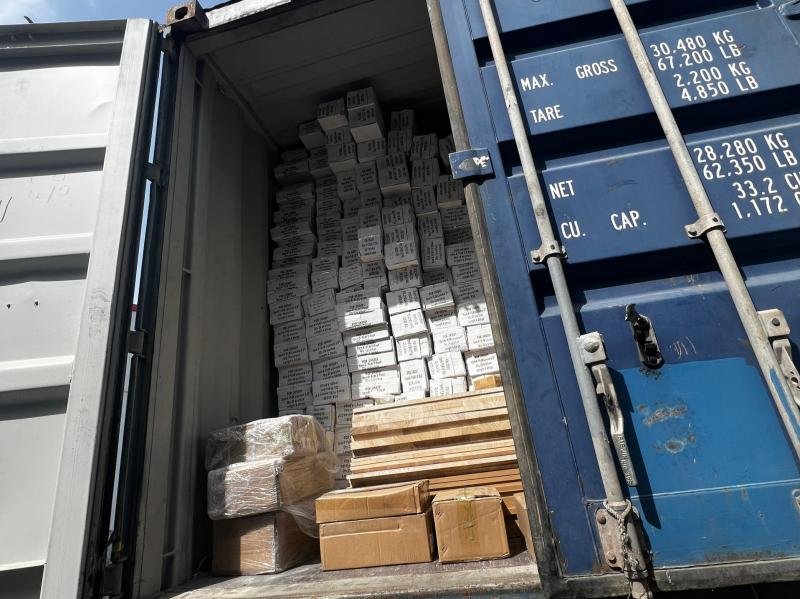
The 55 to 65 days between placing your first order and receiving your first container is not downtime — it is your sales development window. Every distributor who uses this period well has a significantly better first three months than those who wait for the container to arrive before starting to sell.
What to do in the pre-arrival period:
Build your installer network. Plantation shutters are almost always installed by trade professionals — not homeowners. Your primary customer, as a new distributor, is not the homeowner who wants shutters — it is the installer or window covering business who supplies homeowners. Identify the 10 to 20 most active shutter and blind installers in your target area (trade directories, local business searches, Google Maps searches for "plantation shutter installation [your city]") and introduce yourself. You do not need to close a sale — you need to be on their radar when your stock arrives.
Set up your display capability. A trade showroom or a van-based sample display (for installer-distributors) needs to be operational before your container arrives. The most effective display format for new distributors is a set of full-size sample panels across your core range — 4 to 6 panels showing PVC white, PVC antique white, and basswood white in your standard louvre width. This costs AUD $2,000 to $4,000 in product and display hardware, and it is the most important sales investment you will make.
Establish your online presence. A basic website with your product range, contact details, and a request-a-quote form is the minimum. Trade customers in Australia search online for suppliers — a business with no searchable web presence does not exist for a portion of your potential customer base. This does not need to be elaborate; it needs to be functional and credible.
Quote jobs before you have stock. Some installers will place orders before your container arrives if you are transparent about your lead time and have samples available. Pre-selling against incoming stock is normal in the window covering trade — it validates your demand assumptions before your capital is committed, and it gives you revenue on arrival day rather than 4 to 6 weeks after.
The Metrics That Determine Whether Your Business Is Working
Once you are operational, three metrics tell you whether your business model is working. Measure them from month one.
Stock turn rate. How many times per year does your average inventory sell through? A healthy plantation shutter distribution business turns its shutter inventory 4 to 6 times per year. Below 3 times suggests either slow sales velocity or excess stock depth on slow-moving SKUs. Above 6 times suggests you are consistently running out of stock before the next container arrives — which means you are leaving sales on the table.
Gross margin per panel. Track this separately for PVC, wood, and aluminium. A blended gross margin below 35% on your shutter range is a signal that your pricing, your cost structure, or your product mix needs attention. Above 45% blended is strong; above 55% on wood is achievable and worth targeting.
Customer repeat rate. What proportion of your trade customers placed a second order within 90 days of their first? In a healthy distribution business, 60 to 70% of first-time trade buyers repeat within 90 days. Below 40% indicates a problem — either product quality, service, pricing, or availability — that is causing customers to shop elsewhere after their first order.
Pro Tip: The single most useful question to ask an installer who has not reordered is: "What would need to be different for you to use us for your next job?" Most will tell you exactly what the barrier is. Removal of that barrier is usually cheaper than acquiring a new customer.
The Territory Protection Decision
If you are establishing a regional distribution business, territory protection should be one of the first conversations you have with your factory. Territory protection means the factory commits not to supply other distributors in your defined geographic area — protecting your investment in market development.
Not all factories offer territory protection. Those that do typically require a minimum purchase commitment — a specified volume per year — in exchange for the exclusivity. The commitment level is usually set at a volume that is achievable for a distributor with a developed regional market: 4 to 8 containers per year for a state-level territory is typical.
Territory protection is commercially valuable because it prevents a situation where your investment in building installer relationships and brand awareness in your region is eroded by a competitor buying from the same factory at the same or lower price. It is worth negotiating from day one — it is much harder to obtain after your factory has already supplied a second distributor in your area.
We offer territory protection to AU/NZ distributors who meet our minimum annual volume commitments. Contact us to discuss the terms for your target region.
Starting Right Is Easier Than Recovering From a Poor Start
The plantation shutter distribution business in Australia is genuinely attractive — strong and growing demand, defensible margins for distributors who manage their supply chain well, and recurring revenue from trade customers who buy regularly. The barriers to entry are capital and knowledge, not regulatory or structural.
The distributors who succeed are those who do the preparation work — understand the market structure, choose the right business model, capitalise adequately, build their customer base before their stock arrives, and track their metrics from day one. The distributors who struggle are those who move too fast, undercapitalise, start with too broad a range, and wait for the container to arrive before thinking about customers.
We help new AU/NZ distributors through this process as a standard part of our onboarding — product range guidance, sizing recommendations, sample programmes, and ongoing account support from a team that understands the Australian market.
Ready to discuss your first container? Contact us here to request our wholesale catalogue, new distributor information pack, and current pricing.
Related reading: The Complete Guide to Sourcing Plantation Shutters from China (for AU/NZ Importers)