
The largest plantation shutter orders we ship to Australia are not for residential renovations. They are for commercial projects — apartment complexes, hotel fit-outs, student accommodation, aged care facilities, and master-planned residential communities where a builder or developer is specifying the same product across 80, 200, or 500 rooms simultaneously.
Commercial shutter procurement is structurally different from residential distribution. The quantities are larger, the specifications are more complex, the timelines are tighter, and the buyer is not a homeowner shopping for aesthetics — it is a procurement manager, project manager, or quantity surveyor working to a budget, a schedule, and a specification document. If you are a distributor who has not yet moved into commercial project supply, this article will help you understand what the commercial market requires and whether your current supply chain can support it.
Why Commercial Projects Are Worth Pursuing
The financial case for commercial project supply is straightforward. A single hotel fit-out — 180 rooms, each with two windows — represents 360 shutter panels. At an average panel value of AUD $220 retail, that is a AUD $79,200 order from a single customer relationship. A 300-unit apartment complex with one window per room and an average panel value of AUD $195 is a AUD $58,500 order.
Compare this to the residential distribution model, where the average order might be 8 to 12 panels for a single home renovation, and you begin to see why the largest shutter distributors in Australia have invested in commercial project capability.
Beyond the order size, commercial projects offer three structural advantages over residential retail:
Repeatability. Developers who are satisfied with a shutter supplier on one project come back with the next project. A hotel group that standardises on a specific shutter specification across their portfolio places recurring orders for refurbishments, room additions, and new properties. The customer acquisition cost is incurred once; the revenue repeats.
Predictability. Commercial projects have documented schedules. A developer who tells you installation needs to be complete by a settlement date eight weeks from now has a contractual reason to plan ahead — which means you have genuine forward visibility on their order timing. Residential retail operates on impulse and renovation cycles; commercial operates on project plans.
Price insensitivity to specification. When a developer has specified a particular shutter in their design drawings and the specification has been approved by the architect and included in the builder's contract, price negotiation is constrained. The developer cannot easily substitute a different product without a specification change process. This creates pricing stability that is structurally different from the residential market, where every quote is a fresh price negotiation.
What Commercial Buyers Specify Differently
Commercial projects do not use the same specification process as residential sales. Understanding the differences is the first step to serving this market effectively.
Specification documents rather than casual enquiry. A commercial project typically produces a window covering specification document — sometimes embedded in a broader interior finishes specification — that defines product requirements in detail: louvre width, material, colour (often by RAL or AS/NZS code), frame type, hardware finish, and performance requirements. Your job as a supplier is to demonstrate that your product meets the specification, not to sell the buyer on what they should want.
Tender and quotation processes. Larger commercial projects go through a formal tender process. You will be invited to quote against a specification, competing against two or three other suppliers. The evaluation criteria are typically price, lead time, quality evidence (samples and test reports), and demonstrated experience with comparable projects. Having photos of previous commercial installations and reference customers you can provide is more valuable in this context than marketing materials.
Sample approval before order. Commercial projects almost always require sample approval before production can begin. The architect or interior designer specifies a colour; you provide a physical sample; the sample is approved (or requires revision); production begins only after written approval. This adds 2 to 4 weeks to the pre-production timeline that is not always visible in the headline project schedule.
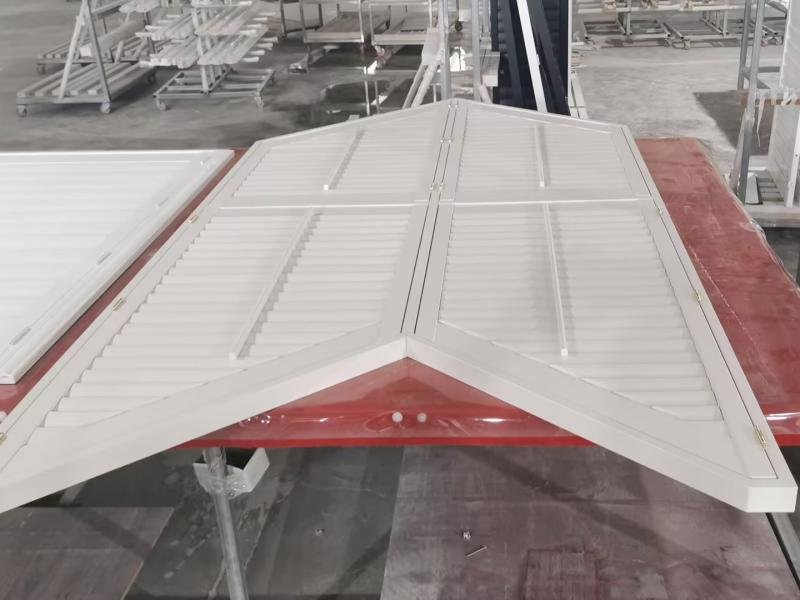
Staged delivery. Large apartment or hotel projects are often staged — floors 1 to 5 ready for installation by week 8, floors 6 to 10 by week 12, and so on. This requires your factory to produce and ship in batches matched to the installation schedule, rather than shipping the entire project quantity in one container. Staged delivery requires a factory with the production planning capability to hold partially completed orders and ship in tranches — not all factories can do this without disrupting their regular production flow.
The Three Project Types and What Each Requires
Hotels and serviced apartments:
Hotel projects are characterised by high consistency requirements and premium finish expectations. Every room needs to look identical — same colour batch, same louvre pitch, same hardware finish. Colour drift between production batches (a panel made in week 1 looking slightly different from a panel made in week 6) is unacceptable. Specify this requirement explicitly with your factory and ask how they manage colour consistency across multi-batch production runs.
Hardware finish matters in hotel applications. Standard residential shutter hardware is typically white or off-white powder coat. Hotel specifications often require chrome, brushed nickel, or matte black hardware finishes to coordinate with the room's overall hardware palette. Confirm that your factory can supply non-standard hardware finishes and at what minimum quantity.
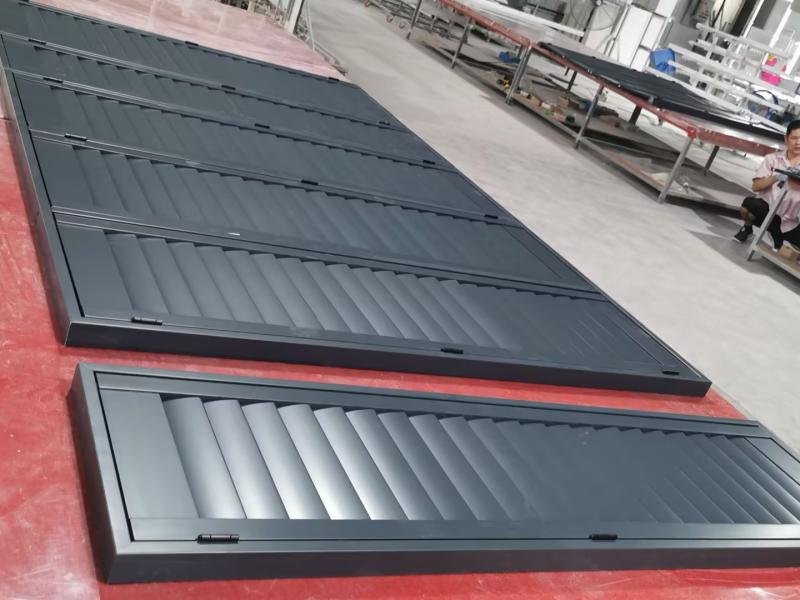
Lead time on hotel projects is typically the most critical variable. Hotel operators have opening dates that are commercially fixed — a hotel that cannot open because the window coverings are not installed loses revenue every day. Build a minimum 15-day buffer into your delivery commitment for hotel projects, and confirm your factory's track record on comparable project sizes before you make a commitment.
Apartment complexes and new residential developments:
Apartment projects involve higher volume, more standardised specifications, and more cost-sensitive buyers than hotels. The decision-maker is typically a development manager or quantity surveyor working to a fixed finishes budget per unit. Price per panel matters, but so does your ability to demonstrate that you can handle the volume without quality or timing issues.
For apartment projects, the key supplier capability to demonstrate is consistent quality across large production runs. A developer who is installing 400 identical white PVC shutter panels needs confidence that panel 400 looks the same as panel 1. Ask your factory about their colour consistency controls for large-volume runs and request evidence — batch test reports or photos from comparable projects are appropriate evidence.
FSC certification becomes relevant in apartment projects targeting Green Star or equivalent sustainability ratings. Developers pursuing 4-star or higher Green Star ratings need certified timber products. Having FSC-certified product available — with Chain of Custody documentation — is a threshold requirement for these projects. Read our detailed explanation of FSC certification for plantation shutters if this applies to your target market.
New build master-planned communities:
Volume builder programmes — where a large residential builder standardises a shutter specification across all homes in a development or across their national build programme — represent the highest volume and most repeatable commercial shutter opportunity in Australia. Volume builders typically specify PVC shutters in a narrow colour range (usually 2 to 3 whites) at competitive price points, installed by their own trade teams or preferred installers.
Winning a volume builder programme requires competitive pricing, reliable lead times, and the ability to supply at scale without quality variation. A volume builder ordering 200 homes per quarter needs a supplier who can consistently deliver 1,500 to 2,500 panels per quarter without delays. This is not a product sale — it is a supply chain partnership, and it is evaluated as such.
What Your Factory Needs to Support Commercial Projects
Not every factory is equipped to handle commercial project supply reliably. Before committing to a commercial project with a developer or builder, confirm that your factory can deliver on the following:
Sample production within 7 days. Commercial projects cannot wait 3 to 4 weeks for colour approval samples. A factory that produces pre-production samples within 5 to 7 days of receiving a specification keeps your project timeline intact. Factories with longer sample lead times will push your project schedule out before production has even begun.
Colour batch consistency documentation. Ask for colour measurement data (Delta E values) from comparable large production runs. A Delta E of ≤1.5 between panels from the same batch, and ≤2.0 between panels from different batches in the same project, is the commercial standard. Factories without colour measurement equipment cannot provide this evidence.
Staged shipment capability. Can the factory produce and hold partial quantities, then ship in tranches matched to your installation schedule? This requires production planning flexibility and warehouse space. Confirm this explicitly before committing to staged delivery in your project contract.
Project-specific documentation. Commercial projects require more documentation than standard import shipments. You may need product test reports to a specific standard (AS 1905 for fire performance, for example), a material safety data sheet for paint compounds, or a certificate of conformance to a specific specification clause. Ask your factory what project documentation they can provide and at what lead time.
Account management depth. A commercial project generates more complex communication than a standard container order — specification queries, sample approvals, schedule updates, staged shipping coordination. Your factory account manager needs to be responsive, technically knowledgeable, and available for calls outside of standard China business hours when your project is in critical phase.
Getting Your First Commercial Project Right
The first commercial project is always the most operationally intensive. The specification process is unfamiliar, the documentation requirements are new, and the stakes are higher than a residential order that can be corrected with a single replacement panel.
Our recommendation for distributors entering commercial project supply for the first time: start with a project between 80 and 150 panels — large enough to be commercially meaningful, small enough to manage without systems that you have not yet built. Use that project to validate your sample approval process, your staged delivery capability, and your quality consistency across a larger production run. The lessons from the first project are worth more than the margin from the second and third projects combined.
We have supplied plantation shutters for commercial projects across Australia — hotels, apartments, aged care, and volume builder programmes — for over 15 years. Our project team manages sample production, staged scheduling, and project documentation as a standard service, not an add-on.
Have a commercial project to discuss? Contact us here with your project specification and timeline — we will provide a project-specific quote and lead time confirmation within 48 hours.
Related reading: FSC-Certified Pine Plantation Shutters: Why It Matters for AU Distributors